Economics of Incarceration
The economic drivers and consequences of mass incarceration
Below, we’ve curated virtually all of the research about the various economic factors of incarceration.
How much does the criminal justice system cost, and who pays for it? How well-funded are prisons and jails? What are the economic impacts and origins of mass incarceration? Do certain programs in prison affect people’s economic well-being after release? See the reports below to explore these questions and more. You can also see related research on our Poverty and Debt page.
-
Overcharged: Coerced labor, low pay, and high costs in Washington's prisons Columbia Legal Services, January, 2024“People in Washington prisons are paid as little as 6% of the state minimum wage...Their wages are then deducted from between 5 to 100% for mandatory fees such as "the cost of incarceration," while basic goods...can cost a day's worth of earnings.”
-
One in Five: How Mass Incarceration Deepens Inequality and Harms Public Safety (Part 4) Sentencing Project, January, 2024“Mass incarceration's hold on vast public resources, its imposition of financial burdens, and the obstacles erected for people with criminal records further erode economic and social buffers against crime.”
-
Under-resourced and Ignored: Indigent Defense in Schuylkill County Wren Collective, January, 2024“We found an underfunded indigent defense system that lacks the support for enough lawyers to represent clients, including at bail hearings, for immigration consultations, and adequate technology for attorneys to properly do their jobs.”
-
Crisis in Corrections: The DOC Staff Shortage and the Inmate Experience Colorado Criminal Justice Reform Coalition (CCJRC), January, 2024“An overwhelming 93% of respondents incarcerated in Colorado say there is a staffing shortage at their facility, and 85% say that the shortage is either significant or moderate.”
-
Understanding the Landscape of Fines, Restitution, and Fees for Criminal Convictions in Minnesota Robina Institute of Criminal Law and Criminal Justice, August, 2023“In 2023, the [Minnesota] DOC reported that of 10,413 correctional fees imposed, it waived 338, for a waiver rate of 3.8%. However, of these, nearly 40% were waived due to the death of the person upon which the fees were originally imposed.”
-
The Criminalization of Poverty in Kentucky: How Economic Crises and Flawed Reforms Fueled an Incarceration Boom Vera Institute of Justice, August, 2023“By turning to criminal legal fines and fees to fund court and jail operations, jurisdictions across Kentucky create a vicious cycle that traps people in poverty and makes it more difficult for people to lead stable lives after incarceration.”
-
The Cost of Doing Business: Why Criminal Justice Reform Is the Right Investment to Strengthen Mississippi's Economy and Workforce FWD.us, June, 2023“Each year, Mississippi's economy -- especially its small businesses -- lose an estimated $2.7 billion in earnings due to criminal convictions.”
-
The Burden of Court Debt on Washingtonians Vera Institute of Justice, January, 2023“At least 78 percent of people with legal-financial debt meet the state's indigency standard, yet courts routinely impose fines and fees at conviction averaging $695 for misdemeanor cases and $1,302 for felony cases.”
-
Prioritization of carceral spending in U.S. cities: Development of the Carceral Resource Index (CRI) and the role of race and income inequality Britt Skaathun et al, December, 2022“To our knowledge, this is the first study to consider the joint interaction of race and class on the prioritization of carceral systems over health and social support systems.”
-
Broken Rules: Laws Meant to End Debtors' Prisons are Failing Nebraskans ACLU of Nebraska, December, 2022“Observations from a combined 2,300+ bail and sentencing hearings show systemic disregard of laws meant to protect Nebraskans who are struggling financially.”
-
Unsustainable: Alabama's Increasing Trend of Keeping the Elderly Behind Bars Alabama Appleseed Center for Law & Justice, November, 2022“The average age of the Alabama prison population has a positive linear relationship (r=.88) with spending in the”
-
Prison agriculture in the United States: racial capitalism and the disciplinary matrix of exploitation and rehabilitation Paywall :( Carrie Chennault and Joshua Sbicca, October, 2022“Prison agriculture embodies explicit forms of exploitation and claims of rehabilitation...At least 662 adult state prisons have agricultural activities, including an array of animal, food, and plant production.”
-
Reduction or Elimination of Costs and Fees Charged to Inmates in State Correctional Facilities Virginia Department of Corrections, October, 2022“The 9% commission [on commissary purchases] collected by VADOC, in addition to high prices and sales tax, collected to fund these services places an unfair cost on some of the Commonwealth's poorest families.”
-
Electronic Monitoring Fees: A 50-State Survey of the Costs Assessed to People on E-Supervision Fines and Fees Justice Center, September, 2022“Broad language in state statutes and rules often gives local governments considerable latitude in determining how much to charge. From a limited review of 31 local jurisdictions with EM programs, fees ranged from less than $1 a day up to $40 per day”
-
Reimagining Restitution: New Approaches to Support Youth and Communities Juvenile Law Center, July, 2022“Across the country, juvenile courts impose restitution orders on youth too young to hold a job, still in full-time school, and often living in families already struggling to get by. This process doesn't work for anyone.”
-
Prison Labor in Arizona: A year-long investigation Paywall :( Arizona Republic and KJZZ News, July, 2022“The Republic's and KJZZ's five-part series reveals the detrimental effects of what happens when a state exploits some of its poorest people for their labor.”
-
The Cost of Solitary Confinement: Why Ending Isolation in California Prisons Can Save Money and Save Lives Berkeley Underground Scholars and Immigrant Defense Advocates, July, 2022“This report estimates the Mandela Act would save, at a minimum, an estimated $61,129,600 annually based on a conservative estimate of the costs associated with solitary confinement.”
-
Captive Labor: Exploitation of Incarcerated Workers ACLU and the University of Chicago Law School Global Human Rights Clinic, June, 2022“Our research found that the average minimum hourly wage paid to workers for non-industry jobs is 13 cents, and the average maximum hourly wage is 52 cents.”
-
New data on formerly incarcerated people's employment reveal labor market injustices Prison Policy Initiative, February, 2022“Of more than 50,000 people released from federal prisons in 2010, a staggering 33% found no employment at all over four years post-release, and at any given time, no more than 40% of the cohort was employed.”
-
Barred from employment: More than half of unemployed men in their 30s had a criminal history of arrest Shawn Bushway et al, February, 2022“By age 35, approximately 50% of the black men in the [survey] have been arrested, 35% have been convicted, and 25% have been incarcerated.”
-
Justice-Involved Individuals and the Consumer Financial Marketplace Consumer Financial Protection Bureau, January, 2022“People exiting jail or prison face frequent fees for the prepaid cards they often have no choice but to receive...even market-rate fees on a prepaid product would burden this vulnerable class of people relative to receiving cash or checks.”
-
Employment of Persons Released from Federal Prison in 2010 Bureau of Justice Statistics, December, 2021“A third (33%) of persons in the study population did not find employment at any point during the 16 quarters after their release from prison from 2010 to 2014.”
-
The Paid Jailer: How Sheriff Campaign Dollars Shape Mass Incarceration Common Cause and Communities for Sheriff Accountability, December, 2021“Sheriffs are politicians who make major decisions about health and safety for millions of Americans--and they shouldn't be up for sale to the highest bidder.”
-
Methods of Calculating the Marginal Cost of Incarceration: A Scoping Review Stuart John Wilson and Jocelyne Lemoine, December, 2021“There is a lack of, and need for, peer-reviewed literature on methods for calculating the marginal cost of incarceration, and marginal cost estimates of incarceration, to assist program evaluation, policy, and cost forecasting.”
-
Beyond Payment Plans: Breaking the Cycle of Court Debt in Tennessee Think Tennessee, December, 2021“For Tennesseans who face an endless cycle of penalties due to an inability to pay court debt, the county where they live could determine whether they have access to a payment plan that could help them break free.”
-
Time for Justice: The Urgent Need for Second Chances In Pennsylvania's Sentencing System Families Against Mandatory Minimums, November, 2021“Based on average incarceration costs, the Pennsylvania Department of Corrections (DOC) is spending $220 million per year to incarcerate 3,892 people who have already served at least 20 years. The true cost is undoubtedly higher.”
-
Blood from a stone: How New York prisons force people to pay for their own incarceration Tommaso Bardelli, Zach Gillespie and Thuy Linh Tu, October, 2021“A study by members of the New York University Prison Education Program Research Collective gives important first-hand accounts of the damage done when prisons shift financial costs to incarcerated people.”
-
The predatory dimensions of criminal justice Joshua Page and Joe Soss, October, 2021“Consistent with developments that financialized the broader political economy, predatory criminal justice practices pivoted toward tools that charge prices, create debts, and pursue collections.”
-
The Golden Key: How State-Local Financial Incentives to Lock Up Kentuckians Are Perpetuating Mass Incarceration Kentucky Center for Economic Policy, October, 2021“Some county jails rely on the economies of scale created by overcrowding including the extra revenue that comes from holding people in state and federal custody and from charging fees to those who are incarcerated.”
-
Police Foundations: A Corporate-Sponsored Threat to Democracy and Black Lives Color of Change and LittleSis, October, 2021“[We] have compiled the most extensive research to date on the links between police foundations and corporations, identifying over 1,200 corporate donations or executives serving as board members for 23 of the largest police foundations in the country.”
-
Electronic Prisons: The Operation of Ankle Monitoring in the Criminal Legal System Kate Weisburd et al., September, 2021“Monitoring and its attendant rules significantly burden basic rights, liberty and dignity.”
-
Effect of Juvenile Justice Fee Repeal on Financial Sanctions Borne by Families Jaclyn E. Chambers, Karin D. Martin, and Jennifer L. Skeem, September, 2021“We estimate that the likelihood of experiencing any financial sanction was 22.2% lower post-repeal [in Alameda County] compared to pre-repeal, and the total amount of sanctions was $1,583 (or 70%) lower.”
-
Debt to Society: The Role of Fines & Fees Reform in Dismantling the Carceral State Wesley Dozier and Daniel Kiel, September, 2021“Between 2005 and 2017, the Tennessee General Assembly passed forty-six bills that increased the amount of debt owed by individuals who make contact with the criminal legal system.”
-
Justice-involved Individuals in the Labor Market since the Great Recession Keith Finlay and Michael Mueller-Smith, September, 2021“While [justice-involved] groups did experience some improvement in economic outcomes during the recovery, their average outcomes remain far below even those of a reference cohort of adults...”
-
Bloody Lucre: Carceral Labor and Prison Profit Laura I. Appleman, August, 2021“The economic exploitation that occurs with most inmate labor is doubly troubling in times of emergency or disaster, where often prisoners' health, safety, and even life is risked to ensure cost-savings on the part of governments or private industry.”
-
Inmates May Work, But Don't Tell Social Security Stephanie Hunter McMahon, July, 2021“Despite a prevailing requirement that inmates work and despite them being forced to work under threat of punishment, inmates are not "employees" or "workers" in the commonly understood sense.”
-
No Kickbacks Parole Illinois, June, 2021“Through its "surcharges", "kickbacks", and denial of basic necessities, the IDOC is effectively siphoning millions of dollars from largely low income communities by preying on people's love for their incarcerated friend or family member.”
-
What families can expect to be charged under the new FCC rules Prison Policy Initiative, June, 2021“A new order from the Federal Communications Commission lowers existing caps on rates and fees in the prison and jail telephone industry.”
-
Empire State of Incarceration Vera Institute of Justice, May, 2021“As bail setting practices changed and counties moved to release more people to prevent the spread of COVID-19 across the state, Black people were left behind.”
-
Jails, Sheriffs, and Carceral Policymaking Aaron Littman, May, 2021“Sheriffs have a unique combination of controls over how big and how full their jails are, but this role consolidation does not produce the restraint that some have predicted. Their disclaimers of responsibility are a smokescreen...”
-
What Jails Cost: A Look at Spending in America's Large Cities Vera Institute of Justice, April, 2021“Since 2011, jail budgets increased 13 percent--accounting for inflation--while jail populations declined 28 percent.”
-
The People's Plan for Prison Closure Californians United for a Responsible Budget (CURB), April, 2021“Accomplishing our goal of closing ten prisons in five years will be hard. It will require political courage. But history is watching us...”
-
What Doesn't Get Measured Doesn't Get Done: A Roadmap for Data Collection and Reporting in the Era of Bail Reform Joanna Thomas, Abdiaziz Ahmed, New York City Criminal Justice Agency, April, 2021“Proper pretrial data collection, analysis, and reporting can help to build systems that meet local needs, save money, improve program practices, and decrease jail crowding.”
-
How Much Criminal Justice Debt Does the U.S. Really Have? Fines & Fees Justice Center, April, 2021“At least $27.6 billion of fines and fees is owed across the nation..”
-
What Jails Cost Statewide: Spending on Jails Across the Rural-Urban Spectrum Vera Institute of Justice, March, 2021“Three out of five people incarcerated in local jails were in smaller cities and rural communities.”
-
Paid Your Debt to Society? Court-related Financial Obligations and Community Supervision during the First Year after Release from Prison Paywall :( Nathan W. Link, February, 2021“One's status as being under correctional supervision at release from prison leads to increased debt, which in turn increases the chance of remaining under supervision during the first year out.”
-
The Cost of Incarceration in New York State: How Counties Outside New York City Can Reduce Jail Spending and Invest in Communities Vera Institute of Justice, January, 2021“In 2019, the 57 counties outside New York City -- which are responsible for funding their own jails -- collectively spent more $1.3 billion to staff and run their jails.”
-
Prisons and Penny-Pinching: Finding Budget Savings in the Time of COVID-19 Texas Public Policy Coalition, January, 2021“Even a small percentage reduction in the number of annual revocations can potentially yield millions in annual cost savings.”
-
The Business Case for Criminal Justice Reform: Second Chance Hiring U.S. Chamber of Commerce, January, 2021“At the national level, economists estimate that the Gross Domestic Product (G.D.P.) is reduced between $78 billion and $87 billion due to excluding formerly incarcerated job seekers from the workforce.”
-
Punishing Relations: How WA DOC's Collateral Damage and Hidden Costs Imprison Families Washington Corrections Watch, January, 2021“The financial and emotional burdens of incarceration are primarily borne by female family members, most especially in communities of color.”
-
Proliferation of Punishment: The Centrality of Legal Fines and Fees in the Landscape of Contemporary Penology Paywall :( Ilya Slavinski and Becky Pettit, January, 2021“Enforcement of LFOs varies geographically and is related to conservative politics and racial threat.”
-
The High Price of Using Justice Fines and Fees to Fund Government in New York Vera Institute of Justice, December, 2020“In 2018, New York state and local governments collected at least $1.21 billion in criminal and traffic fines and fees as revenue.”
-
Spend Your Values, Cut Your Losses 2021 Divestment Portfolio: Smart and Safe Justice System Solutions That Put Communities First Texas Criminal Justice Coalition, November, 2020“Texas spends the most in the nation on prisons and jails; over the past three decades, it has grown 5x faster than the state's rate of spending on elementary and secondary education.”
-
MA DOC Expenditures and Staffing Levels for Fiscal Year 2020 Lifers' Group Inc., October, 2020“The DOC spent nearly three-quarters of a billion dollars in Fiscal 2020, a 6% increase or nearly $40 million over Fiscal 2019.”
-
New York's Ferguson Problem: How the state's racist fee system punishes poverty, lacks transparency, and is overdue for reform No Price on Justice, September, 2020“A national study found that 34 New York localities are about as reliant, if not more reliant, on fines and fees revenue as Ferguson was during the period investigated.”
-
Sticker Shock 2020: The Cost of Youth Incarceration Justice Policy Institute, July, 2020“The average state cost for the secure confinement of a young person is now $588 per day, or $214,620 per year, a 44 percent increase from 2014.”
-
The Broad Scope and Variation of Monetary Sanctions: Evidence From Eight States Sarah Shannon, Beth M. Huebner, Alexes Harris, et al., June, 2020(Key trends include: the lack of transparent processes in implementing this form of punishment, the wide variation in practices and policies across jurisdictions, and the ways that noncompliance deepens legal entanglements and collateral consequences.)
-
Commercialized (In)justice Litigation Guide: Applying Consumer Laws to Commercial Bail, Prison Retail, and Private Debt Collection National Consumer Law Center, June, 2020“States and local governments have increasingly offloaded core functions of their criminal legal systems--traditionally public services--onto private corporations operating to maximize profit for their owners and shareholders.”
-
The Explosion of Unpaid Criminal Fines and Fees in North Carolina Duke Law Center for Science and Justice, April, 2020“One in twelve adults in North Carolina currently have unpaid criminal court debt. This largely uncollectable debt may total well over one hundred million dollars.”
-
Stalled: Alabama's Destructive Practice of Suspending Driver's Licenses Alabama Appleseed Center for Law & Justice, February, 2020“A 2018 survey of Alabamians whose licenses were suspended due to unpaid tickets found 89% had to choose between basic needs like food, utilities, or medicine and paying what they owed and 64% were jailed in connection with unpaid traffic debt.”
-
Local Labor Market Inequality in the Age of Mass Incarceration Luke Petach and Anita Alves Pena, 2020“While income inequality is associated with higher rates of incarceration for all race and ethnicity groups (although not always in statistically significant fashion), the effect is largest for non-white, nonHispanic individuals.”
-
Paying for Jail: How County Jails Extract Wealth from New York Communities Worth Rises and Brooklyn Community Bail Fund, December, 2019“We estimate that in 2017 the 57 counties outside of New York City extracted over $25.1 million for phone calls, $14.1 million for commissary, and $0.2 million for disciplinary tickets.”
-
The Steep Costs of Criminal Justice Fees and Fines: A Fiscal Analysis of Three States and Ten Counties Brennan Center for Justice, November, 2019(Criminal fines and fees burden the members of society who are least able to pay, and the costs of collection are many times greater than those of general taxation, effectively canceling out much of the revenue.)
 The Company Store and the Literally Captive Market: Consumer Law in Prisons and Jails Stephen Raher, November, 2019“The growth of public expense associated with mass incarceration has led many carceral systems to push certain costs onto the people who are under correctional supervision.”
-
The Price of Taxation by Citation: Case Studies of Three Georgia Cities that Rely Heavily on Fines and Fees Institute for Justice, October, 2019“Our findings also suggest taxation by citation is shortsighted. Cities may gain revenue, but they may also pay a price for it in the form of lower community trust and cooperation.”
-
The 1994 Crime Bill Legacy and Lessons, Part 1: Impacts on Prison Populations The Council on Criminal Justice, September, 2019“Congress appropriated $3 billion in funding for grant programs to expand prison capacity; the funding supported the construction of about 50,000 prison beds, representing about 4% of state prison capacity at the time.”
-
Fees, Fines and Fairness: How Monetary Charges Drive Inequity in New York City's Criminal Justice System New York City Comptroller, September, 2019“100,000 civil judgments were issued in just one year for failure to pay criminal court debts in New York City, all but criminalizing poverty.”
-
The Hidden Costs of Florida's Criminal Justice Fees Rebekah Diller, Brennan Center for Justice, August, 2019“Since 1996, Florida added more than 20 new categories of financial obligations for criminal defendants and, at the same time, eliminated most exemptions for those who cannot pay”
-
Paid in Full: A Plan to End Money Injustice in New Orleans Vera Institute of Justice, June, 2019“Money injustice is deeply unfair and harmful to those directly impacted, exacerbates poverty and racial inequality, wastes scarce taxpayer dollars, and does not deliver the safety all people value.”
-
Plus a Life Sentence? Incarceration's Effects on Expected Lifetime Wage Growth Theodore S. Corwin III and Daniel K. N. Johnson, June, 2019“Our work indicates a dampening effect of incarceration on wage growth in the lifetime.”
-
The Prison Industrial Complex: Mapping Private Sector Players Worth Rises, April, 2019“More than half of the $80 billion spent annually on incarceration by government agencies is used to pay the thousands of vendors that serve the criminal legal system.”
-
Too Poor to Pay: How Arkansas's Offender-Funded Justice System Drives Poverty & Mass Incarceration Lawyers Committee for Civil Rights Under Law, March, 2019“In Arkansas, thousands have been jailed, often repeatedly, for weeks or even months at a time, simply because they are poor and cannot afford to pay court costs, fines and fees.”
-
No Credit For Time Served? Incarceration and Credit-Driven Crime Cycles Abhay Aneja and Carlos Avenancio-Leon, February, 2019“Incarceration significantly reduces access to credit, and that in turn leads to substantial increases in recidivism, creating a perverse feedback loop.”
-
Level of Criminal Justice Contact and Early Adult Wage Inequality Robert Apel and Kathleen Powell, February, 2019“On the contrary, formerly incarcerated blacks earn significantly lower wages than their similar-age siblings with no history of criminal justice contact (and even their similar-age siblings who have an arrest record).”
-
New York Should Re-examine Mandatory Court Fees Imposed on Individuals Convicted of Criminal Offenses and Violations New York City Bar, November, 2018“Courts should not prioritize revenue-raising over the successful re-integration of incarcerated persons back into society.”
-
Money for Communities, Not Cages: The Case for Reducing the Cook County Sheriff's Jail Budget Chicago Community Bond Fund, October, 2018“By re-allocating money from reactionary corrections programs to proactive and preventative community services, Cook County can begin to effectively invest in the communities and people previously neglected and criminalized.”
-
Socioeconomic Barriers to Child Contact with Incarcerated Parents Paywall :( Batya Y. Rubenstein, Elisa L. Toman, Joshua C. Cochran, August, 2018“Analyses suggest that lower income parents are less likely to be visited by their children. We also find that economic disadvantage may condition impacts of other practical barriers, such as distance from home.”
 Out of Prison & Out of Work: Unemployment among formerly incarcerated people Prison Policy Initiative, July, 2018(This report calculates that 27% of formerly incarcerated people are looking for a job, but can't find one.)
-
Workers With Criminal Records Society for Human Resource Management and the Charles Koch Institute, May, 2018(74 percent of managers and 84 percent of HR professionals nationwide said they were willing or open to hiring individuals with a criminal record.)
 The Company Store: A Deeper Look at Prison Commissaries Prison Policy Initiative, May, 2018(Incarcerated people spend an average of $947 per person annually through commissaries - mostly to meet basic needs - which is well over the typical amount they can earn at a prison job.)
-
Criminal Justice Administrative Fees: High Pain for People, Low Gain for Government The Financial Justice Project of San Francisco, May, 2018“Over the last six years, more than 265,000 fines and fees have been charged to local individuals, totaling almost $57 million.”
-
Revisiting Correctional Expenditure Trends in Massachusetts MASSInc, May, 2018“Despite steady decline in the total number of individuals held in correctional facilities, spending on prisons and jails continues to rise.”
-
The Evolving Landscape of Crime and Incarceration Greenberg Quinlan Rosner Research, April, 2018(This report shows that a 67 percent majority agrees that "building more jails and prisons to keep more people in jail does not reduce crime," including 61 percent of rural Americans.)
-
The Prison Industrial Complex Mapping Private Sector Players Urban Justice Center, April, 2018“This report exposes over 3,100 corporations that profit from the devastating mass incarceration of our nation’s marginalized communities.”
-
Work and opportunity before and after incarceration Brookings Institution, March, 2018“The combination of high rates of incarceration and low employment rates among exprisoners implies that roughly one third of all not-working 30-year-old men are either in prison, in jail, or are unemployed former prisoners.”
-
A Pound of Flesh The Criminalization of Private Debt American Civil Liberties Union, February, 2018“Arrests stemming from private debt are devastating communities across the country, and amount to a silent financial crisis that, due to longstanding racial & economic inequalities, is disproportionately affecting people of color & low-income communities.”
-
"Set up to Fail": The Impact of Offender-Funded Private Probation on the Poor Human Rights Watch, February, 2018“This report examines the use and impact of privatized probation services for misdemeanor offenses in four US states, and provides recommendations to protect against the abuses of criminal justice debt.”
-
Civil Asset Forfeiture: Forfeiting Your Rights Southern Poverty Law Center, January, 2018(This report finds that civil asset forfeiture snares mostly low-level offenders and many individuals who are never charged with a crime in the first place into an unequal system that undercuts due process and property rights.)
-
Court Fines and Fees: Criminalizing Poverty in North Carolina North Carolina Poverty Research Fund, January, 2018(In recent decades, the North Carolina General Assembly has levied a costly array of fees on low income Tar Heels and their families, creating massive hardships for those caught in webs of criminal justice debt.)
-
The Effects of Pretrial Detention on Conviction, Future Crime, and Employment: Evidence from Randomly Assigned Judges Will Dobbie, Jacob Goldin, and Crystal S. Yang, January, 2018(We find that pretrial detention significantly increases the probability of conviction, primarily through an increase in guilty pleas. It has no net effect on future crime, but decreases formal sector employment and the receipt of some government benefits.)
-
Driving on Empty: Payment Plan Reforms Don't Fix Virginia's Court Debt Crisis Legal Aid Justice Center, January, 2018(After Virginia implemented significant changes to rules governing payment plans for court debt, roughly one in six licensed drivers in Virginia still has their driver's license suspended, due at least in part to unpaid court debt.)
-
Tracking the impact of the prison system on the economy Prison Policy Initiative, December, 2017“In 2012 -- the most recent data available -- the more than 2.4 million people who work for the justice system (in police, corrections and judicial services) at all levels of government constituted 1.6% of the civilian workforce.”
-
Driven by Dollars: A State-By-State Analysis of Driver's License Suspension Laws for Failure to Pay Court Debt Legal Aid Justice Center, September, 2017“43 states (and D.C.) suspend driver's licenses because of unpaid court debt.”
-
Access to Health Care and Criminal Behavior: Short-Run Evidence from the ACA Medicaid Expansions Jacob Vogler, September, 2017(This research article indicates that state Medicaid expansions have resulted in significant decreases in annual crime by 3.2 percent.)
-
Back to Business: How Hiring Formerly Incarcerated Job Seekers Benefits Your Company The Trone Private Sector and Education Advisory Council to the American Civil Liberties Union, June, 2017“Research by economists confirms that hiring people with records is simply smart business. Researchers have found that “employees with a criminal background are in fact a better pool for employers.””
-
Freedom To Thrive: Reimagining safety & security in our communities The Center for Popular Democracy, Law for Black Lives, and the Black Youth Project 100, June, 2017“This report examines racial disparities, policing landscapes, and budgets in twelve jurisdictions across the country, comparing the city and county spending priorities with those of community organizations and their members.”
-
Criminal Background Checks and Access to Jobs: A Case Study of Washington, DC Urban Institute, June, 2017“Examining local regulations and DC’s labor market reveals that justice-involved people—whether formerly incarcerated or not—face significant challenges finding work in in the city.”
-
The Price of Prisons: Examining State Spending Trends, 2010-2015 Vera Institute of Justice, May, 2017“Since 2010, 23 states have reduced the size of their prison populations. Vera’s research found that 13 of these states have saved considerably in taxpayer money — $1.6 billion — at the same time.”
-
Using Time to Reduce Crime: Federal Prisoner Survey Results Show Ways to Reduce Recidivism Families Against Mandatory Minimums, May, 2017“An estimated 45 percent of federal prisoners have mental health and behavioral problems...Two-thirds of prisoners who responded to our survey said they had not received mental or behavioral health counseling while in federal prison.”
-
Selling Off Our Freedom: How insurance corporations have taken over our bail system Color of Change and the American Civil Liberties Union, May, 2017“Fewer than 10 insurance companies are behind a significant majority of bonds issued by as many as 25,000 bail bond agents.”
-
Getting Tough on Spending: An Examination of Correctional Expenditure in Massachusetts MassINC and the Massachusetts Criminal Justice Reform Coalition, May, 2017“DOC [Department of Corrections] and county facilities combined, the state budget allocation per inmate rose 34 percent between FY 2011 and FY 2016. Over this period, education aid per student increased by only 11 percent.”
-
The Price of Prisons: Examining State Spending Trends, 2010-2015 Vera Institute of Justice, May, 2017“Since 2010, 23 states have reduced the size of their prison populations. Vera’s research found that 13 of these states have saved considerably in taxpayer money — $1.6 billion — at the same time.”
-
How much do incarcerated people earn in each state? Wendy Sawyer, Prison Policy Initiative, April, 2017“[P]risons appear to be paying incarcerated people less today than they were in 2001. The average of the minimum daily wages paid to incarcerated workers for non-industry prison jobs is now 87 cents, down from 93 cents reported in 2001.”
-
The steep cost of medical co-pays in prison puts health at risk Wendy Sawyer, Prison Policy Initiative, April, 2017“In Michigan, it would take over a week to earn enough for a single $5 co-pay, making it the free world equivalent of over $300. In 13 states co-pays are equivalent to charging minimum wage workers more than $200.”
-
The Case for Paid Apprenticeships Behind Bars Center for American Progress, April, 2017“This brief argues that greater access to paid prison apprenticeship programs could effectively improve inmates’ post-release outcomes, particularly for a group of individuals who already face significant barriers to labor market entry.”
-
Making Families Pay: The Harmful, Unlawful, and Costly Practice of Charging Juvenile Administrative Fees in California Stephanie Campos-Bui, Jeffrey Selbin, Hamza Jaka, Tim Kline, Ahmed Lavalais, Alynia Phillips, Abby Ridley-Kerr, University of California Berkeley School of Law, March, 2017“[W]e did not find a single county in which fee practices were both fair and cost-effective. Counties either improperly charge low-income families and net little revenue, or they fairly assess families’ inability to pay and net even less.”
-
Pretrial detention costs $13.6 billion each year Prison Policy Initiative, February, 2017“On any given day, this country has 451,000 people behind bars who are being detained pretrial... It costs local governments nationwide: $13.6 billion.”
 Following the Money of Mass Incarceration Prison Policy Initiative, January, 2017“In this first-of-its-kind report, we find that the system of mass incarceration costs the government and families of justice-involved people at least $182 billion every year.”
-
Prisons as Panacea or Pariah? The Countervailing Consequences of the Prison Boom on the Political Economy of Rural Towns John M. Eason, January, 2017“Thus, neither entirely pariah nor panacea, the prison functions as a state-sponsored public works program for disadvantaged rural communities but also supports perverse economic incentives for prison proliferation.”
-
Past Due: Examining the Costs and Consequences of Charging for Justice in New Orleans Vera Institute of Justice, January, 2017“Past Due, and its accompanying technical report, reveal the costs and other consequences of a system that tries to extract money from low-income people and then jails them when they can't pay.”
-
Responsible Prison Project: Reshaping The Texas Prison System for Greater Public Safety Aaron Flaherty, David Graham, Michael Smith, William D Jones, and Vondre Cash, October, 2016“It has often been said that those who are closest to a problem are closest to its solution. That is no less true for those who are in prison.”
-
The Economic Burden of Incarceration in the U.S. Institute for Advancing Justice Research and Innovation, October, 2016“This study estimates the annual economic burden of incarceration in the United States [by including] important social costs...an aggregate burden of one trillion dollars.”
-
A Wealth of Inequalities: Mass Incarceration, Employment, and Racial Disparities in U.S. Household Wealth, 1996 to 2011 Bryan L. Sykes, University of Washington and Michelle Maroto, University of Alberta, October, 2016“[A] non-Hispanic white household with an institutionalized member would actually hold more in assets than an otherwise similar black or Hispanic household without an institutionalized member.”
-
Who Pays for Government? Descriptive Representation and Exploitative Revenue Sources Michael W. Sances and Hye Young You, September, 2016“We find municipal governments with higher black populations rely more heavily on fines and fees for revenue. Further, we find that the presence of black city council members significantly reduces - though does not eliminate - this pattern.”
-
Confronting Criminal Justice Debt: A Guide for Policy Reform Criminal Justice Policy Program at Harvard Law School, September, 2016“By disproportionately burdening poor people with financial sanctions, and by jailing people who lack the means to pay, many jurisdictions have created a two-tiered system of criminal justice.”
-
Community Cages: Profitizing community corrections and alternatives to incarceration American Friends Service Committee, August, 2016“The profitization of community corrections poses a serious threat to the movement to end mass incarceration.”
-
Evaluation of Strategies to Reduce Louisiana's Incarceration Rate and Costs for Nonviolent Offenders Louisiana Legislative Auditor, August, 2016“[T]he purpose of this report was to evaluate potential strategies to reduce incarceration rates and costs for nonviolent offenders in Louisiana.”
-
Unlicensed & Untapped: Removing Barriers to State Occupational Licenses for People with Records National Employment Law Project, April, 2016“[H]aving a conviction record, particularly for people of color, is a major barrier to participation in the labor market.”
-
Get To Work or Go To Jail: Workplace Rights Under Threat UCLA Labor Center, April, 2016“The work-or-jail threat adds the weight of the criminal justice system to employers’ power, and turns the lack of good jobs into the basis for further policing, prosecution, and incarceration.”
-
The Crippling Effect of Incarceration on Wealth Prison Policy Initiative, April, 2016“Once released, that individual may make gains in wealth accumulation, but they will always remain at significantly lower levels of wealth compared to those who are never incarcerated in their lifetime.”
-
Economic Perspectives on Incarceration and the Criminal Justice System White House Council of Economic Advisers, April, 2016“[E]conomics can provide a valuable lens for evaluating the costs and benefits of criminal justice policy.”
-
A National Picture of Prison Downsizing Strategies The RAND Corporation, February, 2016“After decades of unprecedented correctional expenditures and prison population growth, many states faced fiscal pressures on their corrections budgets as the country entered a deep recession in 2008.”
-
Locked Up & Shipped Away: Interstate Prisoner Transfers and the Private Prison Industry Winter 2016 Update Grassroots Leadership, January, 2016(Since the 2013 release of Locked Up and Shipped Away, the same four states (Vermont, California, Idaho, and Hawaii) continue to house a portion of their prisoners in private prisons out of state. And, a fifth state, Arkansas has also opted to do so.)
 You've Got Mail: The promise of cyber communication in prisons and the need for regulation Prison Policy Initiative, January, 2016(There are many benefits to electronic messaging in correctional facilities, but our analysis finds that the technology is primed to be just another opportunity for for-profit companies to exploit families and subvert regulations of phone calls.)
-
Corrections Spending Through the State Budget Since 2007-08: Still High Despite Recent Reforms California Budget & Policy Center, November, 2015(While total corrections spending as a share of the state budget is down slightly since 2007-08, spending for adults under state jurisdiction remains stubbornly high.)
-
In Jail & In Debt: Ohio's Pay-to-Stay Fees ACLU of Ohio, November, 2015(Ohioans are getting billed up to $66.09 a day to be in jail.)
-
Prison Price Tag: The High Cost of Wisconsin's Corrections Policies Wisconsin Budget Project, November, 2015“Wisconsin state and local governments spend about $1.5 billion on corrections each year, significantly more than the national average given the size of our state.”
-
Policing for Profit: The Abuse of Civil Asset Forfeiture Institute for Justice, November, 2015“In 1986, the Department of Justice’s Assets Forfeiture Fund took in $93.7 million in revenue from federal forfeitures. By 2014, annual deposits had reached $4.5 billion--a 4,667 percent increase.”
-
Proposition 47 Progress Report: Year One Implementation Stanford Law School Stanford Justice Advocacy Project, October, 2015“Since the enactment of Proposition 47 on November 14, 2014, the number of people incarcerated in California’s prisons and jails has decreased by approximately 13,000 inmates, helping alleviate crowding conditions in those institutions.”
-
Debtors' Prisons in New Hampshire ACLU of New Hampshire, September, 2015(In 2013 New Hampshire judges jailed people who were unable to pay fines and without conducting a meaningful ability-to-pay hearing in an estimated 148 cases.)
-
Who Pays? The True Cost of Incarceration on Families Ella Baker Center for Human Rights; Forward Together; Research Action Design, September, 2015“Forty-eight percent of families in our survey overall were unable to afford the costs associated with a conviction, while among poor families (making less than $15,000 per year), 58% were unable to afford these costs.”
-
Charging Inmates Perpetuates Mass Incarceration Brennan Center for Justice, May, 2015“Every aspect of the criminal justice process has become ripe for charging a fee. In fact, an estimated 10 million people owe more than $50 billion in debt resulting from their involvement in the criminal justice system.”
-
Above the Law: An Investigation of Civil Asset Forfeiture in California Drug Policy Alliance, April, 2015(Asset forfeiture abuses in California reveal the troubling extent to which law enforcement agencies have violated state and federal law.)
-
Corrections Infrastructure Spending in California Public Policy Institute of California, March, 2015“At the end of 2005, CDCR operated 33 prisons with a statewide design capacity of more than 80,000 beds.”
 The Right Investment?: Corrections Spending in Baltimore City Justice Policy Institute; Prison Policy Initiative, February, 2015“Maryland taxpayers spend $288 million a year to incarcerate people from Baltimore City.”
-
Corrections Statistics by State National Institute of Corrections, February, 2015“This unique compilation of data provides a visual representation of key statistics for each state as well as a comparison of each state in relation to other states.”
-
Justice Expenditure And Employment Extracts, 2012 Bureau of Justice Statistics, February, 2015(This series includes estimates of government expenditures and employment at the national, federal, state, and local levels for the following justice categories: police protection, all judicial and legal functions, and corrections.)
-
Department of Corrections Colorado Correctional Industries Performance Audit Colorado Office of the State Auditor, January, 2015“Although statute requires CCI to operate in a profit-oriented manner, CCI's industries operations earned profit margins on average of less than 1 percent from Fiscal Years 2009 through 2014.”
-
To Serve and Collect: The Fiscal and Racial Determinants of Law Enforcement Michael D. Makowsky, Thomas Stratmann, and Alexander T. Tabarrok, 2015(This study finds increases in arrest rates of African-Americans and Hispanics for drugs, DUI violations, and prostitution where local governments are running deficits, but only in states that allow police departments to retain seizure revenues.)
-
Public Research Universities: Changes in State Funding American Academy of Arts & Sciences, 2015“In general, state spending on corrections has grown much faster than education spending over the last three decades. In eleven states, corrections has now surpassed higher education as a percentage of funding.”
-
"Money Bail": Making Ohio a More Dangerous Place to Live The Buckeye Institute, 2015“Ohio should address the demonstrated shortcomings of the cash bail system by expanding the judiciary’s access to proven risk-assessment tools that can provide a fairer, more efficient way to keep our communities safe and secure.”
-
The Rise in State Prison Populations Center on Budget and Policy Priorities, December, 2014“Most states' prison populations are at historic highs after decades of extraordinary growth. This growth has been costly, limiting economic opportunity for communities with especially high incarceration rates.”
-
Cost-Benefit Analysis and Justice Policy Toolkit Vera Institute of Justice, December, 2014“In recent years, policymakers and the public have been asking whether justice policies pass the “cost-benefit test.” Two questions drive this discussion: First, what works to reduce crime? And second, are those programs and policies worth the cost?”
-
Defunding State Prisons Santa Clara University School of Law, December, 2014“States would, instead, reallocate money spent on prisons to localities to use as they see fit--on enforcement, treatment, or even per-capita prison usage.”
-
One Strike and You're Out: How We Can Eliminate Barriers to Economic Security and Mobility for People with Criminal Records Center for American Progress, December, 2014“Estimates put the cost of employment losses among people with criminal records at as much as $65 billion per year in terms of gross domestic product.”
-
Justice Reinvestment in North Carolina: Three Years Later The Council of State Governments Justice Center, November, 2014“A total of 10 prisons closed as a result and the state is using some of the savings generated to focus on improving supervision practices by adding 175 probation and parole officers and investing in cognitive interventions and substance use treatment.”
-
Changing Priorities: State Criminal Justice Reforms and Investments in Education Center on Budget and Policy Priorities, October, 2014“Corrections spending is now the third-largest category of spending in most states, behind education and health care.”
-
Justice Assistance Grant (JAG) Program, 2014 Bureau of Justice Statistics, August, 2014“In total, approximately $290.9 million was allocated for the FY 2014 JAG awards.”
-
Justice Expenditure And Employment Extracts, 2010 Final Bureau of Justice Statistics, July, 2014“This series includes national, federal, and state-level estimates of government expenditures and employment for the following justice categories: police protection, all judicial and legal functions... and corrections.”
-
Indigent Defense Services In The United States, FY 2008-2012 - Updated Bureau of Justice Statistics, July, 2014“It provides both direct and intergovernmental indigent defense expenditures of state governments for fiscal years 2008 through 2012, and presents some local government expenditures aggregated at the state level.”
-
Justice Expenditure And Employment Extracts, 2009 Final Bureau of Justice Statistics, July, 2014“This series includes national, federal, and state-level estimates of government expenditures and employment for the following justice categories: police protection, all judicial and legal functions... and corrections.”
-
Justice Expenditure And Employment Extracts, 2011 - Preliminary Bureau of Justice Statistics, July, 2014“This series includes national, federal, and state-level estimates of government expenditures and employment for the following justice categories: police protection, all judicial and legal functions (including prosecution, courts, and public defense), and”
-
State Government Indigent Defense Expenditures, FY 2008-2012 - Updated Bureau of Justice Statistics, July, 2014“In 2012, state governments spent $2.3 billion nationally on indigent defense.”
-
A New Approach to Reducing Incarceration While Maintaining Low Rates of Crime The Hamilton Project, May, 2014“What alternative policy options could we pursue in conjunction with scaling back incarceration rates that would reduce the social costs of incarceration while controlling crime?”
-
Justice Reinvestment Initiative State Assessment Report Urban Institute, January, 2014“Since enacting JRI, all eight states - Arkansas, Hawaii, Louisiana, Kentucky, New Hampshire, North Carolina, Ohio, and South Carolina - have experienced reductions in their prison populations since the start of JRI.”
-
Follow the Money: How California Counties Are Spending Their Public Safety Realignment Funds Stanford Criminal Justice Center, January, 2014“Sheriff and Law Enforcement spending is generally a product of local needs (crime conditions and dedication to law enforcement) and preference for punishment. Programs and Services spending fundamentally revolves around electoral confidence in the Sheriff”
-
The Burden of Criminal Justice Debt in Alabama: 2014 Participant Self-Report Survey UAB TASC Jefferson County's Community Corrections Program, 2014“The purpose of this study was to evaluate the success of this approach and the impact of these policies in Alabama. With the general knowledge that increased court costs have not produced projected revenue, we sought to understand why.”
-
Local Government Corrections Expenditures, FY 2005-2011 U.S. Department of Justice, December, 2013“Local governments spent 1.6% of total expenditures on corrections.”
-
Reforming Funding to Reduce Mass Incarceration Brennan Center for Justice, November, 2013“More than 68 million Americans - a quarter of the nation's population - have criminal records.”
-
Funding Public Safety Realignment Public Policy Institute of California, November, 2013“Achieving lower rates of recidivism is a key goal for the state because the share of individuals returning to crime has a direct bearing on the state's ability to reduce prison crowding.”
-
The Impact of Federal Budget Cuts from FY10-FY13 on State and Local Public Safety Vera Institute of Justice, November, 2013“Overall funding for Department of Justice grant programs has dropped by 43 percent since FY10.”
-
Managing Prison Health Care Spending The Pew Charitable Trust, The MacArthur Foundation, October, 2013“Pew found that prison health care spending in these 44 states totaled $6.5 billion in 2008, out of $36.8 billion in overall institutional correctional expenditures.”
-
Criminals and Campaign Cash The Impact of Judicial Campaign Spending on Criminal Defendants Center for American Progress, October, 2013“As Illinois voters were bombarded with attack ads featuring violent criminals, the high court ruled in favor of the prosecution in 69 percent of its criminal cases—an 18 percent increase over the previous year.”
-
State Spending for Corrections: Long-Term Trends and Recent Criminal Justice Policy Reforms National Association of State Budget Officers, September, 2013“State spending for corrections reached $52.4 billion in fiscal 2012 and has been higher than 7.0 percent of overall general fund expenditures every year since fiscal 2008.”
-
Realigning the Revolving Door: An Analysis of California Counties' AB 109 2011-2012 Implementation Plans Stanford Law School Criminal Justice Center, September, 2013“Sheriff's departments were allocated the largest amount of funding at $125,655,502, or 34.9 percent of all expenditure.”
-
Criminal: How Lockup Quotas and In the Public Interest, September, 2013“Essentially, the state would have to guarantee that its prison would be 90 percent filled for the next 20 years (a quota), or pay the company for unused prison beds if the number of inmates dipped below 90 percent capacity at any point...”
-
Treatment of the Highest-risk Offenders Can Avoid Costs Oregon Secretary of State, August, 2013“Oregon taxpayers and victims could have avoided about $21.6 million in costs if substance abuse treatment had been provided to all of the highest-risk offenders.”
-
The Effect of Immigration Detainers in a Post-Realignment California CJCJ, August, 2013“89 percent of said non-criminal ICE detentions in California are in local jails and facilities. These detentions cost taxpayers approximately $16.3 million for local jail holds during the 30-month period studied”
 Please Deposit All of Your Money: Kickbacks, Rates, and Hidden Fees in the Jail Phone Industry Prison Policy Initiative, May, 2013“This report is the first to address in depth the many fees prison phone customers must pay. Fees have an enormous impact on prison phone bills, making up 38% of the $1 billion annual price of calling home.”
-
The Outskirts of Hope: How Ohio's Debtors' Prisons Are Ruining Lives and Costing Communities ACLU of Ohio, April, 2013“In the second half of 2012, over 20% of all bookings in the Huron County Jail were related to failure to pay fines. Between July 15 and August 31, 2012 at least 45 people in Cuyahoga County and 57 in Erie County were jailed for failure to pay,”
-
Wisconsin's Mass Incarceration of African American Males: Workforce Challenges for 2013 Employment and Training Institute, University of Wisconsin, April, 2013“From 1990 to 2011 Wisconsin incarcerated 26,222 African American men from Milwaukee County in state correctional facilities. As of January 2012, 20,591 men had been released back into the community and 5,631 were still imprisoned.”
-
Crime, Cost, and Consequences: Is it Time to Get Smart on Crime? MassInc, Community Resources for Justice, March, 2013“If Massachusetts continues on the current course, the analysis contained in this report suggests the state will spend more than $2 billion over the next decade on corrections policies that produce limited public safety benefit.”
-
Rationing Justice: The Underfunding of Assigned Counsel Systems -- A 50-State Survey of Trial Court Assigned Counsel Rates National Association of Criminal Defense Lawyers, March, 2013“A combination of low hourly rates, fee limitations and the use of flat fees discourages attorneys from providing zealous representation and can give rise to serious conflicts of interest.”
-
The War on Drugs: Undermining peace and security International Drug Policy Consortium, February, 2013“Total expenditure on drug law enforcement by the US has been estimated at over $1 trillion during the last 40 years.”
-
Policing and the Economic Downturn Striving for Efficiency Is the New Norm Police Executive Research Forum, February, 2013“In 2010, 58% of responding agencies said that police services in their community had already declined or would decline with the implementation of recent or planned budget cuts. In 2012 that figure dropped to 44%.”
-
The Federal Prison Population Buildup: Overview, Policy Changes, Issues, and Options Congressional Research Service, January, 2013“The per capita cost of incarceration for all inmates increased from $19,571 in FY2000 to $26,094 in FY2011. During this same period of time, appropriations for the BOP increased from $3.668 billion to $6.381 billion.”
-
State Expenditure Report Examining Fiscal 2011-2013 State Spending National Association of State Budget Officers, 2013“Total corrections spending increased by 3.3 percent in fiscal 2012 and is estimated to have declined slightly by 0.3 percent in fiscal 2013.”
-
Report to the Governor and Legislative Budget Board on the Monitoring of Community Supervision Diversion Funds Texas Department of Criminal Justice, December, 2012“The felony direct community supervision population increased 5.2% from August 31, 2005 (157,914 offenders) to August 31, 2012 (166,054 offenders), while the number of felony technical revocations decreased 10.9% between FY2005 (13,504) & FY2012 (12,034).”
-
State Corrections Expenditures, FY 1982-2010 Bureau of Justice Statistics, December, 2012“Between 1982 and 2001, total state corrections expenditures increased each year, rising from $15.0 billion to $53.5 billion in real dollars.”
-
Sheriffs' Offices, 2007 Bureau of Justice Statistics, December, 2012“From 1987 to 2007, the number of full-time employees in sheriffs' offices increased from about 189,000 to more than 346,000”
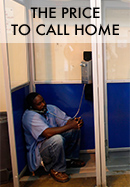 The Price to Call Home State-Sanctioned Monopolization in the Prison Phone Industry Prison Policy Initiative, September, 2012“The prison telephone market is structured to be exploitative because it grants monopolies to producers, and because the consumers- the incarcerated persons and their families- have no comparable alternative ways of communicating.”
-
Bail Fail Why the U.S. Should End the Practice of Using Money for Bail Justice Policy Institute, September, 2012“Although judges and judicial officers may deny or simply not be aware of any racial bias [...], there is strong evidence that these bail decision makers consider the lost freedom caused by pretrial detention to be a greater loss for whites than for blacks”
-
Trends in Juvenile Justice State Legislation 2001-2011 National Conference of State Legislatures, June, 2012“States are reevaluating their juvenile justice systems [to] produce better results for kids at lower cost. This has contributed to a state legislative trend to realign fiscal resources from state institutions toward more effective community-based services”
-
At America's Expense The Mass Incarceration of the Elderly ACLU, June, 2012“Based on statistical analyses of available data, this report estimates that releasing an aging prisoner will save states, on average, $66,294 per year per prisoner, including healthcare, other public benefits, parole, and any housing costs or tax revenue.”
-
Squeeze Play The history of canteen prices and inmate pay The Prison Mirror, May, 2012“Not since 1960s have Minnesota Inmates been paid so little compared to outside wages. This makes it hard to afford canteen, which ultimately limits the money that could be flowing into programs that ultimately make Minnesota safer.”
-
A Juvenile Justice Reprieve: California's 2012 Mid-Year Budget Center on Juvenile and Criminal Justice, May, 2012“Counties cannot continue to oppose both budget triggers which attempt to more realistically balance DJF fees, and juvenile justice realignment, which transitions away from an archaic and dysfunctional state system to build on county successes.”
-
Justice Reinvestment in Pennsylvania A Comprehensive Public Safety Plan for the Commonwealth Council of State Governments Justice Center, May, 2012(Comprehensive public safety plan that reduces costly inefficiencies in PA's criminal justice system and reinvests savings in law enforcement strategies that deter crime, local diversion efforts that reduce recidivism & services for crime victims.)
-
The Costs and Benefits of Community-Based Substance Abuse Treatment in the District of Columbia Urban Institute, April, 2012“On average, we find there is a 55 percent chance that a community-based substance abuse treatment (CBSAT) program serving 150 people would yield benefits that exceed its costs. The median benefit of CBSAT is $615 per person higher than its costs.”
-
Justice Assistance Grant (JAG) Program, 2011 Bureau of Justice Statistics, March, 2012“The total 2011 allocation for the JAG funding was approximately $368.3 million, of which $359.4 million went to states and $8.9 million to territories and the District of Columbia.”
-
Reallocating Justice Resources A Review of 2011 State Sentencing Trends Vera Institute of Justice, March, 2012“Early in the current recession, many states focused only on achieving quick cost savings. Now state lawmakers are considering multiple, related policy changes that will have long-term fiscal impacts.”
-
Improving Budget Analysis of State Criminal Justice Reforms A Strategy for Better Outcomes and Saving Money Center on Budget and Policy Priorities and the American Civil Liberties UNion, January, 2012“States did not write fiscal notes for about 40 percent of the bills. Two states, Delaware and Hawaii, never write fiscal notes for criminal justice bills. Others, including South Dakota and Vermont, rarely write them.”
-
The Price of Prisons What Incarceration Costs Taxpayers Vera Institute of Justice, January, 2012“[T]he total taxpayer cost of prisons in the 40 states that participated in this study was 13.9 percent higher than the cost reflected in those states' combined corrections budgets. The total price to taxpayers was $38.8 billion...”
-
State Expenditure Report Examining Fiscal 2010-2012 State Spending National Association of State Budget Officers, 2012“Corrections accounted for 3.1 percent of total state expenditures in fiscal 2011 and 7.5 percent of general funds.”
-
Correctional Spending Trends Budget Information Report Oregon Legislative Fiscal Office, September, 2011“The Department of Correction's budget is one of the largest commitments of resources in the state budget representing roughly 9.1% of the combined General Fund and Lottery Funds in the 2011-13 legislatively adopted budget.”
-
Crisis in the Courts Defining the Problem American Bar Association, August, 2011“[T]he Legal Services Corportation Budget for FY2011 was reduced an additional 3.8% half way through that budget cycle, even as the number of Americans eligible for civil legal aid was pushed by the Recession to an all-time high of 57 Million.”
-
Inmate Fees as a Source of Revenue Source of Challenges Massachusetts Executive Office of Public Safety and Security, July, 2011“[A]dditional fees would increase the number of inmates qualifying as indigent, increase the financial burdens on the inmate and their family, and jeopardize inmates' opportunities for successful reentry.”
-
System Overload The Costs of Under-Resourcing Public Defense Justice Policy Institute, July, 2011“In state-based public defender offices, 15 of the 19 reporting state programs exceeded the maximum recommended limit of felony or misdemeanor cases per attorney.”
-
Sentencing Reform Amid Mass Incarceration - Guarded Optimism Sentencing Project, May, 2011“A number of state have scaled back mandatory sentencing policies...”
-
Justice Assistance Grant (JAG) Program 2010 Bureau of Justice Statistics, April, 2011“The five states eligible to receive the largest total state allocation included California ($51.1 million), Texas ($34.0 million), Florida ($30.9 million), New York ($24.8 million), and Illinois ($18.9 million).”
-
FY 2010 Operating Per Capita Cost Report Cost Identification and Comparison of State and Private Contract Beds ARIZONA DEPARTMENT OF CORRECTIONS, April, 2011“An inmate health care cost factor is identified and deducted due to the limitations imposed by the private contractors [...][because] unlike the private contractors, the ADC is required to provide medical and mental health services to inmates [...].”
-
A Billion Dollars and Growing: Why Prison Bonding is Tougher on Florida's Taxpayers Than on Crime Collins Center for Public Policy; Florida TaxWatch, April, 2011“Little known and not well understood by taxpayers, this funding approach has saddled future generations of Floridians with over a billion dollars in debt without appreciably increasing public safety.”
-
65 Million The Case for Reforming Criminal Background Checks for Employment The National Employment Law Project, March, 2011(Too often, employers, staffing firms, and screening firms disregard civil rights and consumer protections, categorically banning people with criminal records from employment.)
-
Fact Sheet on President Obama's FY2012 Budget Doing the Same Thing and Expecting Different Results Justice Policy Institute, February, 2011“[The] continued funding pattern will likely result in increased costs to states for incarceration that will outweigh the increased federal revenue for local law enforcement, with marginal public safety benefits.”
-
Smart on Crime Recommendations for the Administration and Congress The Smart on Crime Coalition, February, 2011“Smart on Crime seeks to provide federal policymakers in both Congress and the Administration a comprehensive, systematic analysis of the current challenges facing state and federal criminal justice systems and recommendations to address those challenges.”
-
Justice Assistance Grant Program, 2012 Bureau of Justice Statistics, 2011“The five largest total state allocations included California ($32.9 million), Texas ($22.7 million), Florida ($19.5 million), New York ($16.0 million), and Illinois ($12.0 million).”
-
Banking on Bondage Private Prisons and Mass Incarceration ACLU, 2011(The evidence that private prisons provide savings compared to publicly operated facilities is highly questionable, and certain studies point to worse conditions in for-profit facilities.)
-
Ex-offenders and the Labor Market Center for Economic and Policy Research, November, 2010“Given our estimates of the number of ex-offenders and the best outside estimates of the associated reduction in employment suffered by ex-offenders, our calculations suggest that in 2008 the U.S. economy lost the equivalent of 1.5 to 1.7 million workers.”
-
The Continuing Fiscal Crisis in Corrections Setting a New Course Vera Institute of Justice, October, 2010“Officials are recognizing—in large part due to 30 years of trial and error, backed up by data—that it is possible to reduce corrections spending while also enhancing public safety.”
-
The Hidden Costs of Criminal Justice Debt Brennan Center for Justice, October, 2010“Although 'debtors' prison' is illegal in all states, reincarcerating individuals for failure to pay debt is, in fact, common in some -- and in all states new paths back to prison are emerging for those who owe criminal justice debt.”
-
In For a Penny The Rise of America's New Debtors' Prisons American Civil Liberties Union, October, 2010“Incarcerating indigent defendants unable to pay their legal financial obligations often ends up costing much more than states and counties can ever hope to recover.”
-
Department of Corrections-Prison Population Growth A Report to the Arizona Legislature State of Arizona Office of the Auditor General, September, 2010“The State paid more per inmate in private prisons that for equivalent services in state facilities.”
-
Collateral Costs Incarceration's Effect on Economic Mobility Pew Charitable Trust, Economic Mobility Project, September, 2010“Serving time reduces hourly wages for men by approximately 11 percent, annual employment by 9 weeks and annual earnings by 40 percent.”
-
Drawing Blood from Stones: Legal Debt and Social Inequality in the Contemporary United States Alexes Harris, Heather Evans, and Katherine Beckett, University of Washington, May, 2010“[F]indings suggest that monetary sanctions create long-term legal debt and significantly extend punishment's effects over time.”
-
Pruning Prisons How Cutting Corrections Can Save Money and Protect Public Safety Justice Policy Institute, May, 2009(The United States spends spend billions to incarcerate people in prisons and jails with little impact on public safety, but redirecting funds to community-based alternatives will decrease prison populations, save money, and preserve public safety.)
-
Fact Sheet on FY2010 Department of Justice Budget Justice Policy Institute, May, 2009(The Factsheet on 2010 Department of Justice Budget finds that the 2010 DOJ budget directs more money to law enforcement than prevention with the likely long-term outcome being increased arrests, incarceration, and money spent on corrections.)
-
The Costs of Confinement Why Good Juvenile Justice Policies Make Good Fiscal Sense Justice Policy Institute, May, 2009(Cost of Confinement shows that states spend billions to imprison youth in secure facilities, but could save money, preserve public safety, and improve life outcomes for individual youth by redirecting the money to community-based alternatives.)
-
One in 31: The Long Reach of American Corrections The Pew Center on the States, March, 2009“For eight geographically diverse states [...] 88% of the increase in corrections spending was directed towards prisons, which now consume nearly nine out of every ten state corrections dollars.”
-
Justice Re-investment in New Orleans Spatial Information Design Lab, February, 2009“By 2007, the citywide incarceration rate was at 57 percent of its 2003 level, while the overall population was estimated at 71 percent of its pre-Katrina figure.”
-
The Impact of Mass Incarceration on Poverty Crime and Delinquency, February, 2009“From an empirical standpoint, the results from the current analysis are quite clear; mass incarceration has played a major role in increasing poverty rates.”
-
Compounded Disadvantage Race, Incarceration, and Wage Growth National Poverty Center, October, 2008“Multilevel growth curve models show that black inmates earn considerably less than white inmates, even after considering human capital variables and prior work histories. Furthermore, racial divergence in wages among inmates increases following release...”
-
Profiting from the Poor A Report on Predatory Probation Companies in Georgia Southern Center for Human Rights, July, 2008“The privatization of misdemeanor probation has placed unprecedented law enforcement authority in the hands of for-profit companies that act essentially as collection agencies.”
-
Repaying Debts Justice Center, October, 2007“Financial pressures and paycheck garnishment resulting from unpaid debt can increase participation in the underground economy and discourage legitimate employment.”
-
State Funding for Corrections in FY 2006 and FY 2007 National Conference of State Legislatures, May, 2007“Nationally, FY 2006 general fund corrections spending grew 10 percent above FY 2005 levels.”
-
Impacts of Jail Expansion in New York State: A Hidden Burden Center for Constitutional Rights, May, 2007“The growth in the number of people held in jail has not been caused by an increase in crime, as index crime reports decreased by 30 percent in the last decade in upstate and suburban New York overall.”(Construction of new prisons in New York poses a financial, employment and environmental burden on communities.)
-
Public Safety, Public Spending: Forecasting America's Prison Population 2007-2011 Public Safety Performance Project of The Pew Charitable Trusts, February, 2007“This report provides forecasts for prison populations and incarceration rates for all 50 states.”
-
Toxic Sweatshops: How UNICOR Prison Recycling Harms Workers, Communities, the Environment, and the Recycling Industry Prison Activist Resource Center, October, 2006“UNICOR facilities repeatedly failed to provide proper recycling procedures to captive laborers and staff supervisors.”
-
Saving Futures, Saving Dollars The Impact of Education on Crime Reduction and Earnings Alliance for Excellent Education, September, 2006“[A]bout 75 percent of America's state prison inmates,almost 59 percent of federal inmates, and 69 percent of jail inmates did not complete high school.”
-
Task Force on California Prison Crowding National Council on Crime and Delinquency, August, 2006“Essential services, procedures, and structures designed to reduce recidivism, break the intergenerational cycle of violence, and save taxpayer dollars for more positive expenditures will reduc[e] crime in our communities and enhanc[e] public safety.”
-
Foreign Nationals in Michigan Prisons an examination of the costs Citizens Alliance on Prisons and Public Spending, April, 2006“The Governor should appoint an independent panel to review all alien prisoners, making recommendations for commutation and culling those who are eligible for removal before serving their entire sentence. The Governor should then request their removal.”
-
Justice Expenditure and Employment in the United States, 2003 Bureau of Justice Statistics, April, 2006
-
Cost-Effective Youth Corrections Rationalizing the Fiscal Architecture of Juvenile Justice Systems Justice Policy Institute, March, 2006“The experience of secure confinement can change the kind of routine law-breaking that is often part of adolescence into a stable pattern that, unfortunately, endures over time. States are actually paying additional money to generate worse outcomes.”
-
Welfare and Punishment: The relationship between welfare spending and imprisonment Crime and Society Foundation, 2006“[W]e find that countries that spend a greater proportion of GDP on welfare have lower imprisonment rates and that this relationship has become stronger over the last 15 years.”
-
Fees Paid by Jail Inmates: Fee Categories, Revenues, and Management Perspectives in a Sample of U.S. Jails National Institute of Corrections, December, 2005“Survey responses indicate that 90% of the jails that responded are currently charging jail inmate fees.”
-
Offender Work Report, 2004 Washington State Jail Industries Board, October, 2005“Work within correctional facilities totaled 2,674,877 labor hours in 2004. Jails reported 113,560 labor hours performed on behalf of not-for-profit community organizations...”
-
The Economics of Juvenile Jurisdiction Urban Institute, September, 2005
-
Penny-Wise & Pound-Foolish: Assaultive offender programming and Michigan's prison costs Citizens Alliance on Prisons and Public Spending and American Friends Service Committee, Criminal Justice Program, April, 2005(Michigan Department of Corrections offers assaultive offender programming for people in prison for assault, the report examines the administrative shortfalls of this program and proposes solutions.)
-
Cost-Saving or Cost-Shifting: The Fiscal Impact of Prison Privatization in Arizona Private Corrections Institute, February, 2005
-
Protecting the Future: Moderating West Virginia's Budget Crisis Grassroots Leadership, February, 2005
-
Offender Work Report, 2002 Washington State Jail Industries Board, 2005
-
When Violence Hits Home: How Economics and Neighborhood Play a Role National Institute of Justice, September, 2004
-
Changing Fortunes or Changing Attitudes? Sentencing and Corrections Reforms in 2003 Vera Institute of Justice, August, 2004
-
State Prison Expenditures, 2001 Bureau of Justice Statistics, June, 2004
-
Justice Expenditure and Employment in the United States, 2001 Bureau of Justice Statistics, May, 2004
-
Locked Up: Corrections Policy in New Hampshire Paper 2: Options for Reducing the Prison Population and the Cost of Incarceration New Hampshire Center for Public Policy Studies, February, 2004
-
Offender Work Report, 2003 Washington State Jail Industries Board, 2004
-
2002 State Expenditure Report National Association of State Budget Officers, November, 2003
-
Smart On Crime: Positive Trends in State-Level Sentencing and Corrections Policy Families Against Mandatory Minimums, November, 2003
-
Dollars, Sentences and Long-Term Public Safety Managing a Fiscal Crisis with a Goal of Long-Term Public Safety Middle Ground Prison Reform, September, 2003(Arizona sentencing policy recommendations)
-
Ohio's Priorities? Prison Policy Initiative, September, 2003(charts of racial disparities in OH incarceration, and how much money is spent on education vs. prisons)
-
Upstate New York's Population Plateau: The Third-Slowest Growing 'State' Brookings Institution, August, 2003“Nearly 30 percent of new residents in Upstate New York in the 1990s were prisoners.”
-
Dollars and Sentences: Legislators' Views on Prisons, Punishment, and the Budget Crisis Vera Institute of Justice, July, 2003
-
Corporate Strategies for Electronics Recycling: A Tale of Two Systems Silicon Valley Toxics Coalition, June, 2003(compares Dell's use of prison labor with the practices of HP)
-
EPA helps prisons get up to speed on environmental compliance Environmental Protection Agency, June, 2003
-
Drug Policies in the State of Michigan: Economic Effects Justice Policy Institute, May, 2003
-
Borrowing Against the Future: The Impact of Prison Expansion on Arizona Families, Schools and Communities Grassroots Leadership and Arizona Advocacy Network, April, 2003
-
Cutting Correctly in Maryland Justice Policy Institute, February, 2003(lowering prison population will ease budget crisis)
-
Incarceration and Correctional Spending in Colorado A Legislator's Handbook on Criminal Justice Policy, 2003 Colorado Criminal Justice Reform Coalition, February, 2003
-
Big Prisons, Small Towns: Prison Economics in Small Rural America Sentencing Project, February, 2003
-
Building Bridges: From Conviction to Employment A Proposal to Reinvest Corrections Savings in an Employment Initiative Council of State Governments, January, 2003
-
Cutting Correctly, One Year Later: State Budget Crisis and Corrections Reform Justice Policy Institute, January, 2003
-
Spending More on Prisons than Higher Education Massachusetts Taxpayers Foundation, 2003(has official and inflation adjusted comparison from FY 1968 to 2004)
-
The Economic Impacts of the Prison Development Boom On Persistently Poor Rural Places Tracey Farrigan and Amy Glasmeier, 2003
-
Community Corrections in Ohio: Cost Savings and Program Effectiveness Policy Matters Ohio and Justice Policy Institute, December, 2002(Ohio has realized considerable cost savings by using community corrections programs instead of prison)
-
Seeking Balance: Reducing Prison Costs in Times of Austerity Center on Juvenile and Criminal Justice, December, 2002
-
Building a prison economy in rural America Tracy Huling, October, 2002
-
Blueprint for Cost-Effective Pretrial Detention, Sentencing, and Corrections Systems American Bar Association, August, 2002
-
California Voters' Reaction to Proposed Cuts in the Budget California HealthCare Foundation, July, 2002“large proportions of voters favored cutbacks in state prisons and corrections (46 percent)”(See press release or page 4 of graphical summary.)
-
State Expenditure Report, 2001 National Association of State Budget Officers, July, 2002(See chapter 5)
-
Cutting Correctly: New Prison Policies for Times of Fiscal Crisis Justice Policy Institute, February, 2002
-
Justice Expenditure and Employment in the United States, 1999 Bureau of Justice Statistics, February, 2002“The extracts present public expenditure and employment data pertaining to justice activities in the United States, including police, judicial and legal services, and correctional activities.”
-
State Sentencing and Corrections Policy in an Era of Fiscal Restraint Sentencing Project, February, 2002
-
Prison Expansion in a Time of Austerity: An Analysis of the Governor's Proposed New Prison in Delano Center on Juvenile and Criminal Justice, January, 2002(California)
-
Offender Work Report, 2001 Washington State Jail Industries Board, 2002
-
UNICOR 2001 Annual Report Bureau of Prisons, 2002(UNICOR is the trade name for the federal prison industries)
-
Jail Breaks: Economic Development Subsidies Given to Private Prisons Good Jobs First, October, 2001
-
Locked Up: Corrections Policy in New Hampshire Paper 1: The Fiscal Consequences of Incarceration Policies, 1981 to 2001 New Hampshire Center for Public Policy Studies, September, 2001
-
Offender Work Report, 2000 Washington State Jail Industries Board, 2001
-
Justice Expenditure and Employment in the United States, 1995 Bureau of Justice Statistics, November, 1999
-
Regulating the American Labor Market: The Role of the Prison Industrial Complex David Ladipo, September, 1999
-
State Prison Expenditures, 1996 Bureau of Justice Statistics, August, 1999“presents comparative data on the cost of operating the Nation's State prisons”
-
Prisons as a Growth Industry in Rural America: An Exploratory Discussion of the Effects on Young African American Men in the Inner Cities Tracy Huling, consultant to the U.S. Commission on Civil Rights, April, 1999
-
Cost Savings in State Corrections: Medical treatment in the community for very ill offenders. Washington State Sentencing Guidelines Commission, December, 1998(it's an MSWord file)
-
The Prison Industrial Complex Eric Schlosser, Atlantic Monthly, December, 1998
-
New York State of Mind?: Higher Education vs. Prison Funding in the Empire State, 1988-1998 Justice Policy Institute, December, 1998
-
Class Dismissed: Higher Education vs. Corrections During the Wilson Years Justice Policy Institute, September, 1998(California)
-
U.S. Prison Spending Increases Faster than College Funding 1977-1995 ABC News, July, 1998(Interactive state atlas)
-
Is Maryland's System of Higher Education Suffering Because of Prison Expenditures? Justice Policy Institute, March, 1998
-
Truth In Sentencing: Availability of Federal Grants Influenced Laws in Some States General Accounting Office, February, 1998
-
Justice Expenditure and Employment Extracts, 1992 Bureau of Justice Statistics, January, 1997
-
Factories with Fences: The History of Federal Prison Industries Bureau of Prisons, May, 1996
-
Rural Prisons: An Update Calvin Beale, Department of Agriculture, Rural Development Perspectives, February, 1996“nonmetro counties continued to acquire prisons at a rate dramatically out of proportion to the percentage of the Nation's population that lives in such areas.”
-
Federal and State Prisons: Inmate Populations, Costs, and Projection Models, 1996 General Accounting Office, 1996
-
Prison as Industry New York State Coalition for Criminal Justice, 1994
-
Prisoner Labor: Perspectives on Paying the Federal Minimum Wage General Accounting Office, May, 1993(GAO testimony based on report is at the end of the PDF)
-
Justice Expenditure and Employment, 1990 Bureau of Justice Statistics, September, 1992“Federal Government spending on justice increased 128% in constant dollars per capita from 1971 to 1990, more than twice as fast as the 54.5% increase among State and local governments.”
-
The State Expenditure Report National Association of State Budget Officers, July, 1987“This report provides figures for actual Fiscal Year 1985 expenditures, estimated Fiscal Year 1986 expenditures..., and appropriated Fiscal Year 1987 expenditures.”
-
The Private Sector and Prison Industries National Institute of Justice, August, 1985“As of January 1985, there were 26 projects in which the private sector was involved with State-level prison industries. There has been a gradual growth [...] until 1980, when a marked increase occurred at a rate that continues to grow today.”
Pages Updated On: 25-Apr-2024 - 17:04:12
Links Engine 2.0 By: Gossamer Threads Inc.


