Prison Policy Initiative Alums
The success of the Prison Policy Initiative is due in large part to the students and other volunteers who give large gifts of time. We are proud to have worked with them and look forward to staying in touch with all of them. On this page you can learn more about some of our past volunteers and staff, their contributions, and their current work.
- Andrew Adams, 2011
- Natalie Aflalo, 2013
- Joshua Aiken, 2016-2017
- Erika Arthur, 2008
- Naila Awan, 2021-2023
- Arla Berman, 2006
- Brett Blank, 2007-2008
- Catherine Cain, 2014
- Jennifer Cioffi, 2012
- Alex Clark, 2017
- Rachel Corey, 2022-2023
- Lucius Couloute, 2017-2018
- Avi Cummings, 2009-2010
- Roxanne Daniel, 2019-2021
- JooHye DellaRocco, 2007
- Emile DeWeaver, 2021-2022
- Christian de Ocejo, 2010
- Emily Doll, 2013
- Andrea Fenster, 2020-2022
- Hillary Fenton, 2012
- Mack Finkel, 2018-2019
- Corey Frost, 2014-2016
- Rachel Gandy, 2015
- Will Goldberg, 2006-2007
- Sadie Gold-Shapiro, 2013-2014
- Daiana Griffith, 2019
- Sue Gershon, 2010
- Ellie Happel, 2005-2008
- Stephen Healy, 2001-2006
- John Hejduk, 2007-2008
- Tiana Herring , 2020-2022
- Sarah Hertel-Fernandez, 2014, 2017
- Rose Heyer, 2002-2006
- Kip Hustace, 2014
- Ben Iddings, 2006
- Ginger Jackson-Gleich, 2020-2021
- Alexi Jones, 2018-2021
- Elydah Joyce, 2014-2015
- Kris Kauffman, 2012
- Alex Kim, 2010-2011
- Yoo Eun Kim, 2014-2016
- Cara Kowalski, 2011
- Sarah Kowalski, 2001-2005
- Drew Kukorowski, 2011, 2012
- Lynnsey Lafayette, 2012
- Jenny Landon, 2019-2022
- Elena Lavarreda, 2008-2010, 2013
- Lauren Marcous, 2010
- Laura Meyer, 2011
- Corey Michon, 2016
- Ryan Morrow, 2004-05
- Yugo Nakai, 2006-2007
- Rebecca Neubauer, 2015-2016
- Elliot Oberholtzer, 2017
- Katie Rose Quandt, 2020-2022
- Bernadette Rabury, 2014-2022
- Stephen Raher, 2021-2022
- Stephanie Rainaud, 2012
- Jorge Renaud, 2018-2019
- Sophia Robohn, 2014
- Meghan Rudy, 2007
- Leah Sakala, 2008-2015
- Arielle Sharma, 2014
- Maanas Sharma, 2021
- Justine Sheffler, 2006
- Marbre Stahly-Butts, 2011
- Morgan Stone, 2010-2011
- Allison Tompkins, 2006
- Lindsie Trego, 2015
- Maddy Troilo, 2017-2019
- Sheila Vennell O'Rourke, 2010
- Alison Walsh, 2016
- Carson Whitelemons, 2011-2012
- Matt Widmer, 2003
- Tom Wiehl, 2012
- Emma Peyton Williams, 2022-2024
- Joseph Miles Wobbleton, 2015-2016
As a participant in our 2011 Alternative Spring Break program, Andrew Adams helped to complete our Primer for reporters on county or municipal redistricting & prison-based gerrymandering before calling dozens of rural reporters to introduce them to the problem of prison-based gerrymandering. Andrew studied law at City University of New York School of Law.
As a first year student at Smith College, Natalie Aflalo helped out one afternoon a week with our prison gerrymandering and other projects in the spring of 2013.
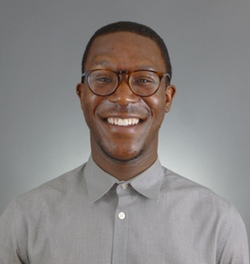 Joshua Aiken, who served as the Policy Fellow from 2016-2017, was the author of the reports "Reinstating Common Sense" (cited by The New York Times) and "Era of Mass Expansion: Why State Officials Should Fight Jail Growth". While at the Prison Policy Initiative he also curated the research clearinghouse. Joshua is a J.D./Ph.D. Candidate in History and African-American Studies at Yale and prior to working at PPI received graduate degrees in Refugee Studies and History from the University of Oxford. He is also a poet and author of the 2023 Palette Poetry Chapbook Prize for his collection to be in & of.
Erika Arthur's research on prison-based gerrymandering in the summer of 2008 was published in Importing Constituents: Prisoners and Political Clout in California. California went on to be the fourth state in the nation to end prison-based gerrymandering. Erika is currently on staff at Atlantic Black Box, a nonprofit dedicated to expanding the field of historical recovery by researching and reckoning with New England's role in colonization and the global economy of slavery, while recentering the stories of Black and Indigenous people and other marginalized voices.
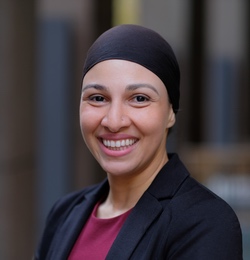 Naila Awan was the Director of Advocacy at Prison Policy Initiative. Naila is a civil and human rights lawyer with years of experience collaborating with, supporting, and representing Black- and Brown-led grassroots organizations in policy reform and litigation efforts. She was the co-author of Executive inaction, a report that reveals how states and the federal government fail to use commutations as a release mechanism. Prior to joining Prison Policy Initiative, Naila worked for multiple civil rights organizations and served on the legislative staff for Congresswoman Tammy Baldwin.
Naila previously served as Senior Counsel at Dēmos, where her work centered on combating voter suppression and expanding access to the ballot for traditionally marginalized communities. In this role, she led a cross-functional project to end the disenfranchisement people experience when then come into contact with the criminal legal system, testified before Congress, and served as counsel in A. Philip Randolph Institute v. Husted, a U.S. Supreme Court case challenging Ohio’s voter purge practices, and Mays v. LaRose, a class action seeking to expand access to the ballot for voters detained in jail. She also co-authored Enfranchisement for All: The Case for Ending Penal Disenfranchisement in Our Democracy and How to End De Facto Disenfranchisement in the Criminal Justice System.
Naila holds a L.L.M in International Legal Studies from the New York University School of Law, a J.D from the Ohio State University’s Moritz College of Law, and a B.A from Miami University of Ohio.
In 2006, Arla Berman worked on projects that were later published as Phantom constituents in the Empire State and the Democracy Toolkit.
As a 2006 law clerk, Brett Blank led our research that was published as Importing Constituents: Prisoners and Political Clout in Illinois. He also published Prisons Warp Vote on TomPaine.com which explained how the prison industry exploits a loophole in Reynolds v. Sims to exert direct influence over the political process. He graduated from the Western New England College School of Law in May 2009.
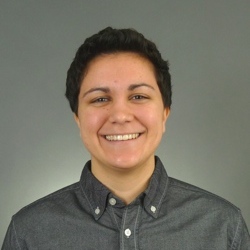 As a January Term 2014 intern, Catherine Cain's projects included creating a database of progressive legislators and contributing to our Locator Tool before returning to work with us in the Fall of 2014.
As a participant in our 2012 Alternative Spring Break program, Jennifer Cioffi helped us build a database that will help end prison-based gerrymandering in Nevada and Mississippi. She graduated from the University of Connecticut School of Law in 2013.
 Alex Clark was a Summer 2017 research intern at the Prison Policy Initiative where she worked on sheriff incumbency and campaign finance and the monopoly dominance of certain companies that sell phone calls to the families of incarcerated people. She also worked with Solitary Watch on a forthcoming report. Her written work included New data: The rise of the “prosecutor politician” and Seizing Chicago: Drug stings and asset forfeiture target the poor. Alex holds a BA in Political Science from the George Washington University and in 2022, will receive her Master’s degree in International Affairs from Columbia University.
Rachel Corey was a consultant for the Prison Policy Initiative, supporting our research and advocacy work. Rachel is a scholar of the criminal legal system and former Executive Director of the Boston-based Criminal Justice Policy Coalition, a nonprofit that organized campaigns and mobilized coalitions in support of progressive criminal legal reform. She has conducted research with Andrea Ritchie at the Barnard Center for Research on Women’s Social Justice, Dr. Natasha Frost at Northeastern University, and Dr. Bruce Western at the Harvard Kennedy School, and was an adjunct lecturer in geography at the College of Staten Island.
At the Prison Policy Initiative, Rachel provided research support on the prison phone industry, the ongoing nationwide trend of local jail expansion, and the expansion of voting access for eligible voters in jails. She is a Ph.D student in Human Geography at the CUNY Graduate Center.
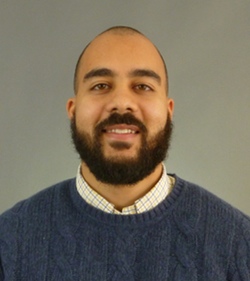 From 2017-18, while working on his dissertation, Lucius Couloute worked with the Prison Policy Initiative as a Policy Analyst. He led our work examining reentry and the effects of criminalization, as well as our campaign to bring accountability to the video calling industry. Lucius received his PhD in Sociology from the University of Massachusetts Amherst, examining the structural and cultural dynamics of reentry systems. His academic work has appeared in Sociology Compass and some of his groundbreaking analyses for the Prison Policy Initiative tackled homelessness, (un)employment, and educational attainment among formerly incarcerated people. In 2019, Lucius joined Suffolk University's faculty as an Assistant Professor of Sociology, and he joined the Prison Policy Initiative's Advisory Board.
Avi Cummings is a writer living in New York City. He joined the Prison Policy Initiative as a research intern in 2009. Among other projects, he co-authored a report on prison gerrymandering in Maryland, leading to that state being the first in the nation to enact a law requiring that incarcerated people be counted at home for redistricting purposes. He also researched the impacts of incarceration on families and communities. A former staff and collective member of the Sylvia Rivera Law Project, Avi currently works at the Barnard Center for Research on Women and is a member of Jewish Voices for Peace.
 From 2019-21, Smith College student Roxanne Daniel served as a research and communications intern. A government and economics major and Florida native, Roxanne previously volunteered with her local Okaloosa County Democrats, and in 2018 interned with the ACLU of Florida's Amendment 4 campaign, which pushed for voting rights restoration for people with most felony convictions. Through that campaign, Roxanne learned from formerly incarcerated colleagues about prison conditions and about the barriers facing people after release. At the Prison Policy Initiative, Roxanne provided research support for a number of projects. She also published a 50-state survey of healthcare policies concerning pregnant people in prisons.
As part of our 2007 Alternative Spring Break program, JooHye DellaRocco calculated how the prison miscount harms democracy in rural Tennessee, co-authoring Phantom Constituents in Tennessee's Boards of County Commissioners. She graduated in 2007 with a Master of Arts degree in Criminal Justice from the State University of New York at Albany.
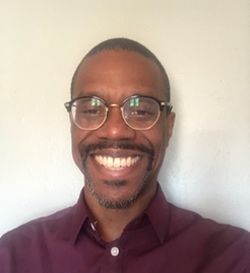 Emile DeWeaver was the Prison Policy Initiative's Senior Strategist in Advocacy. He is a community organizer, journalist, and literary writer who co-founded Prison Renaissance while serving a life sentence in prison. While incarcerated in California, Emile successfully organized for the passage of Senate Bills 260, 261, and 394 which together create a second chance for people who were given extreme sentences for crimes committed before they turned 26. His writing has been featured by the Brennan Center, Mercury News, SF Chronicle, SF Bay View, Colorlines, and TruthOut. Prior to his work with the Prison Policy Initiative, Emile worked as a consultant for social justice organizations like the Ella Baker Center for Human Rights and Prison Law Office.
As a participant in our 2010 Alternative Spring Break program, Christian de Ocejo helped prepare our reports Importing Constituents: Prisoners and Political Clout in Connecticut and Fixing prison-based gerrymandering after the 2010 Census: A 50 state guide. The Connecticut report led to legislation being introduced in that state, and the 50 state report was cited in a New York Times editorial. Christian graduated from the University of Connecticut School of Law in 2012.
Emily Doll, was a 1L at the University of North Carolina School of Law when she performed research for us over winter break about the history of a provision in the National Municipal League's Model State Constitution (Section 4.04(b), 6th ed., 1963) that prohibits prison gerrymandering.
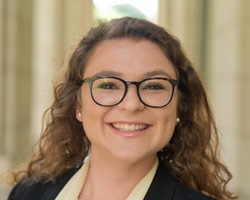 Andrea Fenster was a Staff Attorney and is admitted to the District of Columbia Bar. She is the co-author of Slamming the Courthouse Door: 25 years of evidence for repealing the Prison Litigation Reform Act and supported our work to end prison gerrymandering. Andrea is a graduate of Georgetown University Law Center, where she served as a student attorney in the Criminal Defense and Prisoner Advocacy Clinic and a Notes Development Editor for the American Criminal Law Review. Andrea has extensive experience in both direct service and impact litigation, and has interned at organizations including the Public Defender Service for the District of Columbia, Equal Justice Under Law, and the Prison Law Office. Andrea holds a B.A. from American University.
Sue Gershon came to us from our partner Demos in 2010. She wrote the article 20 years ago, California's Attorney General endorsed counties' response to prison count, and helped to prepare a half dozen fact sheets and a over a thousand individualized letters to county officials in rural counties that had large prisons. In January 2011, she will be joining the Boston office of the Public Interest Network as Associate General Counsel.
Hillary Fenton was a Prison Policy Initiative law clerk in 2012 where she investigated prison-based gerrymandering in county and municipal governments. Some of her findings are available in articles she authored about Arkansas, California and Louisiana. She graduated from the Boston College School of Law in May 2014. In August 2014, she started working as a public defender in the Committee for Public Counsel Services Worcester office.
 Mack Finkel provided programming and statistical analysis support for policy reports, including Failure should not be an option: Grading the parole release systems of all 50 states, and State of phone justice: Local jails, state prisons and private phone providers. Mack works as the Data & Analytics Director at SEIU Healthcare PA, and lives in Philadelphia. Previously, Mack worked for The Bail Project, GMHC (Gay Men’s Health Crisis), and the New York Civil Liberties Union.
 Corey Frost led our research on the correctional standards in order to support the Prison Policy Initiative's work fighting to end letter bans in local jails. He is the author of Protecting Written Family Communication in Jails: A 50-State Survey, the first draft of which he prepared as a participant in our Alternative Spring Break program. He graduated from the University of North Carolina School of Law in May 2016, and served as a Fellow at Legal Aid of North Carolina in Fall 2016.
 Rachel Gandy, an LBJ School of Public Affairs & UT School of Social Work graduate student at the University of Texas at Austin, joined us as an intern for Summer 2015. Her work included analyses of the geographic patterns in the racial disparites between incarcerated people and prison staff, the death penalty, the differing views on confidence in the police by Blacks and Whites, the parole failures behind New York State's elderly prison boom, and explaining explaining Texas' overnight prison boom. She graduated in 2016.
William Goldberg was a Prison Policy Initiative intern in 2006 and a research associate in 2007. Among other projects, he wrote Imprisoned in Low Wages: Limited access to education for people in prison leads to economic exclusion in the July/August 2007 issue of Dollars & Sense and co-authored our reports The Geography of Punishment and Phantom Constituents in the Empire State.
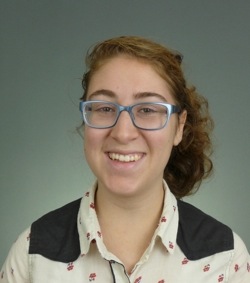 Sadie Gold-Shapiro worked with the Prison Policy Initiative one or two afternoons a week while she was a student at Smith College. She curated the Research Clearinghouse, and her recent projects have included cross-checking our annotations of correctional facilities in the 2010 Census and researching CenturyLinks's call termination practices for our Please Deposit All of Your Money: Kickbacks, Rates and Hidden Fees in the Jail Phone Industry report.
Daiana Griffith was a January 2019 research intern at the Prison Policy Initiative, during her senior year at Mount Holyoke College. For her internship project, she explained the research showing that higher rates of homelessness lead to higher risk of justice involvement for queer youth, in her briefing Why LGBTQ youth are more at risk of incarceration. Previously, Daiana worked as a research assistant for the Politics Department at Mount Holyoke and as an intern and volunteer contributing to research, communications, programs, and policy advocacy at organizations including Black and Pink, Voices from Inside, and the Massachusetts Coalition for the Homeless.
As an undergraduate, Ellie Happel researched how the New York City council's use of flawed Census Bureau counts of the Rikers Island population to draw council districts distorts electoral democracy. This research won her the 2005 Borgman Prize for the best senior thesis in the social sciences at New York University, and her findings were included in our report Phantom Constituents in the Empire State: How Outdated Census Bureau Methodology Burdens New York Counties.In 2011, Ellie graduated from NYU School of Law, where she was a Root Tilden Kern scholar. Ellie pursued racial justice work, including spending one year with the Equal Justice Initiative and a summer as a public defender. Upon graduation, Ellie moved to Haiti, and her work has focused on justice issues in Haiti, and on U.S. policy towards Haiti, since. Currently, Ellie is a staff attorney, adjunct professor, and the Haiti Project director with the Global Justice Clinic of NYU School of Law.
Stephen Healy co-founded the Prison Policy Initiative in 2001. He is currently an Associate Professor of Geography and Urban Studies at Western Sydney University in Australia.
As a 2006 law clerk, John Hejduk wrote Census Bureau's Prisoner Count Hurts Ohio Democracy and co-wrote Importing Constituents: Prisoners and Political Clout in Wisconsin. He will graduate from the Western New England College School of Law in May 2009.

 As a sophomore at Smith College, Sarah Hertel-Fernandez helped out as a intern in the Spring Semester of 2014, and was a part-time Research Associate in the summer. Sarah returned in the summer of 2017 to lead a reorganization of our data visualizations and our research clearinghouse. Sarah is a public librarian and director at Belding Memorial Library in Ashfield.
Kip Hustace came from Stanford Law School for Alternative Spring Break 2014 where he investigated prison gerrymandering in Colorado, Florida, Georgia, Kansas, Louisiana, Missouri, Ohio, South Carolina, Texas, and Wisconsin school boards. After graduating law school, Kip worked as a staff attorney at MALDEF (Mexican American Legal Defense and Educational Fund) in Los Angeles, litigating voting rights and school-to-prison pipeline cases, and currently is a Assistant Professor of Law at Seattle University School of Law, where he teaches Torts and Federal Indian Law and research at the intersection of Indigenous law, civil rights, civil procedure, and the law of democracy.
Rose Heyer developed that GIS methodology for the Prisoners of the Census project, enabling us to quickly calculate how Census Bureau's prison miscount distorts representative democracy. She produced our most popular map U.S. Prison Proliferation, 1900-2000 and she co-authored Too big to ignore: How counting people in prisons distorted Census 2000, Importing Constituents: Prisoners and Political Clout in Massachusetts, Importing Constituents: Prisoners and Political Clout in Texas, Importing Constituents: Prisoners and Political Clout in Ohio, and Thirty-Two Years After Attica: Many More Blacks in Prison but not as Guards. Rose is now GIS and CAD consultant in California.
In 2006, Ben Iddings was the first editor of our legal resources for prisoners database. Ben did the hard work of the original compilation, allowing us to easily update the list each year. He graduated from the University of North Carolina School of Law and is now a public defender in Fort Collins, CO.
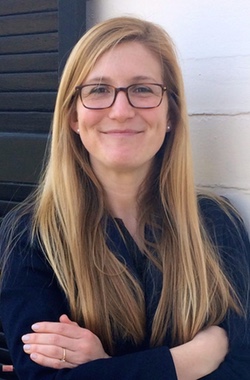 Ginger Jackson-Gleich joined the Prison Policy Initiative for a year as Policy Counsel to help advance our campaign to end prison gerrymandering.
While at the Prison Policy Initiative, she authored Rigging the Jury, a 50-state analysis of how states reduce jury diversity by excluding people with criminal records, and Eligible, But Excluded, a guide to removing barriers to jail voting.
Ginger Jackson-Gleich joined the Prison Policy Initiative for a year as Policy Counsel to help advance our campaign to end prison gerrymandering.
While at the Prison Policy Initiative, she authored Rigging the Jury, a 50-state analysis of how states reduce jury diversity by excluding people with criminal records, and Eligible, But Excluded, a guide to removing barriers to jail voting.
Ginger has been involved in criminal justice reform for over 15 years and joined us in the interim period between clerkships. As a Harvard Law School student, Ginger interned at the Criminal Law Reform Project of the ACLU, the Civil Rights Division of the Department of Justice, and the Alameda County Public Defender's Office. She also represented low-income clients with the Harvard Defenders and the Criminal Justice Institute and served as an editor of the Harvard Law Review She joined the law firm Rosen Bien Galvan & Grunfeld where she represents classes of people in California prisons and jails seeking to vindicate their constitutional rights related to conditions of confinement, access to mental health care, and disability accommodations.
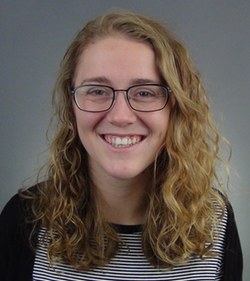 Alexi Jones worked as a Policy Analyst at the Prison Policy Initiative. She's a graduate of Wesleyan University, where she worked as a tutor through Wesleyan's Center for Prison Education. While at the Prison Policy Initiative, she authored two major reports about the excessive use of local jails. Arrest, Release, Repeat: How police and jails are misused to respond to social problems, co-authored with Wendy Sawyer, offers the first national estimates of how many individuals go to county jails each year, and how many are jailed repeatedly; it also finds troubling demographic and health disparities between people who were recently jailed and those who were not. Does our county really need a bigger jail? is designed as a guide for local policymakers and advocates to avoid unnecessary jail expansion. She also authored the 2020 report Reforms Without Results: Why states should stop excluding violent offenses from criminal justice reforms and the 2018 report Correctional Control: Incarceration and supervision by state. In 2021, Alexi started a Master in Public Affairs program at the LBJ School of Public Affairs at The University of Texas at Austin.
 Elydah Joyce, who attended Hampshire College and was a leader of the school's chapter of Students Against Mass Incarceration, joined us as a Research Associate for Summer 2015. Elydah has helped us with illustrations about our prison gerrymandering, sentencing enhancement zone, and video visitation projects. To see some of her work, see The prison phone industry's new business model: Fee Harvesting and Are campaign contributions the new "commission"? Analysis of Securus's contributions in Sacramento.
As a participant in our 2012 Alternative Spring Break program, Kris Kauffman helped us build a database that will support ending prison-based gerrymandering in Wyoming and Louisiana. He attended University of Connecticut School of Law.
As a policy intern from the Smith College School of Social Work (Class of 2012), Alex Kim helped with outreach to rural county and municipal officials about the solutions to prison-based gerrymandering.
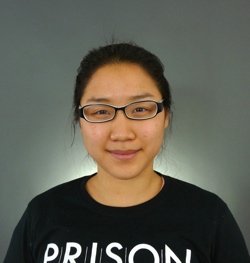 Yoo Eun Kim was a work-study Research Associate at PPI from Spring 2014 to Spring 2016. Among other responsibilities, she was responsible for our legislator outreach list. Read some of Yoo Eun's work here. She graduated from Smith College in May 2016.
As a participant in our 2011 Alternative Spring Break program, Cara Kowalski reached out to dozens of rural reporters in Oklahoma and Texas to introduce them to the problem of prison gerrymandering in county and municipal redistricting. Following graduation from SUNY Geneseo with degrees in sociology and geography in 2011, she ran a food bank in Spokane, WA through AmeriCorps and the Jesuit Volunteer Corps Northwest. In December 2019, Cara graduated with a Master's in Occupational Therapy from Russell Sage College in Troy, NY, and is now an occupational therapist at a rehabilitation hospital in White Plains, NY.
Sarah Kowalski co-founded the Prison Policy Initiative in 2001. After she graduated from Smith College in 2003, she lived in China teaching English. Since moving back to America in 2008, Sarah has worked as a Mandarin Chinese teacher and serves the English Language Learners population in urban districts. She also serves as Social Justice Task Force Co-coordinator at the Unitarian Universalist Society of Greater Springfield.
As a participant in our 2011 Alternative Spring Break program, Drew Kukorowski helped to complete our Primer for reporters on county or municipal redistricting & prison-based gerrymandering before calling dozens of rural reporters to introduce them to the problem of prison-based gerrymandering.
After graduating from the University of North Carolina School of Law, Drew returned to the Prison Policy Initiative for 4 months in 2012 to help us investigate the extent -- and frequent avoidance -- of prison-based gerrymandering in rural counties and municipalities. Somehow he found the time to prepare a groundbreaking report, The Price To Call Home: State-Sanctioned Monopolization In The Prison Phone Industry, and worked with our partner SumOfUs to collect 36,690 public comments calling on the Federal Communications Commission to regulate the prison telephone industry. His work was cited in a New York Times editorial, in letters from Congress to the FCC, and in a major exposé of the industry on Bloomberg Businessweek. He also co-authored a follow up report, Please Deposit All of Your Money:
Kickbacks, Rates, and Hidden Fees in the Jail Phone Industry, exposing the prison phone industry's hidden fees, which saddle the families of incarcerated people with staggeringly high phone bills. You can also see Drew explain the issue on Russia Today.
Drew also has an M.A. in Philosophy from Tufts University and holds bar licenses in Maryland and North Carolina. He currently works at the Council for Children's Rights in Charlotte and defends children that are charged with crimes.
As a participant in our 2012 Alternative Spring Break program, Lynnsey Lafayette reached out to dozens of counties and municipalities in Georgia to determine how they handled the problem of prison gerrymandering. She also helped us build a database that will support ending prison gerrymandering in Nebraska. After graduating from George Mason University, from 2013-2017 Lynnsey worked as a Residential Manager at AIDS Athens in Athens, GA, a local non-profit providing services to community members with HIV/AIDS. Currently, Lynnsey is the Director of Development and Alumni Relations at the UGA College of Public Health. She also serves on UGA's Development and Alumni Relations Diversity, Inclusion, and Equity committee.
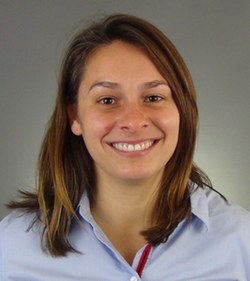 Jenny Landon was the Prison Policy Initiative’s first dedicated development staff member, and helped scale up the organization’s foundation and individual support to accommodate a rapidly growing staff. Previously, she worked as an organizer for anti-corruption campaigns and on the development team of a local community health organization. Jenny is a University of Massachusetts Amherst graduate with a degree in Social Thought and Political Economy.
 Elena Lavarreda is the New Jersey Political Director for SEIU 32BJ, a labor union that represents essential building service workers and fights for economic, social, and racial
justice for all working people. Elena’s first job after graduating from
Smith College in 2008 was as a research associate for the Prison Policy
Initiative. Among other projects, she co-authored reports about prison
gerrymandering in Massachusetts,
Pennsylvania, and
Oklahoma. The
Massachusetts report became the basis of a resolution that
passed the state legislature in August 2014. In 2013 Elena returned
as a consultant and researched the effects of prison gerrymandering on
school board districts. She lives in Brooklyn, NY with her dog and partner.
Elena Lavarreda is the New Jersey Political Director for SEIU 32BJ, a labor union that represents essential building service workers and fights for economic, social, and racial
justice for all working people. Elena’s first job after graduating from
Smith College in 2008 was as a research associate for the Prison Policy
Initiative. Among other projects, she co-authored reports about prison
gerrymandering in Massachusetts,
Pennsylvania, and
Oklahoma. The
Massachusetts report became the basis of a resolution that
passed the state legislature in August 2014. In 2013 Elena returned
as a consultant and researched the effects of prison gerrymandering on
school board districts. She lives in Brooklyn, NY with her dog and partner.
Lauren Marcous worked with us as a law clerk on a Public Interest Fellowship in the summer of 2010. She researched how prison-based gerrymandering harms democracy in dozens of rural counties around the country, and wrote articles about her findings in Alabama, Florida, and Georgia. Her Alabama article was picked up by the Atmore Advance. She graduated from the Western New England School of Law in 2012.
Laura Meyer worked with us on the Prisoners of the Census project, researching how prison gerrymandering harms democracy in counties and cities around the country. Laura graduated from Harvard Law School in 2010. She currently practices at Burch & Cracchiolo, PA, in Phoenix, Arizona, handling business litigation and appellate matters.
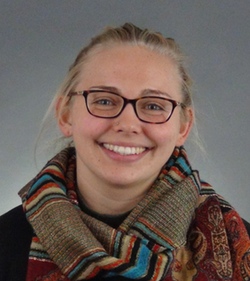 Corey Michon, a senior at Williams College joined us for two weeks in 2016 as part of our Alternative Spring Break program where she wrote about Uncovering Mass Incarceration's Literacy Disparity. She has previously worked with the Innocence Project in New Orleans, as well as the Political Science Department of Williams College conducting research on millennial racial attitudes.
Ryan Morrow's research while he was a student at Western New England College School of Law in 2004 and 2005 helped us understand the history of Kansas' practice of adjusting the census' counts of students and the military for the purposes of state legislative redistricting. Kansas' law demonstrated that it was technically possible to adjust the census to count particular populations at alternative locations and was an inspiration for the laws ending prison-based gerrymandering that were passed in Maryland and New York.
As part of our 2006 Alternative Spring Break program, Yugo Nakai researched how how the prison miscount distorts democracy in Illinois counties. This research was published in Importing Constituents: Prisoners and Political Clout in Illinois. His work helped to fine tune our research methodology eventually published in Democracy Toolkit. He graduated from the Benjamin N. Cardozo School of Law in 2007, worked as a legal services attorney for several years, and is now a software engineer.
As a first year first year law student at the University of North Carolina School of Law, Rebecca Neubauer helped us with a project on automatic suspension of drivers licenses for drug convictions unrelated to driving.
 Elliot Oberholtzer was a Research Associate at the Prison Policy Initiative in the fall of 2017. A graduate of Hampshire College, Elliot is a data analyst with experience in nonprofit communications and administration. He provided part-time research support, and published blog posts on the violent victimization of disabled people, the ways that the criminal justice system — from police to prisons — fails disabled people, and on the dismal state of transgender incarceration policies.
 Katie Rose Quandt was a Senior Editor at the Prison Policy Initiative. Katie Rose is a freelance journalist who writes about criminal justice, incarceration and inequality. She is a senior contributing writer at Solitary Watch, and has written for The Atlantic, Slate, Mother Jones, The Village Voice, The Appeal, The Nation, and In These Times, among others. She was a 2017 Soros Justice Media Fellow and a 2020 Alicia Patterson Foundation Fellow, and is pursuing a M.A. in Biography and Memoir at the CUNY Graduate Center.
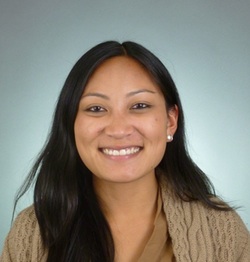 Bernadette Rabuy was a Senior Policy Analyst at the Prison Policy Initiative. Bernadette’s research focused on prison and jail visitation and making key criminal justice data accessible to the public. She co-authored the first comprehensive national report on the video calls industry, Screening Out Family Time: The for-profit video visitation industry in prisons and jails, which has played a key role in protecting in-person family visits in Portland, Oregon, California, and Texas. Her research was also essential to the movement that led the largest video call provider, Securus, to end its automatic bans on in-person visits.
Bernadette is passionate about making the criminal justice system easier to understand and therefore reform. She co-authored the report, Detaining the Poor: How money bail perpetuates an endless cycle of poverty and jail time, which finds that the median bail bond amount in the U.S. represents eight months of income for the typical detainee.
She is grateful to the following organizations that have allowed her to become a stronger advocate: Southern Poverty Law Center, Prison Law Office, National Council on Crime and Delinquency, VOTE, and Californians United for a Responsible Budget. She is a graduate of University of California, Berkeley and University of California, Los Angeles (UCLA) School of Law. You can say hi at @BRabuy.
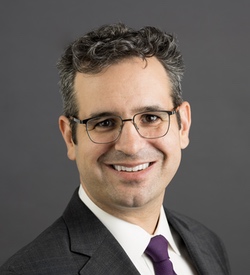 Stephen Raher was Prison Policy Initiative’s general counsel. He worked as a criminal justice reform advocate in Colorado for several years before going to law school. Prior to joining Prison Policy Initiative, Stephen worked as a litigator and bankruptcy lawyer, both in private practice and as an attorney in the federal court system. For many of those years, he was also an active volunteer with Prison Policy Initiative's Young Professionals Network.
Stephen led the Prison Policy Initiative's groundbreaking work on telecommunications and technology in correctional facilities, including our advocacy at the FCC and in front of numerous state regulatory agencies. Stephen has also written several pieces about the sale of goods and services to incarcerated people (including "The Company Store and the Literally Captive Market: Consumer Law in Prisons and Jails," published in the Hastings Race & Poverty Law Journal); and has developed our work advocating against financial exploitation of justice involved people.
Stephen lives and works in Portland, Oregon. He holds a J.D. from Lewis & Clark Law School, and a Master of Public Administration from the University of Colorado. He is admitted to practice law in the states of Oregon and Washington.
As a participant in our 2012 Alternative Spring Break program, Stephanie Rainaud helped us build a database that will help end prison-based gerrymandering in Missouri. She graduated from the St. John's University School of Law in 2014.
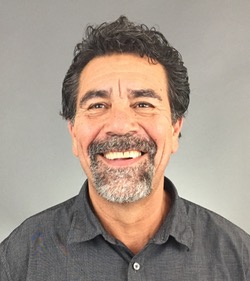 Jorge Renaud was a Senior Policy Analyst in 2018-2019 and the author of the reports
Failure should not be an option: Grading the parole release systems of all 50 states and Eight Keys to Mercy: How to shorten excessive prison sentences. He also wrote the articles Red states, blue states: What do these mean for people on parole?, Who's really bringing contraband into jails? Our 2018 survey confirms it's staff, not visitors and Should prosecutors and survivors have a voice in shortening long sentences?
Jorge Renaud was a Senior Policy Analyst in 2018-2019 and the author of the reports
Failure should not be an option: Grading the parole release systems of all 50 states and Eight Keys to Mercy: How to shorten excessive prison sentences. He also wrote the articles Red states, blue states: What do these mean for people on parole?, Who's really bringing contraband into jails? Our 2018 survey confirms it's staff, not visitors and Should prosecutors and survivors have a voice in shortening long sentences?
 Sophia Robohn joined the Prison Policy Initiative in the summer of 2014 on a RRASC Internship. Sophia, a Hampshire College student, focused on researching prison gerrymandering in school boards across the country.
As part of our 2007 Alternative Spring Break program, Meghan Rudy helped to complete research on how counties in New York State grapple with the redistricting implications of the Census Bureau's decision to count people in prison as residents of the census block that contains the prison. She co-authored our report, Empire State: How outdated Census Bureau methodology burdens New York counties, the findings of which were endorsed by the New York Times editorial board. She graduated from the Hofstra University School of Law in May 2009.
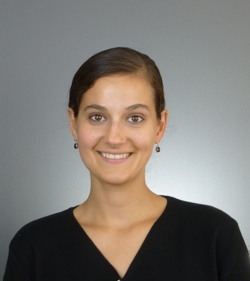 Leah Sakala worked with the Prison Policy Initiative in various capacities, including as a Senior Policy Analyst, from 2008 to 2015. She is the author of Return to Sender: Postcard-only Mail Policies in Jail, which the National Institute of Corrections called "required reading for policy makers and anyone working with individuals in jail custody," and also Breaking Down Mass Incarceration in the 2010 Census: State-by-State Incarceration Rates by Race/Ethnicity. She also co-authored Reaching too far, coming up short: How large sentencing enhancement zones miss the mark, Please Deposit All of Your Money:
Kickbacks, Rates, and Hidden Fees in the Jail Phone Industry, Mass Incarceration: The Whole Pie, and States of Incarceration: The Global Context. Leah is now a State Policy Manager with the Alliance for Safety and Justice, where she supports public safety reform campaigns through policy development, research, and advocacy. Before joining ASJ, Leah was senior policy associate at the Urban Institute’s Justice Policy Center, where she developed research and provided technical assistance to advance justice reform and strengthen community safety strategies. She holds a BA from Smith College and MPP and MBA degrees from Brandeis University.
Leah Sakala worked with the Prison Policy Initiative in various capacities, including as a Senior Policy Analyst, from 2008 to 2015. She is the author of Return to Sender: Postcard-only Mail Policies in Jail, which the National Institute of Corrections called "required reading for policy makers and anyone working with individuals in jail custody," and also Breaking Down Mass Incarceration in the 2010 Census: State-by-State Incarceration Rates by Race/Ethnicity. She also co-authored Reaching too far, coming up short: How large sentencing enhancement zones miss the mark, Please Deposit All of Your Money:
Kickbacks, Rates, and Hidden Fees in the Jail Phone Industry, Mass Incarceration: The Whole Pie, and States of Incarceration: The Global Context. Leah is now a State Policy Manager with the Alliance for Safety and Justice, where she supports public safety reform campaigns through policy development, research, and advocacy. Before joining ASJ, Leah was senior policy associate at the Urban Institute’s Justice Policy Center, where she developed research and provided technical assistance to advance justice reform and strengthen community safety strategies. She holds a BA from Smith College and MPP and MBA degrees from Brandeis University.
As a participant in our 2014 Alternative Spring Break program, Arielle Sharma researched prison gerrymandering in school board jurisdictions around the country, and developed innovative new messaging for our work on ending prison gerrymandering and reforming sentencing enhancement zone policy. Arielle graduated from the University of Connecticut School of Law in 2016, and subsequently worked as a public defender with the Committee for Public Counsel Services in Worcester, Massachusetts. Currently, Arielle works with Lawyers for Civil Rights, managing the Police Accountability docket with a focus on Central and Western MA.
 Maanas Sharma was our Data Science and Policy Analysis Intern in the summer of 2021. When he worked with us, Maanas was a senior at the School of Science and Engineering in Dallas. He is passionate about transdisciplinary equitable policy and incorporating social-scientific understandings into quantitative policy solutions. Maanas is also the founder and Editor-in-Chief of the Journal of Interdisciplinary Public Policy and written extensively on criminal justice reform, protest, and STEM-informed policy. Maanas co-authored States of emergency: The failure of prison system responses to COVID-19.
As a summer intern in 2006 from Smith College, Justine Sheffler found the data that became our Phantom Constituents in Tennessee's Boards of County Commissioners report and helped to map the exclusion of people on Georgia's sex offender registry for the Southern Center for Human Rights' Whitaker v. Perdue case. She graduated from Smith College in 2008, spent time doing outreach and development work at Nuestra CDC,and went on to get a doctorate in clinical psychology in 2019.
As a participant in our 2011 Alternative Spring Break program, Marbre Stahly-Butts reached out to dozens of rural reporters in Texas and California to introduce them to the problem of in county and municipal redistricting. Marbre attended Yale Law School.
As a policy intern from the Smith College School of Social Work (Class of 2012), Morgan Stone helped to build a database of correctional facility locations to be used for redistricting.
As a summer intern in 2006, Allison Tompkins researched how how the Census Bureau's prison miscount distorts democracy in rural counties. Her work helped us fine tune the our research methodology eventually published as the Democracy Toolkit. Allison also spent a week helping us to map bus stops in Georgia for the Southern Center for Human Rights' lawsuit Whitaker v. Perdue which challenged Georgia's ban on people on the sex offender registry from living within 1,000 feet of schools, churches and a long list of other places including school bus stops. The state's hundreds of thousands of school bus stops are, almost by definition, any place there is habitable housing. The legislature unwittingly declared all urban areas, all suburban areas and most rural areas off limits. This law was so extreme that it merited opposition from many of the state's sheriffs. This litigation is still ongoing. Allison graduated from Smith College in 2008.
Lindsie Trego attended the University of North Carolina School of Law. She was conducting pro bono research on some of the prison and jail phone industry's dirtiest profit-boosting, family-fleecing tricks including the companies seizing customer's funds instead of turning them over to state unclaimed funds programs.
 Maddy Troilo was a Smith College student who began as a volunteer at the Prison Policy Initiative during the 2017-2018 academic year, and soon became part of our part-time research support staff. After spending the summer of 2018 as an intern with the Orleans Public Defenders in New Orleans, Maddy returned to volunteer with us during the 2018-2019 school year. She wrote about the lack of effective treatment for substance use disorder in prisons and the continued growth of the elderly prison population in New York, in addition to providing research support for several major reports. She has worked as an intern for the In Our Backyards project with the Vera Institute of Justice, and as an investigative intern in the parole division at the Public Defender Service for DC.
As a participant in our 2010 Alternative Spring Break program, Sheila Vennell O'Rourke wrote a memo with a list of most of the new prisons built or expanded from 2000 to 2010 and the Idaho profile in our report Fixing prison-based gerrymandering after the 2010 Census: A 50 state guide. This report was cited in a New York Times editorial. Sheila graduated from the Roger Williams School of Law in 2012 and is currently a clerk for Justice Thomas G. Saylor of the Pennsylvania Supreme Court. In 2013-2014, she will be clerking for Judge John E. Jones, III, in the Middle District of Pennsylvania before seeking a career in public interest law.
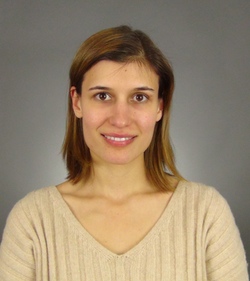 In 2016 Alison Walsh worked with Prison Policy Initiative as a Policy and Communications Associate. She co-authored States of Incarceration: The Global Context 2016 and assisted with the research for our national project on driver's license suspensions for non-driving related drug offenses. Alison is currently the Speaking and Events Manager at Witness to Innocence.
In 2011-2012, Carson Whitelemons worked with us one day a week on our project working to end prison-based gerrymandering, primarily building out our Correctional Facility Locator. She graduated from Smith College in May 2012 and is now a Research Associate in the Democracy Program at the Brennan Center for Justice.
In 2003, Matt Widmer researched how all 50 states define in their constitutions and statutes where people in prison reside. His research formed an integral part of all future publications and advocacy on the Prisoners of the Census project. He is now an attorney in Alaska.
As a participant in our 2012 Alternative Spring Break program, Tom Wiehl helped us build a database that will support ending prison-based gerrymandering in Vermont and Idaho, and he used his skills developed while earning an MFA in Fine Arts to help us graphically explain vote dilution and prison-based gerrymandering in Oklahoma, Rhode Island, and Wisconsin. He graduated from the University of Connecticut School of Law in 2013 and served as a Staff Attorney with the State of Connecticut's Office of Consumer Counsel, advocating for the rights of Connecticut consumers as to regulated utilities and broadband internet access.
Emma Peyton Williams was a researcher and writer at the Prison Policy Initiative. Emma is an activist, scholar, and educator whose work focuses on the intersection of social services and criminal punishment. For the Prison Policy Initiative, she wrote briefings about the criminal legal system’s overlap with two less-well-known systems — the child welfare system and the civil commitment system — as well as a briefing on how states can prevent family separation as a result of incarceration.
Emma is a consultant to abolitionist organizations including the upEND Movement and the Inside Illinois Civil Commitment Project, and works on prison reentry issues with Cabrini Green Legal Aid.
As a first year first year law student at the University of North Carolina School of Law, Joseph Miles Wobbleton helped us with a project on automatic suspension of drivers licenses for drug convictions unrelated to driving.
Recommended Reading:

Why are calls from prisons and jails so expensive?
We look at the progress in the fight for phone justice and what comes next.

Research Library
We curate a searchable database of 4,000+ original research reports, organizing each entry by topic and adding brief summaries.

Mass Incarceration: The Whole Pie
The U.S. incarcerates over 1.9 million people, more than any other country. Where are they locked up and why? Read our report.

Jails and bail: Our research
One out of three people behind bars is in a local jail. Our research drives jail reform.