Shorts archives

Leslie Neal has new documentary about the growing problem of juveniles being tried and sentenced as adults.

by Peter Wagner, October 28, 2004

Leslie Neal has new documentary about the growing problem of juveniles being tried and sentenced as adults. Juvies (2004) reveals the shocking reality of juvenile offenders in America, many of whom are serving draconian sentences for marginal involvement in so called ‘gang’ crimes. The director, Leslie Neal taught a video production class at Los Angeles Central Juvenile Hall to 12 juveniles who were all being tried as adults. Juvies is the product of that class, made jointly by teacher and students, witnessing heartbreaking stories of children abandoned by families and a system that has disintegrated into a dehumanizing vending machine of injustice.


Alan Elsner's new book examines how prison system grew out of control.

by Peter Wagner, April 23, 2004

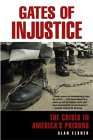
coverReuters’ journalist Alan Elsner’s new book about the criminal justice system, Gates of Injustice: The Crisis in America’s Prisons is a powerful examination of how our prison system grew out of control. The book combines first hand reporting with a detailed analysis of the larger trends that made the U.S. the world’s largest incarcerator without any gain in public safety.

Gates of Injustice is both an introduction to prisons and a detailed indictment of why they don’t work. The book contains a number of powerful (and true) facts that we hadn’t been aware of.

Near and dear to the hearts of Prison Policy Initiative staff, Elsner discusses in the chapter on rural prisons how prisoners are counted in the census and he calls for changing how the Census counts the incarcerated.

This timely book is a must read for everyone interesting in making the world a better — and safer — place.


New documentary explores the historically taboo subject of homosexual relations and rape in prison.

by Peter Wagner, July 3, 2003

New documentary: Turned Out: Sexual Assault Behind Bars

Of the over two million Americans in jail today, one out of five inmates will be sexually assaulted during their incarceration. Most of those who will be “turned out,” or sodomized, and turned into sexual slaves, will be nonviolent drug offenders who have doubled the prison population over the last decade. This video is a shocking but insightful expose of the taboo subject of homosexual rape and homosexual relations in prison. It features frank and often graphic interviews with inmates at correctional facilities throughout the U.S., in which they explain the sexual hierarchy of “iboys” or “sissies,” who play the female role to more powerful inmates known as “men,” with the latter often developing relationships with several “boys” and thus developing “families,” which provide sex, companionship and protection for more vulnerable inmates. Prisoners also discuss the underground economy, the sociology of power and lust, and the sexual exploitation of inmates by prison guards, while interviews with a prison warden and family members of inmates reveal the general awareness of sexual assault within our prison system and the culture of silence which enables its perpetuation.

It’s expensive ($295 to buy, $95 to rent), but we don’t know of anything that comes even close to this on this topic.

[Editor’s note, July 10, 2014: full film is now available here.]


The 1976 handbook to prison abolition has been digitized.

by Peter Wagner, May 22, 2003

Instead of Prisons: A Handbook for Prison Abolitionists is now available on this website. This book summarizes the research on prisons as of the 1976 writing and discusses the strategy of abolition. For example, how do we pick reforms to fight for now that make our long term goal of abolition easier to obtain?

Thanks to everyone who helped with the digitization process!


Nil's Christie's book on the criminal justice "pain delivery system" has been digitized.

by Peter Wagner, February 12, 2003

We can’t speak highly enough of Nils Christie’s Crime Control as Industry (review, buy from Amazon.com). Christie’s first book, Limits to Pain (1981), which argues that the criminal justice system is in fact a pain delivery system, with the size of the system controlled not by the number of committed acts labeled as crimes but by the amount of pain that a society is willing to impose on its citizens, is now available on the internet. Limits to Pain is powerful in its own right, and very helpful in studying the most recent book. We suggest you read the on-line version of Limits to Pain today.


On Jan 11, 2003, outgoing Illinois Governor Ryan reduced the death sentences of all 167 prisoners to life or other sentences.

by Peter Wagner, January 12, 2003

On Jan 11, 2003, outgoing Illinois Governor Ryan reduced the death sentences of all 167 prisoners to life or other sentences. The day prior, he freed four death row prisoners who were innocent.

“The facts that I have seen in reviewing each and every one of these cases raised questions not only about the innocence of people on death row, but about the fairness of the death penalty system as a whole,” –Gov. Ryan

“Our capital system is haunted by the demon of error: error in determining guilt and error in determining who among the guilty deserves to die.”–Gov. Ryan

“The Legislature couldn’t reform it, lawmakers won’t repeal it, and I won’t stand for it U I must act. Because our three-year study has found only more questions about the fairness of the sentencing, because of the spectacular failure to reform the system, because we have seen justice delayed for countless death row inmates with potentially meritorious claims, because the Illinois death penalty system is arbitrary and capricious U and therefore immoral.” –Gov. Ryan

According to the New York Times:

“Governors have broad, virtually unchecked constitutional powers for pardons and clemency, and Mr. Ryan is at least the fourth to empty death row as he departs office, though the scale of his action overshadows the 22 men Gov. Lee Cruce of Oklahoma spared in 1915, the 15 death sentences Gov. Winthrop L Rockefeller of Arkansas commuted in 1970 and the five clemency petitions Gov. Toney Anaya of New Mexico granted in 1986.”


Jon Yount's groundbreaking thesis on prisoner disenfranchisement has been digitized.

by Peter Wagner, December 8, 2002

We just completed scanning and converting a groundbreaking thesis on disenfranchisement written by Jon Yount, a prisoner in Pennsylvania. The March 1998 piece, Felon Disenfranchisement: Pennsylvania’s Sinister Face of Vote Dilution discusses disenfranchisement, racial disparities, the Voting Rights Act and the census-based dilution of minority and urban voting strength. After this thesis, Jon Yount drafted the complaint that led to striking down Pennsylvania’s unconstitutional 5 year waiting period for ex-felon voting registration.


The Supreme Court of Canada has granted convicts in penitentiaries the right to vote.

by Peter Wagner, November 4, 2002

By KIRK MAKIN

Globe and Mail Update Thursday, October 31, 2002

The Supreme Court of Canada has granted convicts in penitentiaries the right to vote.

In a 5-4 decision on Thursday, the court said a federal law that punishes prisoners for their misconduct in society is wrongheaded and more likely to undermine their respect for democracy than to enhance it.

“The legitimacy of the law and the obligation to obey the law flow directly from the right of every citizen to vote,” Chief Justice Beverley McLachlin wrote for the majority. “The idea that certain classes of people are not morally fit or morally worthy to vote and to participate in the law-making process is ancient and obsolete.”

The ruling was a victory for Richard Sauve, convicted of first-degree murder almost 25 years ago in the shooting of a biker in Port Hope, Ont. Mr. Sauve was joined by several other inmates and inmate committees in his constitutional challenge.

Punishment must serve a valid criminal-law purpose and must not be arbitrary, the majority said. Yet, the government failed to produced “any credible theory” to justify using such an essential right as a method of punishment, they said.

In reasons that bristled with indignation, Chief Justice McLachlin said vague philosophical musings do not begin to form a valid basis for denying citizens their right to vote.

“The government cannot use lofty objectives to shield legislation from Charter scrutiny. As to a legitimate penal purpose, neither the record nor common sense supports the claim that disenfranchisement deters crime or rehabilitates criminals.”

She referred to the government’s rationale as “a novel theory” that would permit elected representatives to exclude citizens who have a right to equal participation in a democracy.

“To deny prisoners the right to vote is to lose an important means of teaching them democratic values and social responsibility,” the majority said. “This history of democracy is the history of progressive enfranchisement. The universal franchise has become, at this point in time, an essential part of democracy.”

The Court’s ruling in SauvĂ© v. Canada


Leading scholars and advocates explore the far-reaching consequences of thirty years of "get tough" policies on prisoners, ex-felons, and families and communities.

by Peter Wagner, October 20, 2002

coverInvisible Punishment: The Collateral Consequences of Mass Imprisonment, edited by Marc Mauer and Meda Chesney-Lind, just published by The New Press, reveals how the two million imprisoned Americans and their families are being punished by factors well beyond incarceration. Leading scholars and advocates explore the far-reaching consequences of thirty years of “get tough” policies on prisoners, ex-felons, and families and communities. The contributions in Invisible Punishment define the boundaries of a new field of inquiry concerning the impact of American criminal justice policies.


"The Crisis" reports on how rising incarceration is spilling over into critical arenas of black political and economic power.

by Peter Wagner, July 15, 2002

The cover article of July/August, 2002 issue of “The Crisis” Magazine, (NAACP national publication) is on how rising incarceration is spilling over
into critical arenas of black political (electoral) and economic power, i.e. affecting the lives of African-Americans not under criminal justice control. Key issues focused on are felony disenfranchisement and the impact of census prisoner-counting practices on redistricting, as well as the relationship between those phenomena and post-reconstruction initiatives designed to take away from the newly enfranchised what had just been granted…

The article discusses the Importing Constituents: Prisoners and Political Clout report about the census counting urban prisoners as rural residents.

An internet version of the article is not yet available but you can order a hard copy from Crisis Magazine.


Stay Informed


Get the latest updates:


Share on 𝕏 Donate