Voices that are pushing the envelope – best commentary of 2016
Our favorite criminal justice commentaries of 2016 that shined light on the too often forgotten areas of criminal justice reform
by Bernadette Rabuy, December 29, 2016
This year, we were pleased to see writers, researchers, advocates, and public officials take a stand against mass incarceration. Here are some of our favorite examples of writing that pushed the envelope and shined light on the too often forgotten areas of criminal justice reform:
- Are We There Yet? The Promise, Perils and Politics of Penal Reform
By Marie Gottschalk
Prison Legal News
January 1, 2016
A comprehensive article by Marie Gottschalk, author of Caught, takes a critical look at the causes of mass incarceration and the various obstacles to reform such as the overemphasis on reforms that only affect those convicted of non-serious, nonviolent, and nonsexual offenses. Gottschalk’s article is useful for both those new to criminal justice issues and those looking to become more effective advocates for reform. - The Meaning of Life Without Parole
By Clint Smith
The New Yorker
February 8, 2016
In this poetic piece, writer Clint Smith reminds readers of the humanity of his students who are serving long prison sentences in a Massachusetts state prison. Smith raises the urgent but difficult question: How, if at all, will criminal justice reform impact those convicted of violent offenses? - Debtors’ Prison in 21st-Century America
By Whitney Benns and Blake Strode
The Atlantic
February 23, 2016
Writer Whitney Benns and attorney Blake Strode trace the pervasive practice of St. Louis counties locking people up for failure to pay fines and fees with the region’s troubled past. They explain how the St. Louis regional structure and longstanding racial segregation made the current practice of debtors’ prisons far from surprising. - On pardons, Obama could go down as one of the most merciless presidents in history
By George Lardner Jr. and P.S. Ruckman Jr.
The Washington Post
March 25, 2016
In this oped, George Lardner Jr., a former Washington Post reporter, and P.S. Ruckman Jr., a professor and editor of the Pardon Power Blog, explain that despite President Obama’s Clemency Project 2014, Obama’s clemency record makes him one of the least merciful presidents in history. The oped also challenges the stringent criteria set forth by the Obama administration for commutation requests such as that applicants must have served at least ten years of their prison sentence.
- Why I refuse to send people to jail for failure to pay fines
By Ed Spillane
The Washington Post
April 8, 2016
In this groundbreaking oped, Ed Spillane, judge of College Station Municipal Court and president of the Texas Municipal Courts Association, shares why he refuses to lock poor people up for failure to pay fines. Instead, Judge Spillane urges other judges to be creative and consider alternatives like community service, payment plans, anger-management training, or even mercy. - How to make mass incarceration disappear: John Pfaff, magical statistics and sentencing reform
By Scott Henson
Grits for Breakfast
April 11, 2016
Grits for Breakfast explores Fordham law professor John Pfaff’s counterintuitive and thought-provoking theories about mass incarceration, finding that they hold true for Texas: increased prison admissions, not longer sentences, have been driving mass incarceration since the late 90s. Henson concludes that, beyond prosecutorial reform, sentencing reform can still impact prison admissions such as by reducing common, low-level charges like drug possession or theft from felonies to misdemeanors. - Bail bondsmen aggressively fight forfeitures
By Scott Henson
Grits for Breakfast
June 13, 2016
Henson uncovers a little-known truth: the bail bond industry often gets away with not paying bond money when defendants fail to appear in court. As a result, the bail bond industry gets to profit even without fulfilling its obligations. - Why Prisoners Deserve the Right to Vote
By Corey Brettschneider
Politico
June 21, 2016
Corey Brettschneider, a professor at Brown University, writes that our country should go farther than giving the formerly incarcerated the right to vote; we should move in the direction of Maine and Vermont by allowing those currently behind bars to vote. Granting this right would allow us to listen to the incarcerated as we shape criminal justice policy and have a long-term impact on their political participation. - Private prisons are not the problem: Why mass incarceration is the real issue
By Daniel Denvir
Salon
August 24, 2016
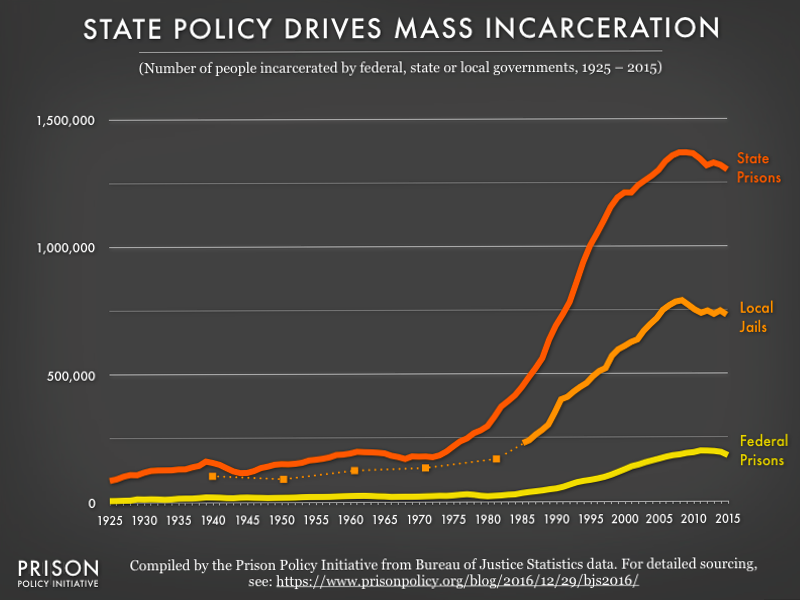
In the wake of the federal government’s announcement that it would phase out the use of private prisons to hold incarcerated people, Daniel Denvir uncovers the disappointing truth that a very small proportion of people in federal prisons would be affected. Denvir explains that the core of the problem of mass incarceration is that our society incarcerates too many people, and a clear majority of those people are in public prisons, not private. - Mentally ill people in solitary confinement — we need to get them out
By Dave Mahoney
The Hill
August 30, 2016
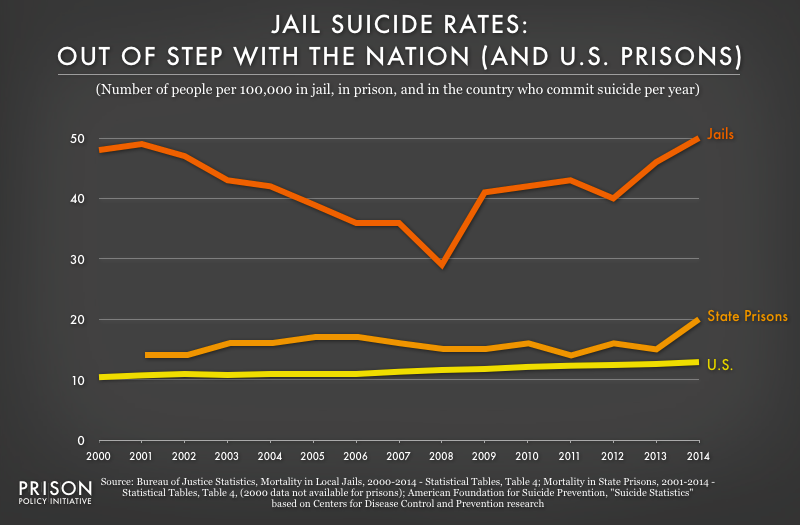
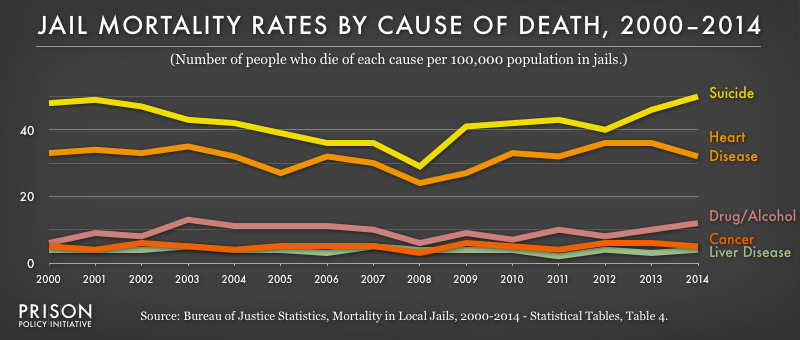
Dave Mahoney, chief law enforcement officer of Dane County (Madison) Wisconsin, gets straight to the point: mentally ill people should not be in solitary confinement; it is nothing short of cruel. According to Mahoney, even jails in general are the wrong place for the mentally ill.