New poll shows mass incarceration is a Latinx issue
A new poll from Latino Justice PRLDEF shows that the Latinx community is deeply concerned about mass incarceration.
by Lucius Couloute, January 24, 2018
Earlier this month LatinoJustice PRLDEF, a national not-for-profit Latino civil rights organization, released findings from a new national poll of the Latinx community on their views of the criminal justice system. Whereas most survey research on criminal justice issues tend to abide by a Black-white binary, this poll brings to light the impact of mass incarceration in the lives of people often left out of the conversation.
Senior Analyst Edward D. Vargas finds that, like most Americans, the majority of Latinxs favor rehabilitation over more punitive responses to crime, such as added police or prisons. Almost 60% of Latinx respondents felt less safe in the wake of Trump’s presidency. Other findings include:
- In the context of widespread attention to the treatment of African Americans by the police, 64% of respondents believed that Latinx people face similar treatment at the hands of the police.
- 57% of all respondents and 70% of Afro Latinx-identified respondents believed that the police are more likely to unjustly use deadly force against Latinx people than against whites.
- 84% of respondents believed that police officers should not stop and search people simply because of their race or ethnicity.
- 83% of Democrats and 70% of Republican respondents support the voting rights of people who have “paid their debt to society” after being convicted of a crime.
- 67% of respondents believe that the Department of Justice should collect better data on Latinx people in the criminal justice system.
The Latinx community is diverse, making it difficult to conclude that any one view defines their experience as a whole. But one thing is clear: mass incarceration is a Latinx issue.
Latinx people make up about 20% of the U.S. incarcerated population, they experience differential treatment at the hands of the police, face stiffer school discipline than their white peers, and are increasingly subject to harassment by ICE, making this poll both timely and informative. The majority of Latinx people want reform. As Juan Cartagena, President of LatinoJustice PRLDEF, explains in a recent piece for HuffPost, “their voices need to be heard.”

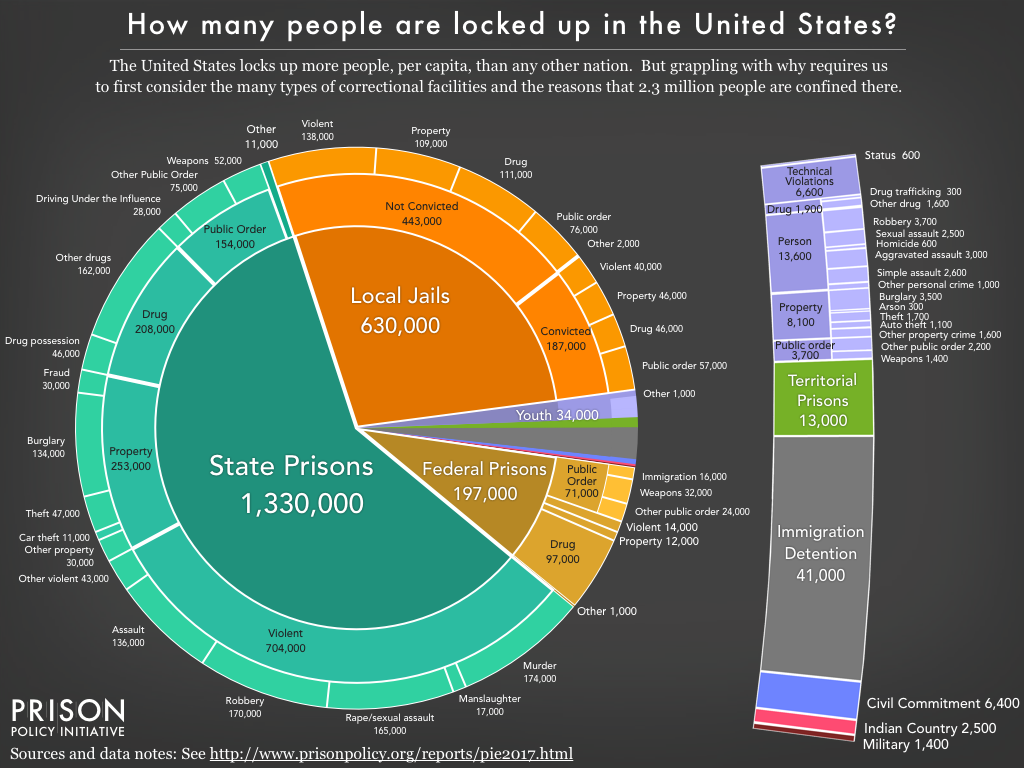
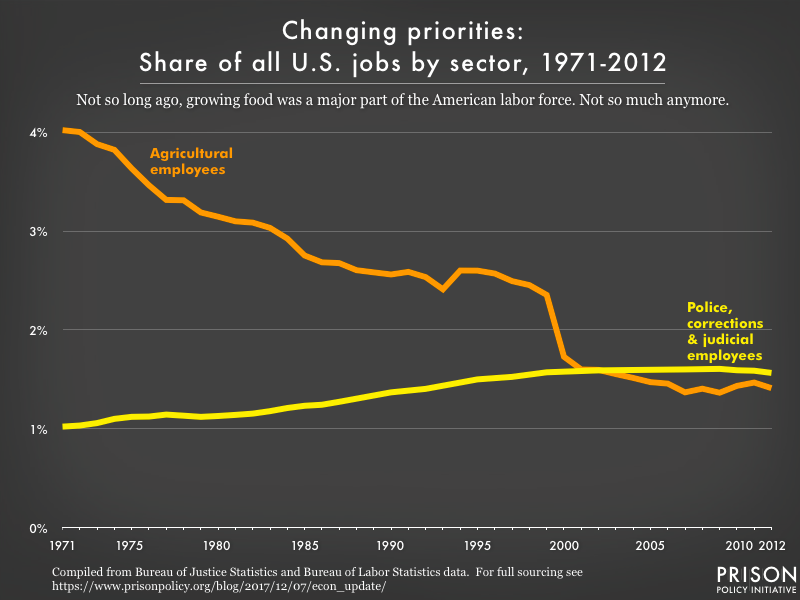 The 2.3 million incarcerated people in the United States are, of course, excluded from the labor force and therefore are not reflected in analyses of labor force participation. Including them would make the portion of the workforce that is involved in the mass incarceration system even larger.
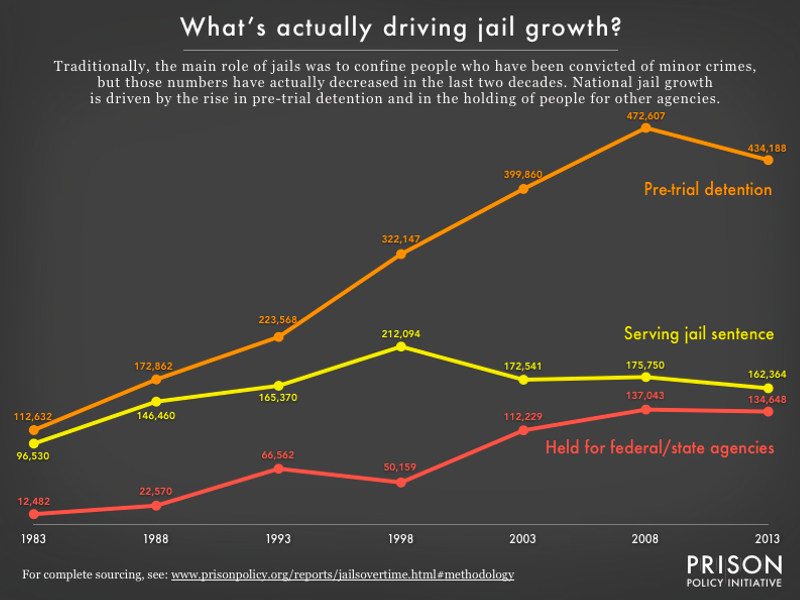 Figure 1. Most state policymakers are not tracking jails in the first place, and the jails’ frequent practice of renting cells to other agencies makes it difficult to draw conclusions from the little data that is available. This report offers a new analysis of federal data to offer a state-by-state view of how jails are being used and we find that, even more than previous research has implied, pre-trial populations are driving “traditional jail” growth. The data behind this graph is in
 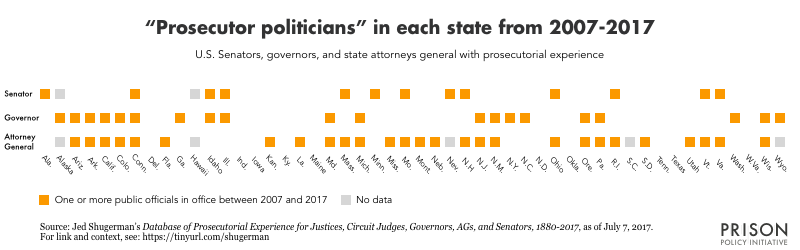 In at least 38 states, a senator, governor, and/or attorney general holding office in the past 10 years was once a prosecutor. This chart may understate the prevalence of these “prosecutor politicians,” since the source is a work in progress and has no data for some positions in five states as of July 7, 2017, and does not include changes in all offices after January 2017.
 The end of American prison visits: jails end face-to-face contact – and families suffer
 NBA Pistons Owner Under Fire for Deal on Inmate Phone Service
 What’s actually driving local jail growth?
 The plunder of the American prison system
 Driver’s Licenses, Caught in the War on Drugs