October 27, 2026: On October 27, 2026 at 1:30 p.m. EST, join the Prison Policy Initiative for a webinar focused on making public records requests. We’ll cover the basics of making a request and provide tips and tricks we’ve learned over decades of sending requests to jails, prisons, and other agencies that can make your requests more effective.
Just because vaccines are increasingly available does not mean that the COVID-19 crisis in prisons and jails is over - far from it. Yet new data show more prisons and jails are returning to “business as usual.”
This article was updated on October 21st, 2021 with more recent jail and prison population data. That version should be used instead of this one.
At the start of the pandemic, public health and medical officials were already warning that incarcerated people would be uniquely vulnerable to the spread of the disease and its most serious medical consequences, due to their close quarters and high rates of preexisting health conditions. But after a year and a half of outbreak after outbreak in prisons and jails, correctional authorities have largely failed to reduce their populations enough to protect the health and lives of those who are incarcerated. The consequences of this failure are serious: According to the UCLA Law COVID-19 Behind Bars Project, more than 412,000 people incarcerated in prisons have had confirmed cases of COVID-19 and over 2,700 people have died from COVID-19 behind bars. And that’s to say nothing of the outbreaks in surrounding communities that have been linked to the crowded, unsanitary conditions of prisons and jails.
Despite the growing availability of vaccines, 17 state prison systems and the Bureau of Prisons had vaccinated less than half of their incarcerated populations by mid-May 2021, and 20 states and the Bureau of Prisons are reporting that less than half of their prison staff had received their first dose of a vaccine by the end of April. With slow uptake of vaccines, the advice from early in the pandemic continues to be the most important: prisons and jails need to keep working to reduce the number of people locked up, by both reducing admissions and ramping up early releases.
Prisons
Even in states where prison populations have dropped, there are still too many people behind bars to accommodate social distancing, effective isolation and quarantine, and increased health care requirements. For example, although California has reduced the state prison population by about 19% in the past 18 months, it has not been enough to prevent large COVID-19 outbreaks in the state’s prisons. In fact, as of June 16th, 2021, California’s prisons were still holding more people than they were designed for, at 107% of their design capacity (and up from 103% in January 2021).
Figure 1. Prison population data for 30 states where sufficient population data was readily available from January 2020 to May or June 2021, either directly from the state Departments of Correction, the Vera Institute of Justice, or the federal Bureau of Prisons. The lighter lines in our graph indicate prison systems where the population is actually increasing since early 2021. See our COVID-19 response tracker for more information on many of the most important policy changes that led to these slow reductions in some states. For the population data for these 30 states and the Bureau of Prisons, see Appendix A.
Sharp-eyed readers may wonder if Connecticut and Vermont are showing larger declines than most other states because those two states have “unified” prison and jail systems, which hold both pretrial defendants and people serving sentences, and pretrial populations typically respond to policy changes more quickly than prisons. However, data from both states show that the bulk of their population reduction is coming from within the “sentenced” portion of their populations. (For the Connecticut data, see the Correctional Facility Population Count Report, and for Vermont, see the daily population reports.)
Many states’ prison populations are the lowest they’ve been in decades,but this is not because more people are being released from prisons. The limited data available from six states shows that the number of prison releases did not change significantly between 2019 and 2020, suggesting that most of the population drops that we’ve seen over the past year are due to reduced prison admissions. In addition, we can see that the number of monthly prison releases in five of these states has been decreasing over the past three years. Only one state for which we found data–Alabama–has seen an increasing trend in the number of monthly releases since 2018. Reducing the number of people admitted to correctional facilities is critical to reducing the number of people behind bars, but to quickly decarcerate, states should be releasing far more people, too.
Figure 2. These six states publish monthly release and admission data for 2018, 2019, 2020, and the beginning of 2021. Although we cannot be certain that this analysis is representative of the other 44 state prison systems and the federal Bureau of Prisons, these data do show us a pattern of responses to the COVID-19 pandemic: reducing prison admissions, while maintaining the status quo of prison releases.
Figure 3. These ten states published monthly release data for 2019, 2020, and the beginning of 2021. While not nationally representative, these ten states show that fewer people have been released from these state prisons in response to COVID-19 in 2020 than in 2019. We’re also seeing that at the start of 2021, prison releases are even lower.
Thankfully, some states have recognized the inefficiency of case-by-case releases and the necessity of larger-scale releases. For example, in New Jersey, Governor Phil Murphy signed (link no longer available) bill S2519 in October 2020, which allowed for the early release of people with less than a year left on their sentences.1 A few weeks after the bill was signed, more than 2,000 people were released from New Jersey state prisons on November 4th.2 In February 2021, North Carolina Governor Roy Cooper announced plans to release 3,500 people in state custody (with 1,500 of those releases to take place within 90 days). The releases were the result of a NAACP lawsuit challenging prison conditions in North Carolina during COVID-19. The state said it would release people using discretionary sentence credits (similar to “good time credits”), home confinement, and post-release supervision. But these are the only two instances we are aware of where large-scale release efforts are actually taking place in state prison systems.
Jails
Jail populations, like prison populations, are lower now than they were pre-pandemic. Initially, many local officials — including sheriffs, prosecutors, and judges — responded quickly to COVID-19 and reduced their jail populations. In a national sample of 388 county jails of varying sizes, most (88%) decreased their populations from March to July of 2020, resulting in an average population reduction of 23% across all 388 jails.3 These population reductions came as the result of various policy changes, including police issuing citations in lieu of arrests, prosecutors declining to charge people for “low-level offenses,” courts reducing cash bail amounts, and jail administrators releasing people detained pretrial or those serving short sentences for “nonviolent” offenses.
But the data tell a different story about the latter part of the pandemic. Between July 2020 and January 2021, the populations of 66% of the jails in our sample increased, reversing course from the earlier months of the pandemic. Since this past January, populations increased again in 61% of the jails in our sample, with an average increase of 10%. Overall, the average population change across these 388 jails since March 2020 has diminished to only a 7% decrease, suggesting that the early reforms instituted to mitigate COVID-19 have largely been abandoned. For example, by mid-April 2020, the Philadelphia city jail population reportedly dropped by more than 17% after city police suspended low-level arrests and judges released “certain nonviolent detainees” jailed for “low-level charges.” But just two weeks later — as the pandemic raged on — the Philadelphia police force announced that they would resume arrests for property crimes, effectively reversing the earlier reduction efforts. Similarly, on July 10th, 2020, the sheriff of Jefferson County (Birmingham), Alabama, announced that the jail would limit admissions to only “violent felons that cannot make bond.”4 That effort was quickly abandoned when the jail resumed normal admission operations just one week later. The increasing jail populations across the country suggest that after the first wave of responses to COVID-19, many local officials have allowed jail admissions to return to business as usual.
Figure 4. Despite the rising national case rate of COVID-19, the number of people held in our sample of 388 county jails across the country has not continued to decrease over the past six months, following initial reductions. This graph contains aggregated data collected and provided by NYU’s Public Safety Lab and updates a graph in our February 3rd briefing. It includes all jails where the Lab was able to report data on March 10th and for at least 75% of the days in our research period, which ended June 17th, 2021. (Data are not available for all facilities for all days.) This graph presents the data as 7-day rolling averages, which smooths out most of the variations caused by individual facilities not reporting population data on particular days. The temporary population drops during the last weeks of May, August, and November 2020 and February 2021 are the result of more facilities than usual not being included in the dataset for various reasons, rather than any known policy changes. To see county level data for all 388 jails included in this analysis, see Appendix B.
Even before COVID-19, prisons and jails were a threat to public health and considered notoriously dangerous places during any sort of viral outbreak. And yet, correctional facilities continue to be a major source of a large number of infections in the U.S. The COVID-19 death rate in prisons is three times higher than among the general U.S. population, even when adjusted for age and sex (as the prison population is disproportionately young and male). Since the early days of the pandemic, public health professionals, corrections officials, and criminal justice reform advocates have agreed that decarceration is necessary to protect incarcerated people and the community at large from COVID-19. Decarceration efforts must include releasing more people from prisons and jails. Despite this knowledge, state, federal, and local authorities have failed to release people from prisons and jails on a scale sufficient to protect incarcerated people’s lives – and by extension, the lives of everyone in the communities where incarcerated people eventually return, and where correctional staff live and work.
Footnotes
New Jersey is not included in the above graph of state prison population changes because the New Jersey Department of Correction has not published monthly population data for 2020. However, in an October 2020 press release (link no longer available) (prior to the November implementation of bill S2519), Governor Phil Murphy claimed the population in state correctional facilities had “decreased by nearly 3,000 people (16%)” since March. ↩
Unfortunately, this major victory for public health was immediately undercut by the federal Immigration and Custom Enforcement (ICE) agency which quickly arrested 88 people who were released under bill S2519. A spokesperson from ICE claimed that these 88 individuals were “violent offenders or have convictions for serious crimes such as homicide, aggravated assault, drug trafficking and child sexual exploitation.” However, these claims are brought into question when considering that the releases that took place under bill S2519 specifically excluded “people serving time for murder or sexual assault” and those serving time for sexual offenses. Although we did not include ICE facilities in our analysis, there is evidence that ICE detention facilities have a COVID-19 case rate that is up to 13 times higher than that of the general U.S. population. ↩
Our analysis is based on a subset of the excellent dataset created by the NYU Public Safety Lab Jail Data Initiative which is collecting jail populations for a diverse group of over 1,000 facilities across the country. For each of our analyses of jail and prison populations during the pandemic (including our earlier analyses in May, August, September, and December 2020 and February 2021), we included all jails from this database that had population data available for at least 75% of the days in the period being studied and had data going back to the start of the pandemic on March 10th, 2020. For this June 2021 analysis, we included all 388 jails that had at least 346 days worth of data, representing at least 75% of the days between March 10th, 2020 and June 17th, 2021. Readers may notice that this sample is slightly smaller than in our previous publications, which is due to varying data availability from some jurisdictions. ↩
The news story from Jefferson County does not make clear whether officials are using “violent” to refer to the crime a person is charged with, crimes of which they have already convicted, a label imposed on them by a risk assessment tool, or something else. ↩
Appendix A: State and federal prison populations during COVID‑19
Prison populations for the federal Bureau of Prisons and 30 states where monthly data was readily available for the period from January 2020 to June 2021. When available, we used point-in-time population counts from the last day of the month. If that data point was not available, we then used either the monthly average daily population (ADP) or the point-in-time population count for latest date available in each month.
Appendix B: County jail populations during COVID-19
This table shows the jail populations for 388 county jails where data was available where data was available for March 10th (the day the pandemic was declared) and for 75% of the days between March 10th, 2020 and June 17th, 2021. (This table is a subset of the population data available for over 1,000 local jails from the NYU Public Safety Lab Jail Data Initiative.)
New data show record high deaths of people locked up in jail, as jail populations have shifted toward smaller, rural jails and growing numbers of women. A lack of accountability and acknowledgement of women’s unique disadvantages all but ensures more deaths to come.
In so many communities nationwide, jails act as reception centers for those experiencing poverty, mental health crises, or substance use disorders. Just a few days ago, Representative Alexandria Ocasio-Cortez referred to jails as “garbage bins for human beings.” This statement tracks with new data that show that even before the COVID-19 pandemic, deaths in jail had reached record high numbers, because they continue to be unregulated, under-resourced places where disadvantaged people are sent to languish.
The Bureau of Justice Statistics (BJS) recently came out with the 2018 mortality data for local jails. Nationwide, there were 1,120 deaths reported, or a rate of 154 deaths per 100,000 people in jail, the highest levels since BJS’ first report on this topic in 2000. The jail population has grown since 2000, of course, but jail deaths have grown more. These deaths spared no demographic, and almost no state; more jurisdictions than ever reported one or more deaths in 2018.
Dying in jail often happens within days or weeks
As in past years, suicide was the single leading cause of death for people in jails, accounting for almost 30% of deaths. Someone in jail is more than three times as likely to die from suicide as someone in the general U.S. population (and still twice as likely when the population is adjusted for age, sex and race/ethnicity to match jail populations).
Suicide in jail tends to happen quickly: half of all those who died by suicide between 2000 and 2018 had been in jail for 9 days or less – compared to a median stay of 17 days for all causes of death. A short stay in jail can be extremely harmful, a fact that even our nation’s top officials acknowledge, noting that “certain features of the jail environment enhance suicidal behavior.”1 For suicide and deaths linked to drugs or alcohol, it’s those first few days in jail that are deadliest.
Millions of people are booked into jails each year with alcohol or drug use disorders, and the number who died of reported intoxication while locked up reached record highs in 2018. Since 2000, these deaths are up 381 percent, and over the entire 18 years of data collection, the median time served before a drug or alcohol intoxication death was just 1 day. One Texas woman, for example, was jailed for unpaid traffic tickets and died after 3 days from complications of withdrawal after begging for medical care, and instead, being asked to clean up her own vomit. With 18 years of data showing that jailing people with substance use disorders for low-level offenses so often leads to death, why are we still using jails as de facto detox facilities?
More women are entering – and dying in – jail
Women made up one-sixth of all jail deaths in 2018, slightly more than their share of the total jail population. Women also had a 7% higher mortality rate than men in jails; this isn’t the first year that was true, but because women are a key driver of jail population growth, the rise in their mortality rate should send correctional leaders and policymakers running toward solutions aimed at keeping women out of confinement.2
Previous research offers solid clues as to where to begin addressing the over-incarceration and preventable deaths of women. Between 2000 and 2018, women in jail died of drug and alcohol intoxication at twice therate of men. (In state prisons, women died this way at half the rate of men.)3 Women are also more likely than men to enter jail with drugs in their system, with a medical problem or chronic condition, or with a serious mental illness.
As we’ve reported before, arrests of women, often for low-level drug offenses like possession, have increased (while men’s arrests have decreased) over the past 35 years. In general, those arrested and put in jail more frequently (a population that is disproportionately Black, too) face other major disadvantages: they’re much more likely to lack health insurance, education, and employment, and to have serious health needs. That’s not to mention the high probability of jail separating a mother from children or the estimated 55,000+ women who enter jail while pregnant and face abysmal nutrition and prenatal care. These statistics paint a bleak picture of what it’s like to be a woman in contact with the criminal justice system, but they also form a clear wishlist of social services that could exist to meet women’s needs outside of jail.
Rural jails, a growing force, had the highest death rates in 2018
Small jails – particularly those with an average daily population of 49 or fewer people – reported the highest mortality rates again in 2018. A long-standing reality, the mortality rate in these smallest jails has actually been more than double the overall jail mortality rate in some years. By absolute numbers, these deaths make up a small portion of all jail deaths each year, but rural areas have become major players in jail incarceration.4
And yes, women and rural jails are growing together. Between 2004 and 2014, the number of women in jail increased 43 percent in rural counties, while declining 6 percent in urban counties. For decades, jails in non-urban jurisdictions have quietly proliferated, fueled by increases in pretrial detention. Additionally, researchers have found that women entering rural jails are significantly more likely to have co-occurring serious mental illness and substance use disorder, despite being severely under-identified by their jails as having such needs.
Jail healthcare is sketchy at best, and deadly at worst
But what does the growth of women’s jail populations across America have to do with mortality? In 2020, Reuters published an unsparing 3-part investigation of jail healthcare systems, deaths, and the increasing presence of women entering and dying there. Reporters established a devastating pipeline of women being arrested, locked up, and left to detox, give birth, or go without necessary psychiatric care in jail cells.
According to the report, on average, deaths were higher in those jails with privately contracted healthcare services, and rural jails are likely to go the private healthcare route.5 These companies’ profit motives shine through in haunting examples of neglect. At a Georgia jail managed by Corizon – a major private correctional healthcare company – senior leadership routinely overrode the recommendations of medical staff; patient names or prescription orders were simply removed from lists to avoid the bad optics of providing untimely care. But when counties move to end their healthcare contracts, there are few real competitors.
The idea that jails are falling short in their care sometimes fuels short-sighted arguments for expanding or building new facilities. One county in Texas was considering a new women’s facility in order to provide “gender-specific” and “trauma-informed” services to this population; fortunately, county commissioners recently postponed the vote to approve its construction at the suggestion of local activists and the county judge. These myopic projects are expensive and do not help communities – in fact, research shows that jail incarceration drives deaths within those counties.
Jails are shameful replacements for key social and medical services, and too often low-level offenses are used to justify locking people up, out of sight, when they simply need help. For women, “gender-responsive” strategies for diversion and treatment do exist, but policymakers should exercise caution in implementing those that are simply new forms of supervision; these programs will only increase the footprint of the criminal justice system. Decriminalization and the provision of gold-standard medical care, followed by a halt to jail construction, should be top of mind when addressing record mortality in jails; our mass incarceration crisis is troubling enough when people survive.
Footnotes
The Bureau of Justice Statistics plans to publish detailed data on suicide in U.S. correctional facilities in August 2021; the most recent version of this report is from 2002. ↩
Not only has the number of incarcerated women increased 14-fold from 1970 to 2014, but women are now found in jails in nearly every county in the US, whereas they were only found in about one-fourth of jails back then. This trend is so troubling, we made a Whole Pie focused on women’s mass incarceration. ↩
The Reuters investigation obtained jail mortality data through 2019, one year beyond what BJS published, and found that drug and alcohol-related deaths among women in jails has not subsided. From 2017 to 2019, about one-fourth of female deaths were linked to drugs or alcohol, compared to just one-eighth of deaths from 2008 to 2016. Still, both of these percentages were double those of men’s drug- and alcohol-related deaths. ↩
In one sense, rural jails and deaths receive lots of attention in localnews and culturalcommentary. In another, policy and research have largely focused on large urban jails and overlooked the complex needs of rural jails. General issues faced by rural jails and their surrounding communities include: an insufficient tax base to support adequate medical or social services, a serious shortage of lawyers and public defenders, and a dearth of general criminal justice system administration, from court hours of operation, to machinery, to investigators. ↩
Jails are not held to any national standard of healthcare, private or public, but can seek optional accreditation. The National Commission on Correctional Health Care offers accreditation to jails, prisons and other detention centers, but does not publish a full list of accredited facilities “by policy.” ↩
Proposal would make an already bad situation worse by removing nearly all First-Class mail from airplanes and putting it on trucks, no matter how far it has to travel.
On the heels of a sharp price increase, the United States Postal Service is now proposing to slow down the speed at which letters are delivered, a change that would hit incarcerated people particularly hard. As we’ve noted before, incarcerated people are uniquely dependent on sending and receiving letters through the mail, and the USPS isn’t doing a good job of serving this population. The new proposal would make an already bad situation worse by removing nearly all First-Class mail1 from airplanes and putting it on trucks, no matter how far it has to travel.
Despite the USPS’s disingenuous claim that most mail won’t be impacted by this proposal, the opposite appears to be true. Because states in the west and northeast currently rely more heavily on air transport for mail, postal customers in those states (including those in prison or jail) will be most penalized by the current proposal.
Incarcerated postal customers deserve better. In many situations (like filing a tax return or court document), incarcerated people have no alternative to the mail. In other situations (like maintaining family connections), alternative channels such as phone and electronic messaging might be available, but they are often expensive and/or plagued with problems. The price of a stamp represents a substantial expense for the average incarcerated person, and that stamp should purchase prompt and reliable delivery.
Our detailed argument is set forth in comments that we filed with the Postal Regulatory Commission opposing the USPS proposal. If you want to make your voice heard, contact your congressional representatives today and tell them to prevent the USPS’s proposed changes to First-Class Mail service standards.
Footnotes
Specifically, the USPS proposal would cover First-Class letters within the continental United States. Mail traveling to or from Alaska and Hawaii could still be transported by plane. ↩
On May 24, the Federal Communications Commission released a historic order lowering existing caps on rates and fees in the prison and jail telephone industry. The same document also signals the FCC’s intent to further lower rates in the future, and create additional rules governing this industry. The public is invited to comment on a wide range of topics.
The FCC’s newest order applies only to out-of-state calls, where the caller and called person are physically in different states, but not to in-state calls, where the caller and called person are physically in the same state. Importantly, the FCC says that companies must charge the out-of-state rate unless they know where the parties are physically located. Previously, many companies calculated rates based on area codes, which will no longer be allowed. (This means some third-party services that offer different phone numbers with a different area code to obtain better calling rates will no longer be effective).
These newly lowered caps go into effect October 26, 2021. Here is what families with incarcerated loved ones can expect to be charged:
Rate caps:
For prisons: With one exception,out-of-state calls will not cost more than 14¢ per minute. Previously, rates were capped at either 21¢ or 25¢ depending on whether the call was collect or debit. The exception is that the FCC is allowing companies to charge higher rates if a mandatory state statute or regulation requires a commission payment to the facility, however, “in no event…can the total rate cap exceed $0.21 per minute.” (FCC Order at fn309).1
For jails with an average daily population of 1,000 or more: With one exception, out-of-state calls will not cost more than $0.16 per minute. Previously, rates were capped at either 21¢ or 25¢ depending on whether the call was collect or debit. The exception is that the FCC is allowing companies to charge higher rates if a mandatory state statute or regulation requires a commission payment to the facility, however, “in no event…can the total rate cap exceed $0.21 per minute.” (FCC Order at fn309).2
For all other jails: Out-of-state calls can cost no more than 21¢ per minute. Currently, collect calls can cost up to 25¢ per minute at these jails, but when the new regulations take effect, collect calls and debit calls will both be capped at 21¢.
International rate caps:
International calls from both prisons and jails will now be capped at the out-of-state rate that applies (above), plus the amount that the provider pays to an underlying wholesale carrier for the cost of the call. Prior to these rules, international calls were not subject to price caps. The exact caps will be hard to predict because the “underlying wholesale” cost is not widely known. But for context, calls from the United States to Mexico via one wholesaler, Twilio, cost between $0.013 and $0.045 per minute depending on the location within Mexico and whether it is to a cell phone. The prices for other countries vary and other wholesalers may have different prices, but the FCC’s intent is clearly to restrict price gouging by the providers.
Single calls:
From both prisons and jails, single call products, like Text2Connect™ and PayNow™, will now be capped at $6.95 per call, plus the applicable per-minute rate. We have previously found that companies were charging $9.99-14.99 for a single telephone call.
Third-party financial transaction fees:
In both prisons and jails, third-party financial transaction fees, like fees associated with Western Union and MoneyGram payments, will be capped at $6.95 per transaction. Currently, these fees can be as high as $9.99.
Footnotes
We note that calls in some states are already less than 14¢ per minute, and while many states still choose to collect a commission, most states do not appear to do so under a “mandatory” structure that would allow them to increase the cost of a call beyond 14¢ per minute. ↩
We note that calls in some county jails are already less than 16¢ per minute, and while many county jails still choose to collect a commission, most county jails do not appear to do so under a “mandatory” state structure that would allow them to increase the cost of a call beyond 16¢ per minute. ↩
New data from the Bureau of Justice Statistics shows that state prisons are seeing alarming rises in suicide, homicide, and drug and alcohol-related deaths.
The latest data from the Bureau of Justice Statistics (BJS) on mortality in state and federal prisons is a reminder that prisons are in fact “death-making institutions,” in the words of activist Mariame Kaba. The new data is from 2018, not 2020, thanks to ongoing delays in publication, and while it would be nice to see how COVID-19 may have impacted deaths (beyond the obvious), the report indicates that prisons are becoming increasingly dangerous – a finding that should not be ignored. The new numbers show some of the same trends we’ve seen before – that thousands die in custody, largely from a major or unnamed illness – but also reveal that an increasing share of deaths are from discrete unnatural causes, like suicide, homicide, and drug and alcohol intoxication.
State prisons, intended for people sentenced to at least one year, are supposed to be set up for long-term custody, with ongoing programming, treatment and education. According to one formerly incarcerated person, “if you have the choice between jail and prison, prison is usually a much better place to be.”
Deaths in jail receiveconsiderableattention in popular news, and hereon ourwebsite – which they should, given the deplorable conditions that lead to tragedy among primarily unconvicted people. State prisons, on the other hand, are regarded as more stable places, where life is slightly more predictable for already-sentenced people. Why, then, are suicides up 22 percent from the previous mortality report, just two years prior? Why are deaths by drug and alcohol intoxication up a staggering 139 percent from the previous mortality report, just two years prior?
The answer isn’t just because there are more incarcerated people. The very slight net change in the state prison population since 2001 pales in comparison to the increase in overall deaths occurring in these facilities. (Prison populations have actually decreased since peaking in 2009, but they’re still larger in 2018 compared to 2001.) Prisons have been, and continue to be, dangerous places, exposing incarcerated people to unbearable physical and mental conditions. State prison systems must greatly improve medical and mental healthcare, address the relationship between correctional officers and the health of their populations, and work with parole boards to accelerate release processes. Then, maybe, a state prison sentence would not become a death sentence for so many.
Record-setting deaths in almost all categories
In 2018, state prisons reported 4,135 deaths (not including the 25 people executed in state prisons); this is the highest number on record since BJS began collecting mortality data in 2001. Between 2016 and 2018, the prison mortality rate jumped from 303 to a record 344 per 100,000 people, a shameful superlative. It may seem like a foregone conclusion that more people, serving decades or lifetimes, will die in prison. But for at least 935 people, a sentence for a nonviolent property, drug, or public order offense became a death sentence in 2018.1
BJS slices mortality data in many ways, one of which is “natural” versus “unnatural” death; “natural” deaths are those attributed to illness, while “unnatural” deaths are those caused by suicide, homicide, accident, and drug or alcohol intoxication. Any death pending investigation or otherwise missing a distinct cause gets filed away as “other,” or “missing/unknown.” Other than accident deaths, every cause of death had its worst year yet in 2018.
Taking BJS’ definitions of “natural” and “unnatural” deaths at face value2, the data shows that, like in past years, most (77%) of all prison deaths in 2018 were “natural.” However, “unnatural” or preventable deaths make up an increasing share of overall mortality: In 2018, more than 1 in 6 state prison deaths (17%) were “unnatural,” compared to less than 1 in 10 (9%) in 2001.3 Clearly, prisons are doing poorly at keeping people in their care safe. We must remember that being locked up is the punishment itself; inhumane conditions are not supposed to be part of a prison sentence.
Suicide rates in prison are higher than ever
Incarceration is not only difficult for someone who comes in with mental health needs, but it creates and exacerbates disconnection, despair, and overall psychological distress. Prison is basically a mental health crisis in and of itself, and too many incarcerated people contemplate and/or complete suicide.
In 2018, state prisons saw the highest number of suicides (340) since BJS began collecting this data 20 years ago. Compared to the 1% net growth of state prison populations since 2001, suicides have increased by a shocking 85 percent. Suicide is an affliction for the general U.S. population, but the mortality rate from suicide in state prisons has always been higher.
The BJS data does not allow us to compare death rates by sentence length, but it’s hard to ignore the possibility that longer sentences are contributing to a sense of hopelessness and forcing incarcerated people into harmful situations. Other data collected by BJS shows that between 2001 and 2015, the number of people admitted annually to state prison with a sentence of 5 years or longer grew by nearly 12,000 people, accounting for almost all of the growth in new prison admissions over that time period.4
At the end of 2015, 1 in 6 people in state prisons had already served over 10 years. To add insult to injury, between 2016 and 2018, the average state prison sentence grew by about four months.
Not only does a longer incarceration increase the sheer probability of having a mental health crisis inside, but it also creates the conditions for this to happen. With longer periods of separation from loved ones, and a rapidly changing outside world, people serving long sentences are isolated and deprived of purpose.
When someone in prison is clearly in crisis, correctional officers are supposed to act swiftly to prevent suicide and self-harm. Not only do officers routinely fail to recognize mental health warning signs, but they’ve been found allowing and even encouraging self-harm, a disturbing reality. And on an institutional level, prison systems avoid making the necessary changes to protect people in dangerous conditions: In response to a Department of Justice investigation finding that the Massachusetts Department of Correction “exposes [people experiencing a mental health crisis] to conditions that harm them,” the DOC is piloting Fitbit-like bracelets for its population to track changes in vital signs related to mental health distress. Instead of rolling back harsh solitary confinement practices and improving how correctional officers respond to crises, the DOC is increasing surveillance and allowing another private company to profit off of prisons.
Who is committing homicide in prison?
The number of homicides in state prisons reached a record high of 120 deaths in 2018, a reminder that while prisons are secure, they are largely unsafe.Violence in prison is commonplace, tied to trauma prior to incarceration as well as mental health stressors inside. The rate of homicide in state prison is 2.5 times greater than in the U.S. population when adjusted for age, sex, and race/ethnicity.
The age of those who died in prison seems most relevant when talking about illness, but older people were actually more at risk of homicide and all other causes of death, except for accidents. By absolute numbers, more homicide deaths affected people in their 20s, 30s and 40s, but the homicide rate was highest for incarcerated people aged 55 and older. They were twice as likely to die by homicide as anyone aged 25 to 44.
What about who is actually behind the deaths that are ruled homicides? The BJS data does not separate homicide committed by incarcerated people from death “incidental to the use of force by staff,” or even “resulting from injuries sustained prior to incarceration.” While correctional officials might go right to “prison gangs” or otherwise blame incarcerated people for these deaths, it’s a bit more complicated than that. In this terrible instance, a correctional officer heeded a request to close a cell door remotely, allowing someone to fatally wound a 72-year-old man in total privacy. The nuance of who is responsible for prison homicides points to huge gaps in security and staffing, but also a clear indifference to people’s lives and unaddressed anger and trauma.
How can drug and alcohol intoxication deaths be so high, when prison security is so strict?
As we look back to the beginning of mortality data collection in 2001, no manner of death has spiked more than drug overdoses and alcohol intoxications. (Unfortunately, the BJS data does not distinguish between the two.)
With such coarse data, it’s difficult to pinpoint an explanation for this trend with certainty. However, no conversation about illicit substances inside prisons would be complete without mention of contraband, particularly drugs brought in by correctional staff.
In the name of preventing contraband from entering prisons, many state prison systems have cracked down on incoming mail and visitation, two major lifelines for incarcerated people. However, there’s evidence to suggest that the majority of drugs, as well as sought-after items like cell phones and cigarettes, are brought in directly by prison staff. In 2018, we conducted a survey of local news coverage that revealed a dozen instances in that year alone where staff were fired, arrested, or sentenced with smuggling drugs and other items into correctional facilities.
A recent Twitter poll doubles down on the premise that prison security staff are the major players in contraband movement. Initiated by Worth Rises director Bianca Tylek, the poll and resulting thread brought formerly incarcerated voices into what could be the most revealing look to date at how correctional officers in particular are wound up in contraband dealings.
With so many people in state prisons lacking proper treatment for substance use disorders, it’s no wonder corrections staff will use their access to the outside and charge exorbitantly for drugs like Suboxone or potent synthetic cannabinoids. Instead of improving the quality of healthcare and treatment for drug addiction, prisons are imposing costly restrictions on mail and visitation and incentivizing their own staff to carry out illegal activity.
Mortality data for 2020 won’t be released for another two years or so, but we don’t have to wait to see whether drug contraband was drastically reduced when state prisons banned in-person visitation due to the pandemic: it wasn’t. In Virginia, for example, the Department of Corrections found that drugs did not become more scarce; positive drug tests actually increased after pandemic restrictions went into effect. Texas prisons also saw an uptick in drug contraband and related disciplinary reports in 2020, even as prison populations declined and visits were limited or cut off entirely.
Can we relate the thriving drug market in prisons to increasing drug-related deaths? Not directly. Clearly, though, the people working in prisons, who already turn a blind eye to violence and suffering, are responsible for introducing some of the dangerous substances that killed 249 people in 2018.
Illness is still the most common cause of death, but how natural is illness in prison?
Even though most prison deaths each year are attributed to illness, and are therefore “natural,” being sick or old in prison is not quite what it is on the outside. Incarceration can add 10 or 15 years to someone’s physiology, and take two years off of their life expectancy per year served, alarming statistics when considered alongside longer sentences and high costs of healthcare for older people.
The systemic neglect of illness and aging in prison populations isn’t natural at all. Every summer, we hear about prisons in hot climates that lack air conditioning, exposing incarcerated people to consistent temperatures of over 100 degrees. We’ve previously reported on these extreme heat conditions that exacerbate chronic diseases, counteract medications, and increase the risk of dehydration and heat stroke among even the healthiest people. In Texas, for example, when summer incarceration is described as unconstitutional, deadly, and a practice in reckless indifference, how natural are some deaths due to “illness”?
Again, consider the mortality data that will eventually come out for 2020, when prisons and jails played host to the COVID-19 pandemic and over 2,600 incarcerated people (and over 200 staff) died as a result. We know how badly every state handled this situation; it will be important not to brush these deaths aside as simply succumbing to illness – nor the deaths caused by other illnesses that went untreated in understaffed, overwhelmed prison health systems. These thousands of people were failed by state criminal justice systems, and deserved care and precaution while in custody.
State criminal justice systems can improve prison healthcare and loosen their grip on parole processes
We are supposed to trust prison systems to keep people alive and safe, so they can serve their sentences and be released back to their communities. The significant increase in overall “unnatural” deaths, like suicide, homicide, and drug intoxication tells us that state prisons are failing to provide humane conditions for incarcerated people, and it’s killing them. There are many ways that state prisons and related agencies can reduce the risk of death.
A surefire way to reduce risk is to reduce prison populations, and parole boards are a natural bottleneck to this end. Parole hearings and approval rates must increase in order to move large numbers of incarcerated people back into their communities, despite many states failing to do this in 2020 when it was clearly a matter of life and death. Compassionate release should be ramped up, and no one should be ordered to return to prison after recovering from illness. Burdensome in-person check-ins should also be eliminated to reduce the incidence of low-level technical violations of parole and probation.
States can also consider major sentencing policy changes to address the scourge of long prison sentences that only worsen physical health, mental health, and preparation for reentry. Dozens of state legislatures are considering “second-look” policies to review cases for those currently serving excessive, costly sentences.
As one of the most basic services guaranteed to people in custody, healthcare must be improved. And if it feels like prison healthcare spending is already outrageous, releasing people – especially older, sicker people – would certainly mitigate those costs. Medical care aside, correctional officers must respond swiftly to sick calls and emergencies.
Providing high-quality treatment for substance use disorders would prevent incarcerated people from turning to desperate and dangerous solutions. State correctional agencies must acknowledge the scale of drug smuggling facilitated by correctional staff. Instead of banning in-person visitation and meaningful resources like books, prison staffshould be subject to stricter security measures and enduring consequences.
Improving prison conditions can also prevent many “natural” deaths in prison; for example, there should be universal standards for indoor temperatures where extreme heat can be deadly. In a decently climate-controlled space, medications will work as intended, and people can remain focused on education, employment, and connection with loved ones, and deadly viruses might not spread so easily. And as we have learned through the pandemic, improving ventilation, access to healthcare, coordination with public health departments, and reducing population density by releasing more people from prison can prevent countless deaths when infectious diseases enter prisons.
Under pressure, change does happen, and we have been tracking state-level changes due to the COVID-19 pandemic. Some changes were only temporary or did not go far enough to slow the spread of the deadly virus. Had states taken these actions years ago to reduce other dangers in prisons, we might not have seen record mortality in 2018 – or for that matter, in 2020.
Footnotes
This calculation, based on Table 4 in Time Served in State Prisons, 2018, excludes state prison deaths among people convicted of any violent offense, many of whom may also have been serving relatively short sentences. Also, this data set is not perfectly consistent with the Mortality data set; data in the Time Served report was not available from 8 states and D.C. ↩
It’s reasonable to be skeptical of the natural/unnatural distinction put forth by BJS: Missing/unknown deaths happen to be up almost 700% from 2016, but are conveniently left out of this binary. ↩
Federal prison deaths (including private facilities) were only reported as an aggregate count until 2015, with limited details about cause of death. In 2015, “unnatural” deaths made up 11% of federal prison deaths. In 2018, they accounted for just over 14% of all federal prison deaths. ↩
According to data from the National Corrections Reporting Program, 127,060 people (36% of all new court commitments) were admitted to state prisons in 2001 with a new sentence of 5 years or longer. In 2015, that number had grown to 138,975 (38% of all new court commitments), an increase of 11,915 admissions. Over the same time period, the total number of new court commitments to state prisons – of any sentence length – grew by 12,029. ↩
We’re excited to introduce Prison Policy Initiative Research Analyst, Leah Wang! Leah holds a M.S in Sustainability Science from the University of Massachusetts Amherst, and a B.A in Economics and Environmental Studies from Bowdoin College. Prior to joining the Prison Policy Initiative, Leah was an analyst at the Massachusetts Department of Correction, and has worked in agriculture, local food systems, and outdoor education. Leah has spent several years teaching and working with prison and jail education programs, like Petey Greene and The New Garden Society.
Most states did not prioritize incarcerated people in their vaccination plans. As a result, seven months since the first vaccines were distributed, just 55% of people in prison have been vaccinated, leaving them vulnerable to infection.
Throughout the pandemic, prisons have been a hotspot for COVID-19, with case rates in prisons betweenfour to five times higher than in the general population. Despite being disproportionately impacted by the pandemic, however, most states did not prioritize incarcerated people in their vaccination plans. As a result, seven months since the first vaccines were distributed, just 55% of people in prison have been vaccinated,1 leaving them vulnerable to infection.
Using data from the UCLA Law COVID-19 Behind Bars Data Project, The Marshall Project/AP, and other state-specific sources,2 we calculated the current rate of vaccinations among incarcerated people in 48 state prison systems and the federal Bureau of Prisons.3 For our measure of vaccination, we counted anyone who had received at least one dose of a vaccine as of May 14, 2021.4 Our findings are disheartening:
In 17 state prison systems and the Bureau of Prisons, less than half of incarcerated people have received a vaccine.
Vaccination rates are the worst in Utah, South Carolina, and Alabama where 20% or less of the prison population has received the first dose of a vaccine.
And two states – Florida and Wyoming – have not released any vaccination information at all. Their lack of transparency makes it impossible to hold these Departments of Corrections accountable and ensure they are doing all they can to limit the spread of the virus.
As we recently reported, many states prioritized correctional staff for early vaccine access, under the misguided assumption that a fully-vaccinated staff would act as a preventative “barrier” between incarcerated people and the communities surrounding prisons. With many correctional staff refusing to be vaccinated, the median staff vaccination rate across the country was still just 48% at last count. To meaningfully protect people in prison, incarcerated people need to be vaccinated at much higher rates than we’re seeing thus far.
Figure 1. Data compiled from the UCLA Law COVID-19 Behind Bars Data Project, The Marshall Project, and several state-specific data sources (see footnote 1). See the appendix to this article for a table with details about all 48 prison systems for which we gathered data.
Only ten states have vaccinated more than 70% of people incarcerated in their prison systems. Some of these states – Massachusetts, Oregon, and California – included incarcerated people in the early phases of their vaccination schedules. Had more states prioritized vaccinating people in prisons, vaccination rates would be higher across the board.
Vaccinating incarcerated people may be one of the only fast and effective mitigation strategies available to prevent the spread of the virus and save lives: The inability to socially distance in prisons combined with the higher rates of chronic health issues among incarcerated people has led to prison mortality rates two to three times higher than that of the general population.
Since vaccinations started in the U.S., there have been too many avoidable deaths. In Nevada, for example, one-third of COVID deaths in prisons occurred this year(after vaccines became available). Similarly, New Hampshire’s first COVID prison death didn’t occur until December 30, 2020, and there have since been two more deaths (link no longer available) in 2021. In Oklahoma, incarcerated people became eligible to receive the vaccine late last year, but vaccinations did not start until March; and since January, at least 11 people may have died from COVID-19. Although the number of new cases each day has gone down in the United States since January, incarcerated people are still unprotected and dying, even when we have effective vaccines available.
The dark history of the prison medical system could be a huge barrier to vaccine uptake in prisons. Many incarcerated people are wary of the prison medical system, and for good reason: prison medical systems have long been notorious for unethical experimentation and inadequate medical care. According to the results of a survey published by The Marshall Projectin February, more than half of incarcerated respondents did not believe the prison was acting in their best interest by making the vaccine available, and very few respondents believed medical staff would provide accurate information about the vaccine.
To address these concerns, public health experts have been clear: education is crucial to vaccine acceptance behind bars. There are educational resources designed specifically for COVID-19 vaccine education for people in prisons that can be used to address common questions and concerns. The reality is that vaccine education needs to be more than just handing out flyers and hanging up posters: to combat distrust in the prison system, prisons should bring in outside experts and trusted community members to discuss the vaccines with incarcerated people. Correctional staff – who have shown widespread reluctance to take the vaccine themselves – should not be relied up on to deliver accurate information about vaccines.
Nearly 397,000 people in prisons have tested positive for COVID-19 since March 2020, and the virus will only continue to spread without widespread vaccinations behind bars. For more than a year, incarcerated people have dealt with devastating consequences of the virus, ranging from the inability to see their loved ones, to the unnecessary use of solitary confinement, to death. Lack of visitation and the use of solitary confinement, as well as discontinued programming and limited access to health care are all incredibly dangerous, in addition to the dangers of COVID-19. States need to start investing in and accelerating vaccine education and administration for people in prisons.
Appendix
Prison System
Number of incarcerated people who have received at least one dose
Total prison population
Percentage of incarcerated people who have received at least one dose
We’ve opted to use the vaccination numbers reported by the Associated Press on 5/9/21 because the Arkansas Department of Corrections hasn’t provided The Marshall Project with updated data since 4/20/21. The article provides the number of doses and the percentage of people who have recieved the vaccine, but not the total population.
The Marshall Project/AP does not include the number of people who have received the one dose Johnson & Johnson vaccine; we’ve added these vaccinations, however, for accuracy and consistency with the UCLA data.
Vaccine data was last updated on 5/12/21. The Marshall Project/AP doesn’t include the number of people who have received the one dose Johnson & Johnson vaccine; we’ve added these vaccinations, however, for accuracy and consistency with the UCLA data.
This article from 4/12/21 reports the number of vaccines distributed and the percentage of people who have recevied the vaccine, but not the total number of incarcerated people.
The Marshall Project/AP doesn’t include the number of people who have received the one dose Johnson & Johnson vaccine; we’ve added these vaccinations, however, for accuracy and consistency with the UCLA data.
Vaccine data was last updated on 4/16/21. The Marshall Project/AP doesn’t include the number of people who have received the one dose Johnson & Johnson vaccine; we’ve added these vaccinations, however, for accuracy and consistency with the UCLA data.
It’s important to note that states do not report vaccination data consistently, so we made every effort to avoid double-counting people and overestimating vaccination rates. Specifically, we typically defined people receiving “at least one dose” of a vaccine as those who were reported as “partially” vaccinated, or having “initiated” vaccination or “received first dose.” This is because many states record vaccinated people twice – once when a two-dose vaccine schedule is started and once when it’s completed; those receiving the one-shot Johnson & Johnson vaccine may be included in both categories as well (as a “first dose” and as “completed”). In states where the available data suggested a different definition, we have noted those differences in “notes/clarifications” in the appendix table. ↩
Source notes: In addition to the data from UCLA and The Marshall Project/AP, we sought vaccination data for people in prison from state Department of Corrections websites and news articles. Our vaccination rates are calculated based on prison populations reported in The Marshall Project/AP dataset. Data from UCLA, The Marshall Project/AP, and state Department of Corrections websites were accessed on May 17, 2021. ↩
Readers who want to conduct their own analysis can access data from previous weeks and months from both UCLA and The Marshall Project/AP. ↩
For Texas and the states with vaccinations counts from UCLA’s dataset, the data are as of May 14. For most states with vaccination counts from The Marshall Project/AP dataset, the data are as of May 11. In the appendix table, we noted the date of the data for states that have vaccination counts for only earlier than May 11. ↩
The carceral environment can be inherently damaging to mental health by removing people from society and eliminating meaning and purpose from their lives. On top of that, the appalling conditions common in prisons and jails — such as overcrowding, solitary confinement, and routine exposure to violence — can have further negative effects. Researchers have even theorized that incarceration can lead to “Post-Incarceration Syndrome,” a syndrome similar to PTSD, meaning that even after serving their official sentences, many people continue to suffer the mental effects.
Incarceration itself is inherently harmful to people’s health
Many of the defining features of incarceration are linked to negative mental health outcomes, including disconnection from family, loss of autonomy, boredom and lack of purpose, and unpredictability of surroundings. Prof. Craig Haney, an expert on the psychological effects of imprisonment and prison isolation, explains, “At the very least, prison is painful, and incarcerated persons often suffer long-term consequences from having been subjected to pain, deprivation, and extremely atypical patterns and norms of living and interacting with others.” And as Dr. Seymour L. Halleck has observed, “The prison environment is almost diabolically conceived to force the offender to experience the pangs of what many psychiatrists would describe as mental illness.”
Family disconnection
By its very nature, incarceration separates people from their social networks and loved ones. In 2018, when researchers at the University of Georgia analyzed the relationship between prison conditions and mental health in 214 state prisons, they found that people incarcerated more than 50 miles from home were more likely to experience depression. This isn’t surprising: Psychologists have long known that people with social support and positive family relationships tend to have better psychological wellbeing.
Similarly, in a 2015 review of the research on the impact of prisons on mental health, separation from family and friends emerged as a major stressor for incarcerated people; it was also associated with psychological distress. In fact, many people described this separation as the most challenging aspect of their incarceration. Goomany and Dickinson, who authored the review, found that even when incarcerated people receive visits from family members, the prison environment makes it harder for them to connect. Correctional facilities are built and operate around the goal of security, and these “regulations and security measures inevitably impact on the relationships between prisoners, their families, and children.”
Separation from children can be especially distressing for incarcerated women. As one 1998 article in Behavioral Sciences & the Law noted, “Separation from children is one of the most stressful conditions of incarceration for women and is associated with feelings of guilt, anxiety, and fear of losing mother-child attachment.” A 2005 study found that “most mothers described an intense focus on feelings of distress, depression, or guilt.” One mother in that study explained her feelings: “All I’d do was cry. It is horrible being away from your kids, especially when they the only people who care for you.” Another said, “I was very hurt, depressed, crying constantly, and worried.” The study noted that 6 percent of the mothers interviewed described themselves as suicidal early in their incarceration; as their separation from their children continued, 22% “continued to focus intensely on their distress.”
Loss of autonomy & lack of purpose
Incarcerated people have virtually no control over their day-to-day lives, including when they wake up, what they eat, what their jobs are, and when they have access to recreation. This can lead to feelings of dependence and helplessness. The three main studies included in Goomany and Dickinson’s review all concluded that this loss of autonomy harms mental health. Once again, this makes sense; we know people feel better and have better mental health outcomes when they have control over their surroundings.
Similarly, incarceration is often characterized by boredom, monotony, and lack of stimulation. Many incarcerated people have limited access to education, job training, and other programming that can fill their time and become a meaningful part of their lives. In a 2003 study of incarcerated people in England, participantsreported that lack of activity and mental stimulation leads to extreme stress, anger, and frustration. Some reported using unhealthy coping mechanisms to manage boredom, including substance abuse. The 2018 University of Georgia study mentioned earlier also found that people in prisons with limited access to work assignments experienced higher levels of depression. Once again, this fits with psychological research that shows meaninglessness and a lack of purpose can lead to symptoms of anxiety, depression, and hopelessness.
Unpredictability
These feelings of anxiety and depression can be exacerbated by the unpredictable nature of the carceral environment. As the Behavioral Sciences & the Law article mentioned above explains, there are numerous rules in prisons and jails that do not exist in the free world — many of which are ambiguous and only enforced erratically. The authors note that “institutional rules are enforced selectively, depending on factors such as inmate-staff relationships, staff member’s mood, the severity of the rule violation, and the convenience of rule enforcement.” This lack of clarity and predictability can contribute to feelings of uncertainty and stress.
Cruel conditions make a negative environment worse
Even a relatively “humane” prison or jail can contribute to negative mental health outcomes for the reasons outlined above. But the reality is that poor conditions in prisons and jails cause significant additional suffering and trauma. As the World Health Organization explains, “There are factors in many prisons that have negative effects on mental health, including: overcrowding, various forms of violence, enforced solitude or conversely, lack of privacy, lack of meaningful activity, isolation from social networks, insecurity about future prospects (work, relationships, etc.), and inadequate health services, especially mental health services.” This list of mentally damaging conditions accurately describes most U.S. jails and prisons.
Overcrowding & punitiveness
Many jails and prisons throughout the country are overcrowded, which makes the inherently negative carceral environment even worse. Overcrowding often means more time in cell, less privacy, less access to mental and physical healthcare, and fewer opportunities to participate in programming and work assignments. Correctional administrators may respond to overcrowding by forgoing screening and monitoring of vulnerable people. A 2005 study found that overcrowding is highly correlated with prison suicide.
The 2018 study from the University of Georgia similarly found that overcrowding and punitiveness are correlated with depression and hostility. The researchers noted that punitive environments “likely set inmates on edge, making them overly hostile or even depressed.”
Solitary confinement
Being put in solitary confinement, which is a common practice in many prisons and jails, is especially harmful to mental health. As we discussed in a briefing last year, the stress caused by spending time in solitary confinement can lead to permanent changes to people’s brains and personalities. Depriving humans — who are naturally social beings — of the ability to interact with others can cause ‘social pain,’ which affects the brain in the same way as physical pain. A 2000 study found that people were significantly more likely to develop psychiatric disorders while in solitary confinement than while housed in non-solitary units.
Trauma from experiencing and witnessing violence
Prisons and jails are extremely violent places. People often experience traumatic verbal or physical assaults and dehumanization at the hands of correctional officers. And the various stressors in a carceral environment also increase the chances of violence between incarcerated people. Researchers in a 2009 study found that experiencing violence during incarceration was significantly related to “aggressive and antisocial behavioral tendencies as well as emotional distress.”
In fact, even witnessing violence behind bars can be traumatizing, as we have discussed previously. Exposure to violence in prisons and jails can exacerbate existing mental health disorders or even lead to the development of post-traumatic stress symptoms like anxiety, depression, avoidance, hypersensitivity, hypervigilance, suicidality, flashbacks, and difficulty with emotional regulation.
Lasting effects
Some researchers suggest that the trauma people experience behind bars can lead to Post-Incarceration Syndrome, a syndrome that shares characteristics with PTSD. A 2013 study of 25 released lifers found that participants experienced a specific cluster of mental health symptoms, including institutionalized personality traits (like distrusting others, difficulty maintaining relationships, and problems making decisions), social-sensory disorientation (issues with spatial reasoning and difficulty with social interactions), and social and temporal alienation (the feeling of not belonging in social settings).
Similarly, a 2019 literature review found that incarcerated people experience high rates of Potentially Traumatic Events, often shortened to PTEs. The review further revealed that experiencing PTEs behind bars was strongly correlated with rates of PTSD upon release.
We often think of incarceration as something people live through and from which they can ultimately be released. But the reality is that time spent in prisons and jails can create a host of collateral consequences that haunt individuals even after release. As the research shows, incarceration can trigger and worsen symptoms of mental illness — and those effects can last long after someone leaves the prison gates.
This Mother’s Day — as the COVID-19 pandemic continues to put people behind bars at serious risk — nearly 150,000 incarcerated mothers will spend the day apart from their children.1Over half (58%) of all women in U.S. prisons are mothers, as are 80% of women in jails, including many who are incarcerated awaiting trial simply because they can’t afford bail.
Most of these women are incarcerated for non-violent offenses. Most are also the primary caretakers of their children, meaning that punishing them with incarceration tears their children away from a vital source of support. And these numbers don’t cover the many women who will become mothers while locked up this year: An estimated 58,000 people every year are pregnant when they enter local jails or prisons.2
Most incarcerated mothers are locked up in local jails
Women incarcerated in the U.S. are disproportionately in jails rather than prisons. As we’ve written before, even a short jail stay can be devastating, especially when it separates a mother from children who depend on her.
80% of the women who will go to jail this year are mothers — including 55,000 women who are pregnant when they are admitted. Beyond having to leave their children in someone else’s care, these women will be impacted by the brutal side effects of going to jail: Aggravation of mental health problems, a greater risk of suicide, and a much higher likelihood of ending up homeless or deprived of essential financial benefits.
How incarceration — and life after incarceration — hurts mothers and their children
Women who are pregnant when they are locked up have to contend with a healthcare system that frequently neglects and abuses patients. In a 50-state survey of state prison systems’ healthcare policies, we found that many states fail to meet even basic standards of care for expectant mothers, like providing screening and treatment for high-risk pregnancies. In local jails, where tens of thousands of pregnant women will spend time this year, healthcare is often even worse (across the board) than in state or federal prisons.
More challenges await incarcerated mothers and pregnant women when they are released from jail or prison. Formerly incarcerated women experience extremely high rates of food insecurity, according to a 2019 study. And as we previously reported, the 1.9 million women released from prisons and jails every year have high rates of poverty, unemployment, and homelessness, confirming what many advocates already knew: that there is a shortage of agencies and organizations able and willing to help formerly incarcerated women restart their lives.
It’s time we recognized that when we put women in jail, we inflict potentially irreparable damage to their families. Most women who are incarcerated would be better served though alternatives in their communities.
So would their kids. Keeping parents out of jail and prison is critical to protect children from the known harms of parental incarceration, including:
Traumatic loss marked with feelings of social stigma and shame and trauma-related stress
More mental and physical health problems later in life
Incarceration punishes more than just individuals; entire families suffer the effects long after a sentence ends. Mother’s Day reminds us again that people behind bars are not nameless “offenders,” but beloved family members and friends whose presence — and absence — matters.
Footnotes
Based on the most recent (2016) Survey of Prison Inmates, the Bureau of Justice Statistics (BJS) estimates 57,700 women in state and federal prisons are parents of minor children. We calculated approximately 88,400 pregnant women in local jails based on the Vera Institute of Justice report’s estimate that 80% of women in jail are mothers, and the BJS reports 110,500 women in local jails at mid-year 2019 (80% of 110,500 is 88,400). While jail populations dropped quite dramatically in the early months of the COVID-19 pandemic, we opted to use the more typical 2019 jail population for our estimate because other data sources show that jail populations have largely rebounded since mid-year 2020. ↩
These estimates are based on the following percentages, reported in the linked sources: 4% of women admitted to state and federal prisons annually, and 3% of women admitted to local jails, are pregnant at the time of admission. The estimated 55,000 women admitted to jails while pregnant each year is based on the number of women over age 18 arrested in 2017 (over 1.7 million women), as reported in the original source. The estimated number of pregnant women admitted to state and federal prisons in a year is based on the total number of female admissions in 2019 (73,586) as reported by the Bureau of Justice Statistics CSAT — Prisoners tool. The one-day prevalence of pregnancy at year-end 2016 (as opposed to the share of annual admissions) was 0.6% in prisons and 3.5% in local jails. ↩
Why do some places incarcerate people at much higher rates than others? We considered this question in 2019, when we compared prison incarceration rates across U.S. counties, finding a wide range that loosely correlated to the respective state imprisonment rates. Now, we can do the same for jail incarceration rates. While it’s difficult to find jail incarceration data at the city level, this data is available by county in the Vera Institute of Justice’s Incarceration Trends Database. Using this database, we considered 63 highly populated cities,1 and calculated the overall jail incarceration rate and pretrial detention rate of each city’s surrounding county.2 We found that, like prison incarceration rates, jail detention rates vary significantly. But unlike our study of prison incarceration rates, we could find no obvious explanation: neither violent crime rates, local police budgets, nor local jail budgets explained the large differences from city to city. These variations mean that your chances of being put in jail can depend on something as arbitrary as the city you live in.
Jail and pretrial detention rates are important for showing just how deeply mass incarceration is affecting your local community. Jails are the “front door” of the criminal justice system. In 2019 alone, there were more than 10.3 million admissions into U.S. jails. Black and low-income people are disproportionately affected by repeat arrests, and are more likely to be held pretrial simply because they cannot afford bail, perpetuating the cycle of poverty and incarceration. Even short stays in jail can have a major impact on people’s livelihoods, threatening their ability to keep their jobs and housing, and straining familial relationships. This harm is unnecessary, though; as our research has shown, reforms that allow more people to return home pretrial were not associated with rising crime rates in the states, cities, and counties we analyzed.
Rates are per 100,000 county residents. In its database, the Vera Institute of Justice presents rates for counties per 100,000 residents aged 15-64. For our analysis, we recalculated the rates using the counties’ total populations, using population counts from the Vera Institute of Justice’s downloadable dataset, to make the figures comparable to other criminal justice data. The data exclude people held in jails on behalf of federal authorities, such as U.S. Immigration and Customs Enforcement and U.S. Marshals Service.
City
State
County
Jail detention rate (per 100,000 county residents)
Pretrial detention rate (per 100,000 county residents)
Memphis
Tenn.
Shelby County
491
245
New Orleans
La.
Orleans Parish
397
301
St. Louis
Mo.
None
393
395
Philadelphia
Pa.
Philadelphia County
389
257
Nashville
Tenn.
Davidson County
361
191
Baltimore
Md.
None
331
330
Virginia Beach
Va.
None
328
148
Louisville
Ky.
Jefferson County
308
171
Fresno
Calif.
Fresno County
305
221
Jacksonville
Fla.
Duval County
297
119
Denver
Colo.
Denver County
295
205
Washington, D.C.
D.C.
None
294
158
Charleston
S.C.
Charleston County
286
229
Atlanta
Ga.
Fulton County
279
198
Colorado Springs
Colo.
El Paso County
279
111
El Paso
Texas
El Paso County
277
177
Little Rock
Ark.
Pulaski County
272
203
Newark
N.J.
Essex County
262
242
Jackson
Miss.
Hinds County
259
252
Charleston
W. Va.
Kanawha County
254
193
Las Vegas
Nev.
Clark County
251
132
Indianapolis
Ind.
Marion County
249
189
Birmingham
Ala.
Jefferson County
249
179
Tulsa
Okla.
Tulsa County
248
172
Billings
Mont.
Yellowstone County
246
224
Oklahoma City
Okla.
Oklahoma County
243
173
Milwaukee
Wis.
Milwaukee County
240
126
Sacramento
Calif.
Sacramento County
235
116
Boise
Idaho
Ada County
232
205
Wichita
Kan.
Sedgwick County
230
171
Omaha
Neb.
Douglas County
225
204
Cheyenne
Wyo.
Laramie County
223
201
Tampa
Fla.
Hillsborough County
211
145
Salt Lake City
Utah
Salt Lake County
208
191
Des Moines
Iowa
Polk County
206
174
Boston
Mass.
Suffolk County
201
118
Dallas
Texas
Dallas County
198
152
Austin
Texas
Travis County
195
143
San Antonio
Texas
Bexar County
195
184
Houston
Texas
Harris County
185
141
Albuquerque
N.M.
Bernalillo County
179
187
Tucson
Ariz.
Pima County
178
147
San Diego
Calif.
San Diego County
176
82
Sioux Falls
S.D.
Minnehaha County
174
174
San Jose
Calif.
Santa Clara County
172
127
Phoenix
Ariz.
Maricopa County
171
131
Los Angeles
Calif.
Los Angeles County
170
105
Columbus
Ohio
Franklin County
169
133
Fort Worth
Texas
Tarrant County
168
121
Fargo
N.D.
Cass County
154
155
Portland
Maine
Cumberland County
154
90
Miami
Fla.
Miami-Dade County
149
112
Charlotte
N.C.
Mecklenburg County
143
125
San Francisco
Calif.
San Francisco County
143
118
Kansas City
Mo.
Jackson County
140
120
Seattle
Wash.
King County
137
107
Portland
Ore.
Multnomah County
134
106
Chicago
Ill.
Cook County
126
113
Raleigh
N.C.
Wake County
111
101
Detroit
Mich.
Wayne County
107
64
Manchester
N.H.
Hillsborough County
100
53
Minneapolis
Minn.
Hennepin County
99
62
New York
N.Y.
5 NYC Counties
98
71
Varying detention rates defy any logical explanation
We found that jail incarceration and pretrial detention rates vary greatly from city to city. There are some high outliers; Memphis, Tenn., for example, has a total jail detention rate of 491 per 100,000 residents, far above the average jail detention rate across the 63 cities of 225 per 100,000. On the other end of the spectrum, cities like New York and Minneapolis jail fewer than 100 residents per 100,000. Similarly, the pretrial detention rates in St. Louis and Baltimore (395 and 330 per 100,000, respectively) are more than double the average pretrial detention rate for the cities we studied, which was 163 per 100,000. We considered various possible explanations for the drastic differences from city to city, but didn’t find many consistent trends.
Local crime rates don’t consistently explain jail detention rates
First, we used the FBI’s Universal Crime Reporting program data to analyze the cities’ violent crime and total crime rates, to see if high rates of crime correlated with high rates of detention.3 Memphis, St. Louis, and Baltimore — all of which have notably high detention or pretrial detention rates — do in fact have the three highest violent and total crime rates of the cities for which we were able to obtain data.4 This pattern isn’t consistent across other cities, though. For example, Charleston, S.C., has some of the highest jail detention and pretrial detention rates, yet its violent crime and total crime rates rank among the lowest of these cities. On the other end of the spectrum, Detroit boasts very low detention rates, but has a relatively high violent crime rate.
It’s also difficult to know how directly violent crime is actually impacting detention rates because other factors likely influence both crime and incarceration. Poverty, addiction, and a lack of social services, for example, could contribute separately to high rates of both crime and jail detention. In fact, detention itself has been shown to increase the odds of future offending, which is counterproductive from a crime rate-defined public safety standpoint.
Local police and jail budgets don’t explain jail rates, either
Next, we explored whether police budgets were correlated with jail and pretrial detention rates. Using the Vera Institute of Justice’s police budget data, we examined the percent of city funds spent on policing and the number of city dollars per resident allocated to the police. Our analysis did not reveal any noteworthy connections between these measures and local jail rates, however.
The Vera Institute of Justice also provides data on the jail budgets in major cities and the number of county dollars spent per resident specifically on jails. Again, we found no strong correlations between jail budgets and jail incarceration rates. The only notable finding is a correlation between changes in jail population and changes in jail budgets since 2011: Cities that reduced their jail budgets (or avoided large increases) also reduced their jail populations more dramatically. While this may not be particularly surprising, it does suggest that cutting jail budgets could help communities reduce the number of people cycling through jails, while freeing up money to be used elsewhere, like schools.
In many places, the effects of bail reform remain to be seen
A number of cities and states included in this analysis, such as Philadelphia and Dallas, have enacted bail reforms in the past few years. However, since most of these changes occurred after 2018 — the most recent year for which the Vera Institute of Justice’s jail detention data are available — the data we used for this analysis do not yet show the effects of those reforms. Ultimately, these reforms should result in reduced pretrial detention rates. Current data show bail reforms have an impact on overall jail detention as well, since the pretrial population makes up about two-thirds of jail populations nationwide.
In New Jersey, for example, pretrial detention populations decreased by 50 percent from 2015 to 2018 – which was just one year after reforms were implemented. Additionally, New Jersey and San Francisco both saw at least 45 percent decreases in their overall jail populations after instituting bail reforms. We hope and expect these reforms (and others implemented more recently) will continue to lower rates of pretrial incarceration in cities and counties across the country.
While there isn’t a clear explanation for why jail incarceration and pretrial detention rates vary so much from city to city, it is clear that too many people cycle through jails each year, and reforms are long overdue. City leaders need to start investing in their communities instead of jails by expanding access to health care and social services, and implementing alternatives to incarceration.
Appendix
City
State
County
Jail detention rate (per 100,000 county residents)
Pretrial detention rate (per 100,000 county residents)
Violent crime rate (per 100,000 county residents)
Total crime rate (per 100,000 county residents)
Policing budget
Jail budget
Jail population change since 2011
Jail budget change since 2011
Albuquerque
N.M.
Bernalillo County
179
187
no data
no data
$211,084,000
$77,707,756
-52%
-13%
Atlanta
Ga.
Fulton County
279
198
no data
no data
$248,508,775
$90,484,158
8%
13%
Austin
Texas
Travis County
195
143
380
3,569
$491,265,529
$99,791,862
-31%
17%
Baltimore
Md.
None
331
330
1,843
6,116
$549,046,349
no data
no data
no data
Billings
Mont.
Yellowstone County
246
224
no data
no data
$27,017,423
$13,708,860
26%
69%
Birmingham
Ala.
Jefferson County
249
179
no data
no data
$92,775,797
no data
no data
no data
Boise
Idaho
Ada County
232
205
193
1,097
$70,561,456
$28,435,821
-8%
20%
Boston
Mass.
Suffolk County
201
118
no data
no data
$431,731,291
no data
no data
no data
Charleston
S.C.
Charleston County
286
229
196
1,384
$53,445,152
$40,081,245
-53%
9%
Charleston
W. Va.
Kanawha County
254
193
no data
no data
$22,489,588
$4,775,000
29%
-4%
Charlotte
N.C.
Mecklenburg County
143
125
no data
no data
$285,877,585
$90,941,557
-31%
-5%
Cheyenne
Wyo.
Laramie County
223
201
no data
no data
$14,493,787
$12,834,792
47%
35%
Chicago
Ill.
Cook County
126
113
497
2,076
$1,776,930,437
$437,932,791
-44%
40%
Colorado Springs
Colo.
El Paso County
279
111
461
3,254
$140,388,709
no data
no data
no data
Columbus
Ohio
Franklin County
169
133
no data
no data
$347,780,657
$82,811,353
-21%
19%
Dallas
Texas
Dallas County
198
152
406
2,275
$545,974,490
$143,920,841
-19%
20%
Denver
Colo.
Denver County
295
205
no data
no data
$277,927,093
$118,219,314
-29%
22%
Des Moines
Iowa
Polk County
206
174
342
2,344
$71,546,587
$38,268,987
-22%
10%
Detroit
Mich.
Wayne County
107
64
745
2,372
$318,193,356
$132,556,915
-43%
14%
El Paso
Texas
El Paso County
277
177
319
1,629
$157,607,718
$73,784,469
8%
1%
Fargo
N.D.
Cass County
154
155
326
2,595
$22,832,341
$14,171,961
2%
42%
Fort Worth
Texas
Tarrant County
168
121
201
1,417
$352,893,268
no data
no data
no data
Fresno
Calif.
Fresno County
305
221
no data
no data
$201,764,000
no data
no data
no data
Houston
Texas
Harris County
185
141
694
3,764
$899,879,053
no data
no data
no data
Indianapolis
Ind.
Marion County
249
189
no data
no data
$283,571,003
no data
no data
no data
Jackson
Miss.
Hinds County
259
252
no data
no data
$37,523,140
no data
no data
no data
Jacksonville
Fla.
Duval County
297
119
no data
no data
$481,594,597
$124,301,200
-18%
17%
Kansas City
Mo.
Jackson County
140
120
no data
no data
$262,247,405
$29,623,840
-15%
31%
Las Vegas
Nev.
Clark County
251
132
no data
no data
$173,702,925
$286,998,563
-12%
36%
Little Rock
Ark.
Pulaski County
272
203
875
4,385
$80,209,890
no data
no data
no data
Los Angeles
Calif.
Los Angeles County
170
105
346
1,442
$1,735,493,169
$1,347,462,000
-5%
44%
Louisville
Ky.
Jefferson County
308
171
602
4,014
$191,988,200
$56,639,000
-38%
-1%
Manchester
N.H.
Hillsborough County
100
53
no data
no data
$25,285,675
no data
no data
no data
Memphis
Tenn.
Shelby County
491
245
1,382
5,906
$274,511,008
$138,591,511
-29%
-8%
Miami
Fla.
Miami-Dade County
149
112
297
2,088
$281,251,000
$383,686,000
-35%
12%
Milwaukee
Wis.
Milwaukee County
240
126
842
2,444
$321,470,403
no data
no data
no data
Minneapolis
Minn.
Hennepin County
99
62
318
1,868
$193,360,000
$74,904,183
-44%
22%
Nashville
Tenn.
Davidson County
361
191
no data
no data
$216,790,900
$56,703,800
-33%
-12%
New Orleans
La.
Orleans Parish
397
301
no data
no data
$206,887,632
$73,312,897
-73%
-7%
New York
N.Y.
5 NYC Counties
98
71
no data
no data
$11,036,298,140
$2,307,064,976
-58%
-1%
Newark
N.J.
Essex County
262
242
no data
no data
$207,955,896
no data
no data
no data
Oklahoma City
Okla.
Oklahoma County
243
173
604
4,029
$226,626,456
no data
no data
no data
Omaha
Neb.
Douglas County
225
204
521
3,652
$159,838,743
$54,353,577
-4%
55%
Philadelphia
Pa.
Philadelphia County
389
257
no data
no data
$956,632,151
$220,169,920
-45%
-18%
Phoenix
Ariz.
Maricopa County
171
131
no data
no data
$909,129,491
no data
no data
no data
Portland
Maine
Cumberland County
154
90
65
746
$17,757,540
$20,579,182
-28%
16%
Portland
Ore.
Multnomah County
134
106
464
4,917
$238,190,326
$109,598,622
-35%
18%
Raleigh
N.C.
Wake County
111
101
132
1,038
$109,694,902
$50,109,750
-7%
55%
Sacramento
Calif.
Sacramento County
235
116
365
1,950
$184,342,524
no data
no data
no data
Salt Lake City
Utah
Salt Lake County
208
191
189
1,876
$82,235,729
$105,080,518
-36%
32%
San Antonio
Texas
Bexar County
195
184
591
4,253
$479,091,284
$72,653,612
-3%
7%
San Diego
Calif.
San Diego County
176
82
201
1,141
$542,087,473
$387,184,895
-10%
63%
San Francisco
Calif.
San Francisco County
143
118
no data
no data
$706,182,301
no data
no data
no data
San Jose
Calif.
Santa Clara County
172
127
254
1,631
$473,208,901
$243,451,168
-38%
15%
Seattle
Wash.
King County
137
107
227
1,927
$440,240,547
$208,640,119
-39%
20%
Sioux Falls
S.D.
Minnehaha County
174
174
493
3,589
$41,028,140
$17,020,439
-6%
53%
St. Louis
Mo.
None
393
395
1,913
8,049
$154,870,227
$35,382,770
-46%
-8%
Tampa
Fla.
Hillsborough County
211
145
235
1,479
$176,982,462
$192,045,470
-27%
4%
Tucson
Ariz.
Pima County
178
147
no data
no data
$193,274,430
$52,554,404
-2%
0%
Tulsa
Okla.
Tulsa County
248
172
647
4,080
$121,682,000
no data
no data
no data
Virginia Beach
Va.
None
328
148
129
1,885
$102,960,533
$40,694,736
-14%
21%
Washington, D.C.
D.C.
None
294
158
982
5,247
$655,379,632
$203,529,000
-51%
21%
Wichita
Kan.
Sedgwick County
230
171
885
4,967
$89,245,584
$33,793,490
-2%
6%
Footnotes
These cities represent some of the 50 largest cities across the country, as well as the largest cities in each state. ↩
Four cities – Baltimore, St. Louis, Virginia Beach, Va., and Washington, D.C. – are independent cities not part of a county. In these cases, the Vera Institute of Justice reported the detention rate for the cities themselves. ↩
We calculated violent crime and total crime rates for the 38 cities and counties for which the FBI had complete data. We did this by adding the reported crime counts from the city police and corresponding county sheriff’s offices together. (For independent cities, we only used the crime counts from city police.) Then, to calculate the rates, we used the populations for each county as reported in the Vera Institute of Justice’s Trends dataset, which was the same population used to calculate the jail and pretrial detention rates in this briefing. ↩
It’s difficult to compare cities because there are a multitude of factors that could explain differing crime rates. However, the FBI’s UCR data is the closest we can get to having somewhat standardized data across multiple cities and counties. ↩
October 27, 2026: On October 27, 2026 at 1:30 p.m. EST, join the Prison Policy Initiative for a webinar focused on making public records requests. We’ll cover the basics of making a request and provide tips and tricks we’ve learned over decades of sending requests to jails, prisons, and other agencies that can make your requests more effective.


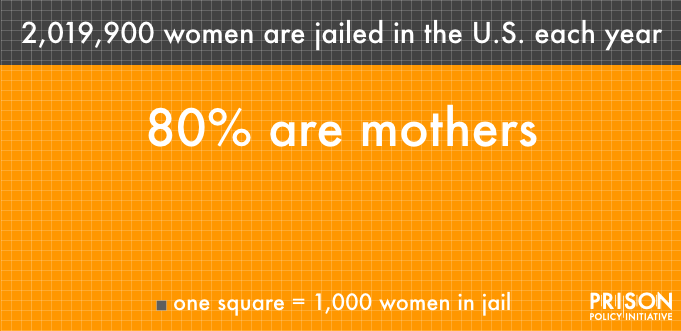 Estimates have been rounded for this graphic. Sources: Federal Bureau of Investigation,


